Happy Diwali: Light Diyas inside this Diwali, because while the world outside sparkles with fairy lights and firecrackers, many of us find ourselves sitting in quiet rooms feeling surprisingly drained, anxious, and emotionally dim.
You’ve swept the floors, put up the marigolds, arranged festive sweet boxes, and smiled for family photographs. Yet beneath the celebratory cheer, a nagging exhaustion lingers: burnout from relentless routines, old emotional grievances resurfacing during family gatherings, or a restless mind racing faster than sparklers.
We spend weeks illuminating our balconies, patios, and doorways, yet we routinely neglect the one sanctuary that needs illumination most: the sacred room inside our own chest.
Here is the honest promise of this guide: this festival season does not have to be another performative marathon of social pleasantries and frantic shopping. When you consciously turn inward and decide that this Happy Diwali: Light Diyas inside this Diwali journey is about inner restoration, you will unlock deep mental clarity, dissolve heavy emotional patterns, and anchor an unshakeable sense of calm that outlasts the festive weekend.
Let us step beyond superficial ritualism and rediscover the transformative spiritual psychology behind every single flame.“The real festival of lights begins the precise moment you stop searching for validation in outside spectacles and kindle compassion within your own mind.”
It is one of modern life’s most bewildering paradoxes: the most vibrant holidays often trigger the heaviest emotional overwhelm. For weeks leading up to Diwali, your schedule overflows with shopping runs, deep cleaning, gift exchanges, and workplace deadlines compressed into festive short weeks. By the time Amavasya (the moonless night of Diwali) arrives, your sensory nervous system is overloaded, frayed, and running on fumes.
We mistakenly treat celebration as an external production rather than an internal reset. In our rush to make our homes look picture-perfect for visiting relatives and social media feeds, our inner temple remains neglected. Suppressed feelings of loneliness, financial comparison, grief over lost loved ones, or simple emotional fatigue settle into the background.
To experience a genuinely transformative Happy Diwali: Light Diyas inside this Diwali transformation, we must first grant ourselves permission to pause. The darkest night of the lunar calendar is not an accident of the cosmos; it is an invitation. The ancient Rishis chose the darkest night deliberately because pure light is neither appreciated nor truly recognized against an afternoon sky—it is discovered only when darkness forces us to look within.
The Spiritual Anatomy of a Diya: An Ancient Psychological Blueprint
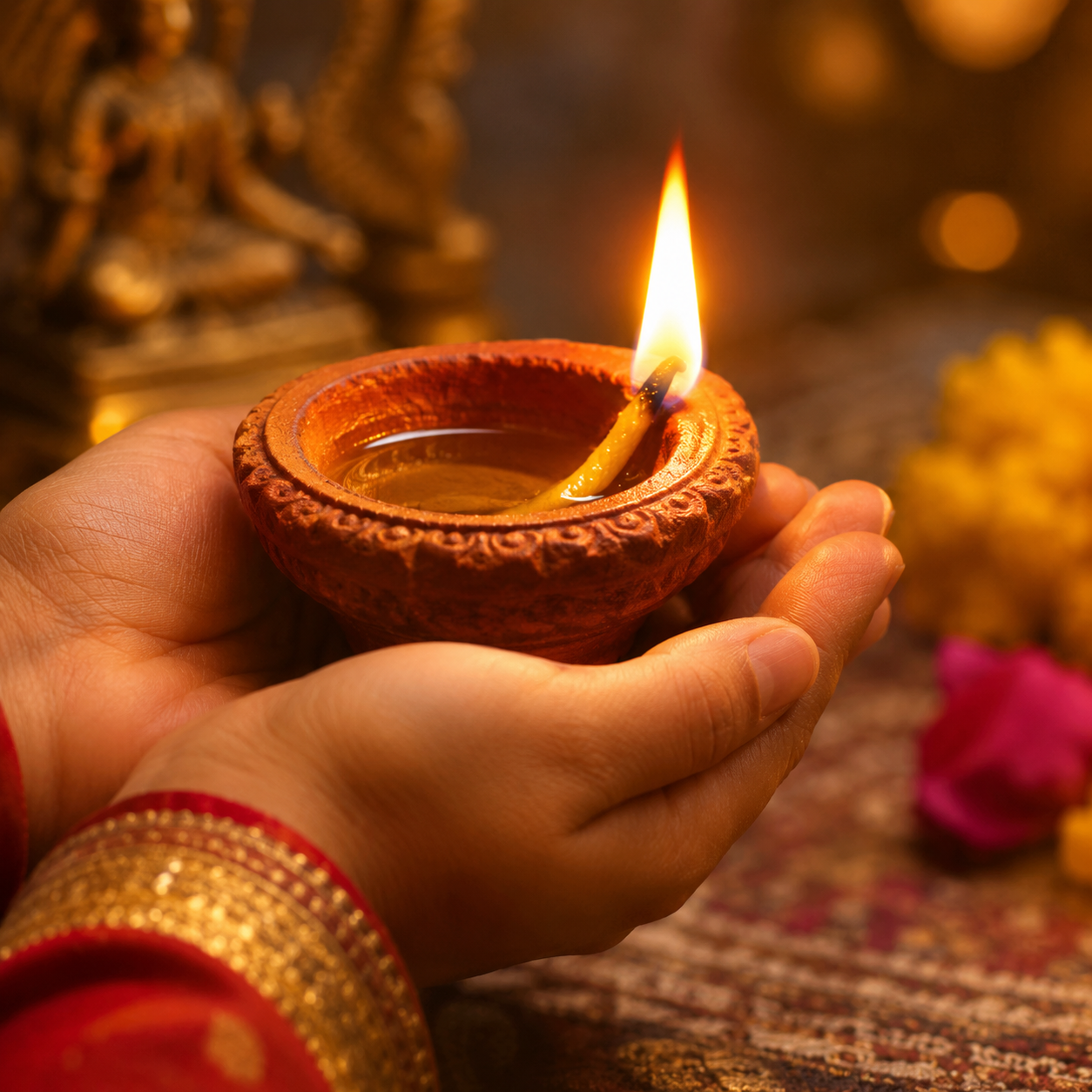
A clay lamp (mitti ka diya) is far more than festive decor; it is an ingenious ancient metaphor for the human mind, body, and consciousness. When you look closely at a diya, each of its four physical elements corresponds to a specific aspect of human psychology and spiritual practice:·
The Clay Body (Mitti): Represents our physical form and mortal body. Clay comes directly from the earth, fragile, porous, and temporary. It reminds us that our earthly struggles, physical appearances, and ego attachments are fundamentally transient.·
The Oil or Ghee (Sneha / Taila): In classical Sanskrit, the word sneha holds two intertwined meanings: oil and unconditional affection or love. The oil fuels the wick; similarly, negative tendencies, attachments (vasanas), and past resentments must be dissolved and offered as fuel for our spiritual awakening.·
The Cotton Wick (Batti): Symbolizes the Atman or our focused, singular intellect (Buddhi). Unwound, cotton fibers are dispersed and wild; gently rolled and twisted, they become a laser-pointed channel capable of drawing fuel upward toward the flame.·
The Flame (Jyoti): Represents pure, awakened consciousness (Chaitanya). Notice the unique law of flame: no matter which direction you tilt the lamp, the flame always rises upward. It refuses to point toward the earth, illustrating an awakened mind that naturally ascends above low-frequency grievances and pettiness.Understanding this timeless architecture allows you to practice authentic inner work. When you celebrate with the spirit of
Happy Diwali: Light Diyas inside this Diwali, you are not just sparking a match; you are consciously consuming your mental baggage to elevate your awareness.
5 Internal Diyas You Must Kindle to Heal From Within
To make this journey practical rather than abstract, let us identify the specific internal lamps waiting to be illuminated in the quiet chambers of your mind:
1. The Diya of Self-Awareness (Svadhyaya)
We spend lifetimes analyzing the personalities, flaws, and words of others while our own thought patterns operate on unconscious autopilot. The first lamp to light inside is clear, non-judgmental observation of your internal narrative. Notice your automatic reactions, your habitual insecurities, and your triggers. When you shine compassionate awareness onto an emotional trigger, its unconscious power over your day begins to dissolve immediately.
2. The Diya of Forgiveness (Kshama)
Carrying unresolved resentment into a festival is like wearing fine new silk clothes while holding open bags of rotting garbage. Grudges do not hurt the person who wronged you; they continually poison the nervous system of the person clinging to them. Lighting this second lamp means understanding that forgiveness is an act of self-cleansing. Releasing past grievances creates space for grace, fresh joy, and peace.
3. The Diya of Contentment (Santosha)
Diwali shopping culture easily devolves into competitive consumerism—buying things we don't need with money we don't have to impress people we barely know. The diya of Santosha burns brightly when you acknowledge that your worth is neither determined nor measured by material acquisitions. Abundance is fundamentally an internal posture, not a bank balance or stack of branded shopping bags.
4. The Diya of Grounded Patience (Dhairya)
In an era dominated by hyperactive digital dopamine, instant delivery apps, and immediate notifications, our collective capacity for calm endurance has quietly deteriorated. Lighting the lamp of patience allows you to inhale deeply, slow down, and trust divine timing. It helps you recognize that internal healing is an organic, seasonal process that cannot be rushed or pressured.
5. The Diya of Active Compassion (Karuna)
The light of the fifth diya expands your circle of empathy. Joy multiplies exponentially only when it is shared without hidden expectations. Look past your immediate family circle: acknowledge the street vendor selling handmade clay pots, the delivery person navigating chaotic holiday traffic, or an elderly neighbor spending the festival alone. Simple, heartfelt human kindness is the purest manifestation of sacred light.
Internal Contemplation and Timeless Wisdom
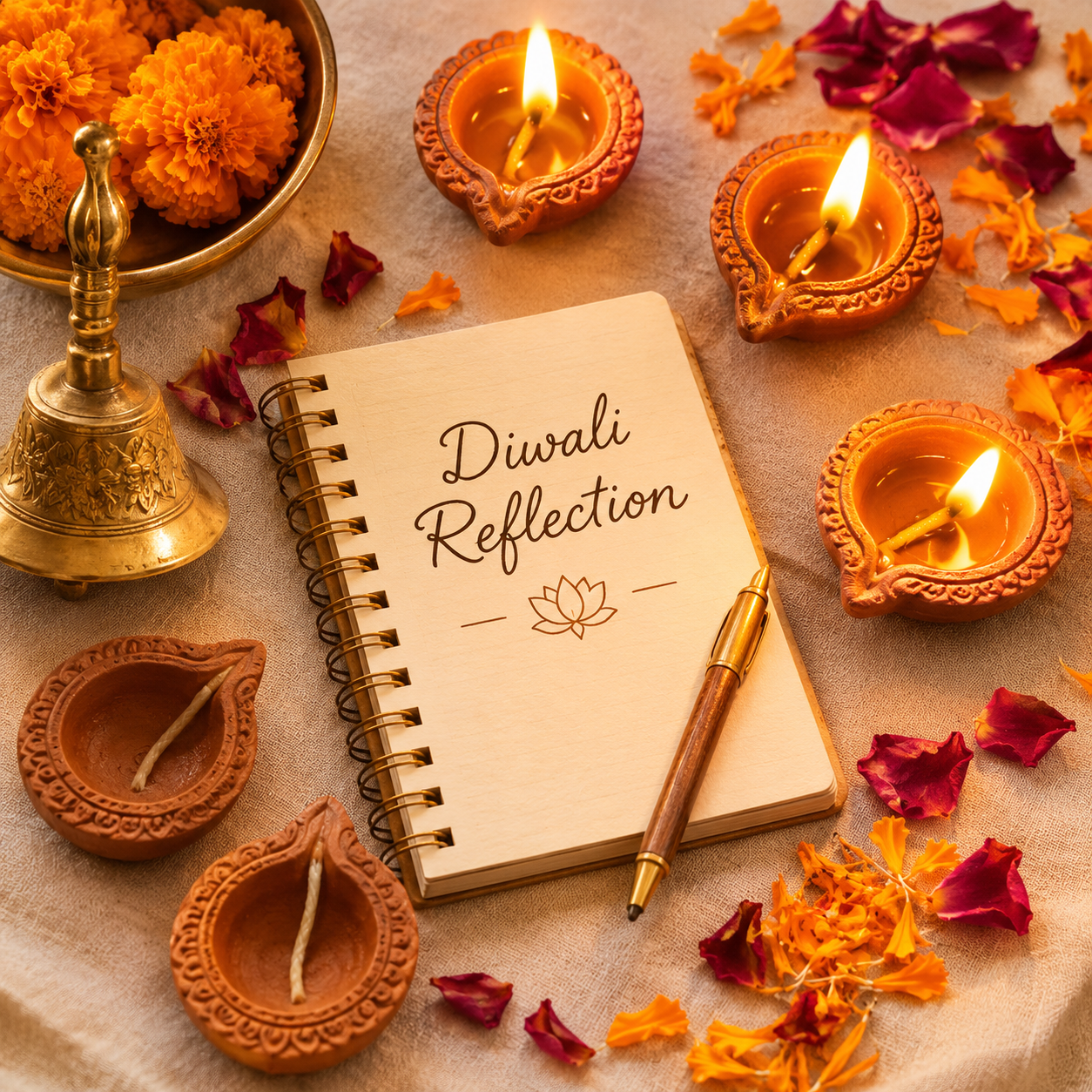
Deepening your interior life requires intentional reflection. While traditional rituals carry poetic elegance, their ultimate purpose is to guide human consciousness back home to source. Exploring foundational spiritual texts and understanding genuine philosophical wisdom—such as the timeless insights preserved in the Vedas and Upanishads on Sacred Texts—reveals that rituals were never designed as empty dogmatic obligations, but as practical tools for psychological liberation.
When you internalize the ancient mantra “Tamaso ma jyotir gamaya” (Lead me from darkness to light), you understand that darkness is not a malignant, hostile force. Darkness is simply the temporary absence of awareness. The second you decide to Happy Diwali: Light Diyas inside this Diwali, you stop struggling against emotional shadows and let your inner presence quietly take their place.
For those eager to discover how scriptural metaphors mirror modern cognitive reframing, explore our deep dive on Understanding Ancient Vedic Mantras for Daily Anxiety to establish a calm morning grounding routine. Similarly, learning to quiet chronic overthinking through mindfulness helps clarify your journey; read our practical guide on Mindful Meditation for Busy Minds to sustain peace throughout the chaotic holiday rush.
“A single clay lamp does not negotiate with the darkness of a vast cave. It simply shines, and the darkness dissolves of its own accord.”
4 Simple Steps to Experience Happy Diwali: Light Diyas Inside This Diwali
Transforming conceptual wisdom into a lived, grounding experience requires simple, repeatable rituals. Here is an accessible, 15-minute contemplative practice you can use anytime during the festival days:
1. Clear Your Physical and Digital Space:
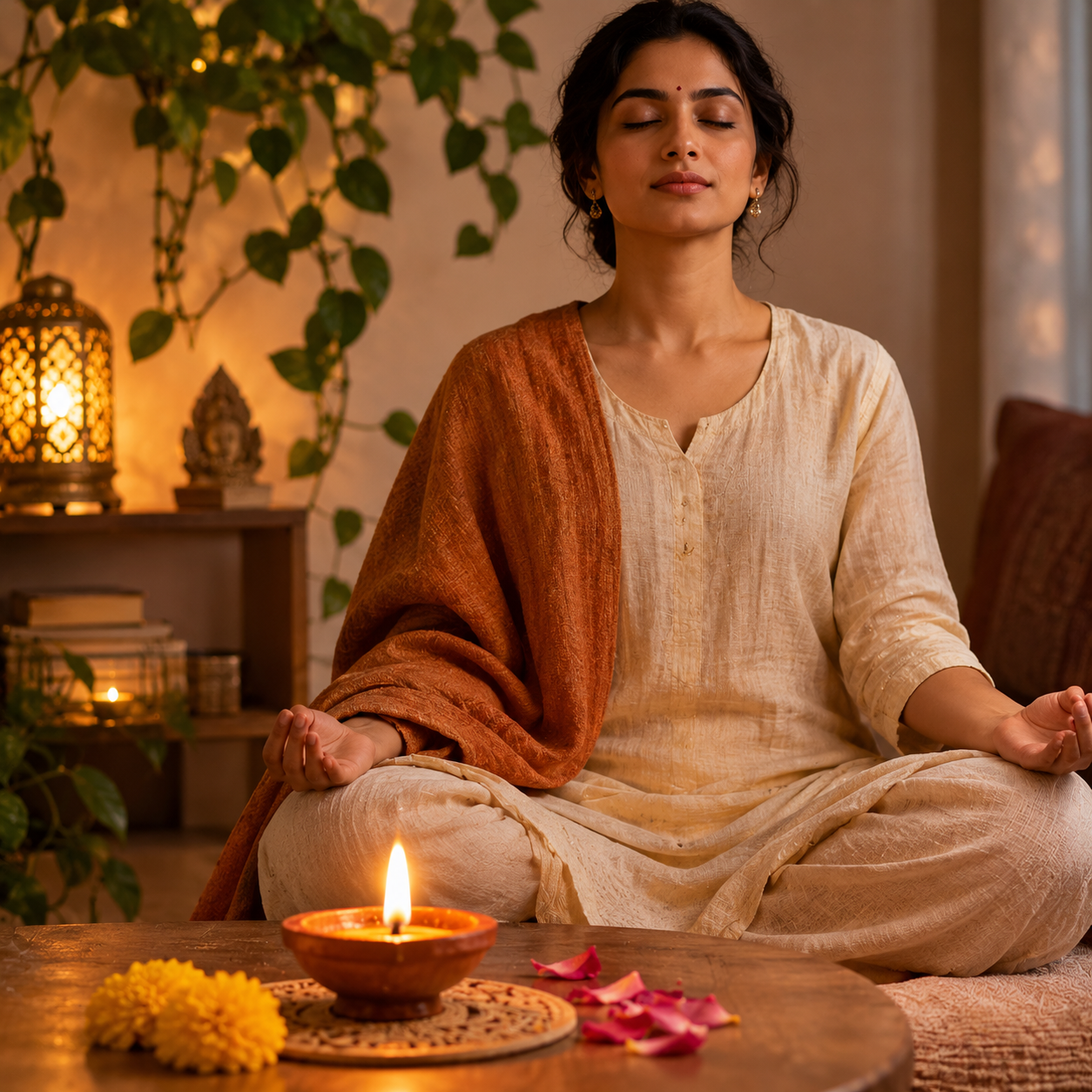
Before sitting down, put your smartphone on 'Do Not Disturb' mode for just twenty minutes. Clear a clean, comfortable corner in your quietest room. Sit comfortably on a cushion or a chair with your spine upright yet relaxed.
2. Engage in Mindful Flame Ignition (Trataka Preparation):
Place a single brass or clay diya at eye level about two feet in front of you. Strike a match deliberately, feeling the texture of the box and listening to the soft scrape. As the cotton wick catches fire, observe the gradual emergence of the teardrop flame: the blue core at its base, the steady golden mantle, and the subtle ambient heat it generates.
3. Practice the Three-Breath Mental Release:
Inhale deeply through your nostrils for a count of four, imagining your breath drawing clean, healing golden light directly into your heart center. Hold your breath gently for two seconds. As you exhale slowly through your mouth, visualize your built-up anxiety, lingering grudges, and unspoken pressures leaving your body as grey vapor, offered up directly into the flame to be cleansed. Repeat this cycle three times.
4. Anchor Your Silent Festive Intention:
Silently declare: “Outside, lights shine brightly; inside, I am home. I release what drained me yesterday, and I choose gentle awareness today.” Rest your eyes softly on the flame for five minutes without straining, allowing your racing thoughts to gently decelerate.
External Wisdom: Modern Science Validates Ancient Rituals
Interestingly, contemporary cognitive psychology and behavioral neurobiology increasingly echo what ancient meditators discovered millennia ago. Fixing your gaze gently upon a steady flame—a classical yogic practice known as Trataka—actively slows runaway beta brainwave activity, shifting neurological states into calming alpha waves that foster emotional equilibrium and deep rest.
Authoritative medical institutions like the Mayo Clinic on Mindfulness and Stress Relief emphasize that brief, intentional moments of focused mindfulness reliably lower cortisol levels, stabilize resting heart rates, and strengthen cognitive emotional regulation. The outward act of lighting an oil lamp serves as a concrete sensory anchor, grounding your nervous system securely in the present moment amidst sensory overload.
Furthermore, academic research hosted on platforms such as PubMed / NCBI on Yogic Visual Concentration Techniques demonstrates that focused visual meditation enhances sustained attention spans and noticeably alleviates symptoms of chronic anxiety. When you declare that this season is about Happy Diwali: Light Diyas inside this Diwali, you are not engaging in wishful thinking—you are applying time-tested, biologically sound practices for psychological restoration.
To dive deeper into the physical and mental benefits of setting up an everyday home altar or sacred space, you can also review our companion guide on Creating a Sacred Altar Space for Daily Calm.
Cultivating Year-Round Radiance Beyond the Holidays
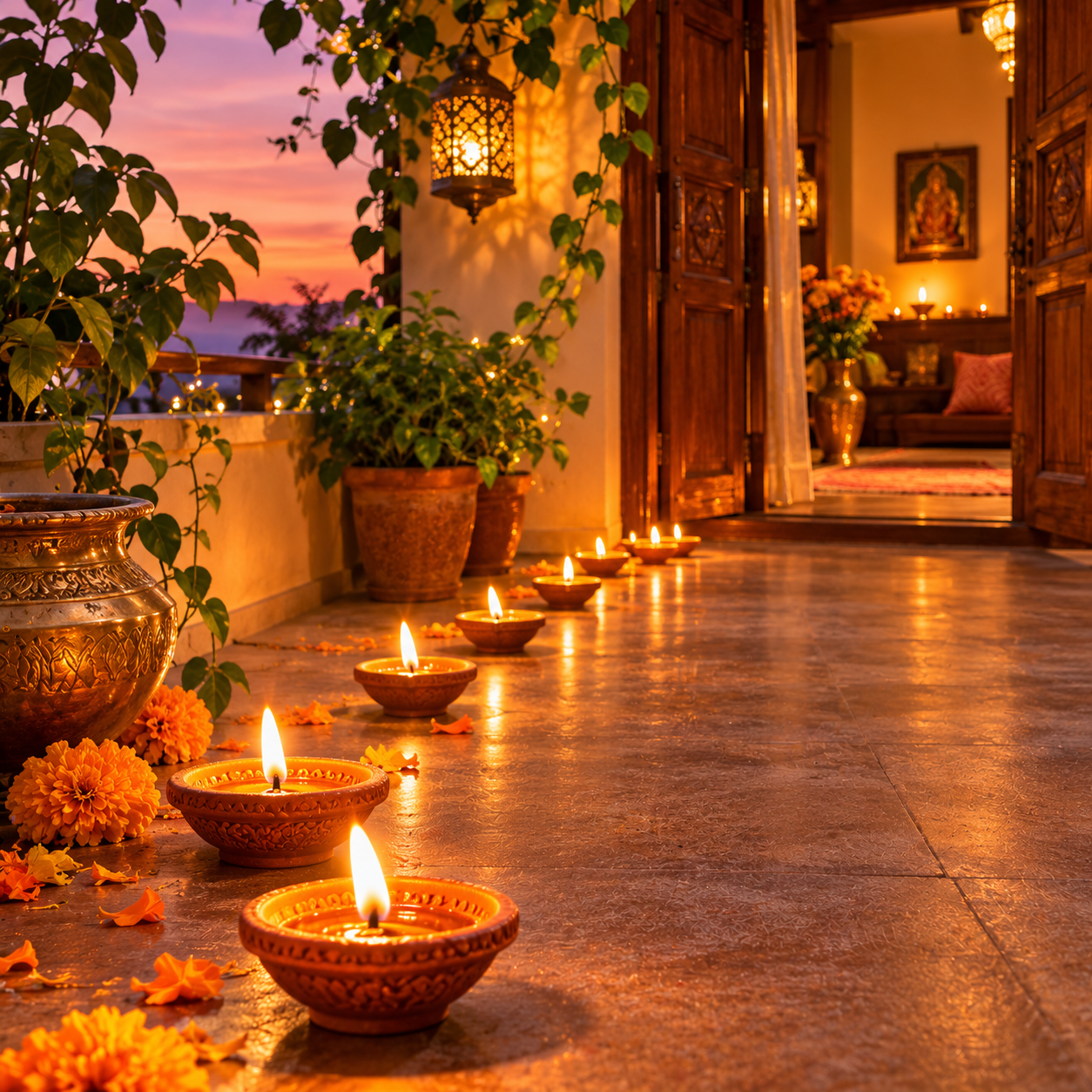
The ultimate test of any spiritual practice is not how tranquil you feel during a quiet ceremony, but how gracefully you carry that serenity into regular life on a hectic Monday afternoon. The holiday decorations will eventually come down, the marigold garlands will dry, and the sweet boxes will be emptied. But the inner clarity you cultivate through this Happy Diwali: Light Diyas inside this Diwali approach does not need to vanish when the festivities conclude.
Commit to carrying your inner flame into your everyday conversations:
. Listen With Curiosity Rather Than Urgency: When interacting with family members whose differing opinions trigger you, keep your inner diya burning steadily. Choose to respond from a space of grounded calm rather than defensive habit.
. Preserve Five Minutes of Morning Stillness: Before touching your phone or scanning the day's notifications, spend five quiet minutes with your eyes closed, breathing into your chest and checking in with your internal weather.
· Practice Micro-Acts of Clean Energy: Whenever you enter a room or begin a work meeting, quietly decide to be a source of ease rather than anxiety. Your state of being is contagious; radiating grounded peace permits others to relax around you.
When you live with this steady intention, every sunrise becomes an extension of the festival of lights. You embody the truth that external circumstances do not dictate your inner climate—your conscious awareness does.
Frequently Asked Questions
Q1: What does it truly mean to light diyas inside this Diwali?
It means turning your attention inward to illuminate your mind through self-awareness, forgiveness, and mental clarity, ensuring your emotional wellbeing is revitalized alongside outer celebrations.
Q2: How is Diwali connected to inner spiritual awakening?
Diwali falls on the darkest night of the month (Amavasya). Spiritually, this darkness signifies unconscious ignorance, while lighting lamps symbolizes the awakening of pure divine consciousness (Atman) over ego-driven fears.
Q3: How can I avoid emotional burnout and stress during Diwali?
Set healthy personal boundaries, take short sensory breaks away from screens, prioritize restorative sleep, and spend 10 to 15 quiet minutes each evening in peaceful contemplation instead of back-to-back social events.
Q4: Can Trataka (flame gazing) using a Diwali diya reduce overthinking?
Yes. Mindful flame gazing engages the optic nerve and focuses scattered cognitive activity onto a singular sensory anchor, naturally shifting active brain waves into calming alpha waves that quiet runaway overthinking.
Q5: What is the spiritual significance of using clay diyas instead of electric lights?
Clay (mitti) represents the physical body and grounding connection to the earth, while organic oil and a hand-spun cotton wick symbolize purifying our attachments and focusing our intellect toward spiritual elevation.
Save this guide for later when the holiday bustle begins to pull you away from your center.
Share it with someone who overthinks and needs a gentle reminder to breathe, rest, and celebrate gently.
Follow for more practical spirituality, grounding mindfulness practices, and timeless wisdom for modern life.