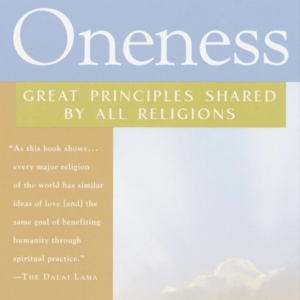
Can the world’s major religions share common moral and spiritual teachings despite their distinct traditions, rituals, and theological frameworks? This fundamental inquiry sits at the heart of Oneness: Great Principles Shared by All Religions by Jeffrey Moses.
Rather than walking readers through a conventional theological treatise, Moses curates scriptural passages, proverbs, and wisdom literature from diverse global traditions. He groups these timeless insights around universal themes such as the Golden Rule, filial respect, inner peace, moral accountability, and divine love.
In this comprehensive review, we examine the core architecture of Oneness by Jeffrey Moses, unpack its six foundational principles, evaluate its critical strengths and limitations, and help you decide whether this volume belongs on your personal bookshelf.
Table of Contents
ToggleWhat Is Oneness: Great Principles Shared by All Religions About?
At its essence, Oneness: Great Principles Shared by All Religions operates as an accessible thematic compendium. Moses sets out to prove that while religious doctrines often divide humanity, core ethical imperatives unite us.
The work bypasses historical polemics and instead juxtaposes primary texts from Christianity, Islam, Judaism, Hinduism, Buddhism, Taoism, and indigenous traditions. By placing these excerpts side by side, Moses demonstrates how cultures separated by thousands of miles and centuries of history arrived at remarkably harmonized ethical conclusions.
Rather than arguing that all faiths are identical, the book serves as a mirror reflecting humanity’s shared conscience. It invites spiritual seekers and casual readers alike to look past external dogma and encounter the universal heartbeat of global wisdom.
About the Author: Jeffrey Moses
Jeffrey Moses is an author, editor, and dedicated researcher specializing in comparative religion and human potential. Driven by a passion for interfaith understanding, Moses spent years compiling cross-cultural teachings to demonstrate the shared moral foundations of civilization.
His work on Oneness gained widespread critical acclaim, earning forewords and endorsements from prominent spiritual leaders and thinkers, including the Dalai Lama and Mother Teresa. Moses designed the book not as an academic ivory-tower exercise, but as a practical, bridge-building resource accessible to everyday readers of all backgrounds.
Summary of the Book’s Main Principles
Instead of following a chronological timeline or narrative arc, the book is organized thematically around primary ethical virtues. Moses curates each section to emphasize practical human conduct over esoteric theory.
The text illuminates how diverse cultures consistently guide individuals toward personal self-mastery, social harmony, and reverence for life. A central takeaway is that ethical integrity is not the private property of any single culture.
Crucially, the similarities highlighted in Oneness do not imply that all religious paths are doctrinally identical. Different traditions maintain distinct metaphysical, philosophical, and liturgical foundations. The book’s true objective is celebrating ethical convergence without erasing doctrinal individuality.
Six Key Principles Explored in Oneness
1. The Golden Rule: Treat Others as You Wish to Be Treated
The principle of reciprocity is universal. Moses documents how this maxim appears across traditions: Christianity’s Sermon on the Mount, Judaism’s Talmudic teachings through Rabbi Hillel, Islam’s Hadith literature, Hinduism’s Mahabharata, and the Analects of Confucius.
While some traditions frame the rule positively (“Do unto others”) and others negatively (“Do not do to others what hurts you”), the moral demand remains identical: cultivate active empathy.
2. Respect for Parents and Elders
Moses highlights filial piety as a vital pillar of social stability. From the Biblical commandment to honor father and mother to Vedic mandates treating parents as divine guests (Matru Devo Bhava), respect for elders transcends geography.
The book explains that honoring parents is not merely domestic politeness; it reflects deep spiritual gratitude for the lineage that preserves life and sacred knowledge.
3. The Spiritual Search Within
A striking parallel across mystical traditions is the realization that sacred realization begins internally. Whether exploring the Christian teaching that the kingdom of God is within, the Hindu understanding of the Atman, or the Taoist path of internal stillness, Moses illustrates that external rituals are incomplete without inner transformation.
While the theological meaning of ultimate reality differs, the inward journey remains a shared human instinct. For those interested in the broader metaphysical dimension of this unity, our detailed exploration of the spiritual principle of Divine Oneness provides additional philosophical context.
4. Actions and Their Consequences
Accountability forms the backbone of global moral philosophy. Moses links the agricultural imagery of Western scripture—”as you sow, so shall you reap”—with the Eastern understanding of karma.
The book carefully compares these ideas without conflating them into identical dogma. The fundamental message is uniform: our moral choices carry inevitable energetic and existential weight across time.
5. Humility Before Judging Others
Moses gathers stark warnings against self-righteousness. From Jesus warning against pointing out the speck in another’s eye while ignoring one’s own log, to Buddhist teachings on recognizing personal flaws before critiquing others, the literature warns against spiritual pride.
True wisdom demands rigorous self-examination and boundless patience toward the shortcomings of our neighbors.
6. Love as a Spiritual Principle
The final anchor of the book centers on love, compassion, and universal benevolence. Moses compares the Christian declaration that “God is love” with Buddhist metta (loving-kindness) and Islamic invocations of the Divine as Ar-Rahman (The Most Compassionate).
Love is not treated as a passive emotion, but as an active, unifying force sustaining the moral cosmos.
How the Book Connects Different Religious Traditions
Moses builds an interfaith bridge by letting primary scriptures speak for themselves. Rather than injecting heavy theological commentary, he allows the juxtaposition of sacred passages to create an undeniable sense of harmony.
By viewing world religions through an ethical rather than liturgical lens, the reader encounters what Aldous Huxley famously called the “Perennial Philosophy.” Readers realize that while the languages, metaphors, and historical contexts differ, humanity’s deepest spiritual longings are shared across every continent.
What Makes This Book Different?
Unlike standard comparative religion textbooks that dissect timelines, historical schisms, and liturgical developments, Oneness adopts an anthology-style approach.
Its short, quotation-driven layout transforms the reading experience. You do not need to read it cover-to-cover in a single sitting. Instead, it functions as a meditative sourcebook that can be opened at random for daily contemplation, study group prompts, or interfaith dialogue.
What I Liked About the Book
Intuitive Thematic Curation: The grouping of passages makes the volume effortless to browse and reference.
Broad Inclusivity: Moses pulls evenly from major world religions as well as indigenous and philosophical wisdom traditions.
Accessible Entry Point: Readers need no prior background in theology or classical languages to grasp the core message.
Encourages Interfaith Goodwill: By highlighting common ground, it counters fundamentalist narratives of division and hostility.
Limitations and Things to Keep in Mind
Lack of Historical Context: Presenting short quotes side by side strips away the nuanced cultural and historical circumstances in which those scriptures were revealed.
Doctrinal Flattening: Readers must remember that shared moral guidelines do not equal identical worldviews. Concepts of salvation, God, rebirth, and sin differ drastically between traditions.
Not an Academic Resource: Those seeking rigorous theological analysis or philological commentary will find the text overly simplified.
Who Should Read Oneness?
Interfaith Advocates & Study Circles: An ideal discussion starter for interfaith gatherings, civic councils, and book clubs.
Beginners in Comparative Religion: Those looking for an approachable introduction before diving into dense theological texts.
Spiritual Seekers: Readers who identify as “spiritual but not religious” and appreciate universal ethical wisdom.
Educators: Teachers seeking concise, side-by-side examples of global moral principles for classroom discussions.
Is Oneness by Jeffrey Moses Worth Reading?
If you are seeking an accessible, uplifting collection that highlights humanity’s collective ethical conscience, Oneness: Great Principles Shared by All Religions is well worth a spot on your reading list. Its greatest virtue lies in placing disparate traditions into peaceful conversation on the page.
While serious scholars will want deeper theological context, general readers and seekers looking for cross-cultural encouragement will find it an inspiring reference work. To continue your journey through inspiring literature, you can explore more spiritual books and literature in our curated library.
Disclosure: This article may contain affiliate links. If you purchase through these links, SpiritualKhazaana may earn a commission at no additional cost to you.
Frequently Asked Questions
What is the book Oneness: Great Principles Shared by All Religions about?
The book by Jeffrey Moses explores shared moral and spiritual virtues across global faiths. It presents primary quotations around universal themes such as the Golden Rule, love, parental honor, humility, and personal responsibility.
Who wrote Oneness: Great Principles Shared by All Religions?
The book was written and curated by author and comparative religion researcher Jeffrey Moses, featuring forewords and endorsements from renowned global spiritual leaders.
What are the main principles discussed in Oneness?
Central themes include the Golden Rule, honoring parents and ancestors, inward spiritual realization, moral accountability (sowing and reaping), practicing humility over judgment, and living through love.
Does Oneness claim that all religions are identical?
No. The book highlights ethical and humanitarian similarities across sacred texts, but it does not claim that theological doctrines, views on the afterlife, or ritual practices are the same.
Is Oneness suitable for beginners?
Yes. Its quotation-based, thematic design makes it exceptionally easy to read without requiring any prior knowledge of comparative religion or classical scriptural languages.