
Table of Contents
ToggleThe Lord’s Supper: Guide to Transform Your Worship (2026)
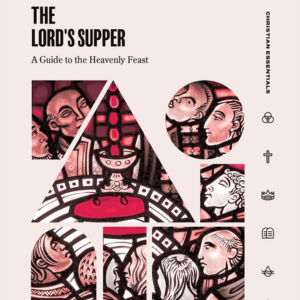
The Holy Communion, the Eucharist, the Lord’s Supper—regardless of the name used, this sacred meal stands at the very heart of Christian worship. Yet, for many, the ritual can become mechanical, or conversely, shrouded in such deep mystery that it feels inaccessible.
In The Lord’s Supper: A Guide to the Heavenly Feast, renowned theologian John W. Kleinig invites readers to pull up a chair at the Lord’s table with fresh eyes. This isn’t just a dry theological treatise; it is a devotional map to experiencing “heaven on earth.”
The Core Message: Why Kleinig Wrote This Guide
Before diving into the chapters, it is essential to understand the author’s primary objective. Kleinig wants to move the reader from being a passive observer to an active participant in a cosmic reality.
His central thesis is that the Lord’s Supper is not merely a memorial of a dead martyr or a symbolic snack; it is a dynamic encounter with the living Christ. Kleinig argues that in this meal, Jesus is the host, the guest, and the food itself. The book aims to restore a sense of awe, showing that when we receive the bread and wine, we are stepping out of linear time and into the eternal feast of heaven.
The Lord’s Supper – Summary
Series Preface & Prayer for Meditation
The book begins by setting a contemplative tone. The Series Preface establishes the “Lex Orandi” (the law of prayer) approach—emphasizing that we learn theology best through worship.
The Prayer for Meditation is a unique inclusion. Kleinig uses the Lord’s Prayer as a lens through which to view the Sacrament. He suggests that when we pray “Give us this day our daily bread,” we are asking for more than sourdough; we are asking for the Bread of Life. This section anchors the book in humility, reminding the reader that the Supper is a gift to be received, not a puzzle to be solved.
Orientation: Finding Our Place at the Table
Kleinig begins by orienting the reader to the “geography” of the Sacrament. He explains that many Christians suffer from “liturgical amnesia”—we forget where we are. He positions the Lord’s Supper as the intersection of the past (the Cross), the present (the Church), and the future (the Second Coming).
The Meal of Meals: Excellence in Simplicity
Why bread and wine? In this chapter, Kleinig explores the “ordinariness” of the elements. He argues that Christ chose the most basic staples of human life to show that He intends to sanctify our entire existence. It is the “Meal of Meals” because it fulfills every other meal we have ever eaten. It is the ultimate satisfaction of human hunger.
The Feast Within a Feast: The Liturgical Context
The Lord’s Supper does not happen in a vacuum; it happens within the Divine Service. Kleinig explains that the liturgy is the “feast” that surrounds the “inner feast” of the Sacrament. He breaks down how the hymns, the readings, and the prayers prepare the heart to receive the body and blood. It’s a nested reality—one joy leading into a deeper one.
An Ordered Meal: The Beauty of Structure
God is not a God of chaos. Kleinig defends the traditional structure of the Communion service. He explains that the “order” (the Ordo) isn’t about legalism; it’s about hospitality. Just as a host sets a table in a specific way to make guests feel welcome and safe, the Church’s liturgy provides an ordered path for the soul to approach the holy without being overwhelmed.
A Sacrificial Banquet: Gift vs. Work
This is one of the most vital chapters for understanding Kleinig’s Lutheran perspective. He distinguishes between a “sacrifice” we give to God and a “sacrificial banquet” God gives to us.
- The Sacrifice: Christ’s once-and-for-all death on the cross.
- The Banquet: The distribution of the benefits of that sacrifice to us today.
We don’t re-sacrifice Jesus; we feast on the victory He already won.
The Blood of the Covenant: The Legal and Loving Bond
Kleinig delves into the Old Testament roots of “Covenant.” He explains that blood signifies life. By sharing His “blood of the covenant,” Jesus is entering into a binding, legal, and familial contract with us. He takes our debt; we take His life. It is a blood transfusion for the soul.
The Unseen Host: Who is Really Serving?
If you look at a church service, you see a pastor in robes. But Kleinig insists that the unseen host is Jesus Himself. The pastor is merely the “waiter.” This shift in perspective is revolutionary for the reader: you aren’t a guest of the local congregation; you are a guest of the King of the Universe.
Related Articles


Sound Remembrance: More Than a Memory
When Jesus said, “Do this in remembrance of me,” He didn’t mean “think about me like a distant memory.” Kleinig explains the Hebrew concept of Zikkaron—a remembrance that makes a past event presently active. In “Sound Remembrance,” the Holy Spirit brings the benefits of the Cross into the year 2026, making them as fresh as the day they occurred.
Bread from Heaven: Manna for the Wilderness
Drawing parallels to the Exodus, Kleinig portrays the Christian life as a journey through a wilderness. Just as the Israelites needed manna to survive the spiritual ‘desert’ of modern life. If you are currently walking through a difficult season, reading a Come to Jesus book summary can offer extra comfort and practical ways to find God in your daily struggles.
How Can We Do This? The Mystery of Faith
Kleinig addresses the skeptics and the confused. How can bread be body? He doesn’t resort to complex chemistry but points to the Power of the Word. He argues that the same Word that created the universe (“Let there be light”) is the Word that effects the Sacrament (“This is my body”). We “do this” by trusting the Word over our senses.
Heaven on Earth: The Thin Place
This chapter explores the “eschatological” (end-times) nature of the meal. Kleinig describes the Lord’s Supper as a “thin place” where the veil between heaven and earth is pulled back. When we sing the Sanctus (“Holy, Holy, Holy”), we are literally joining our voices with angels and archangels who are currently worshipping at the throne of God.
Full Remission: The Gift of Forgiveness
The book concludes with the practical “payoff” of the meal: Full Remission. Kleinig emphasizes that the Lord’s Supper is the “delivery vehicle” for the forgiveness of sins. It isn’t just a general statement that God loves you; it is a physical guarantee. As the bread touches your tongue, your sins are gone.
Detailed Review: A Masterclass in Sacramental Living
The Strength of Kleinig’s Prose
John W. Kleinig has a rare gift for being a “scholar-practitioner.” He avoids the dense, academic jargon that often plagues books on the Eucharist. Instead, he uses metaphors of feasting, hospitality, and friendship. His writing feels like a warm conversation with a wise grandfather who happens to have a PhD in the Old Testament.
The “Heavenly Feast” Perspective
The most unique aspect of this book is how it shifts the focus from what we are doing to what God is doing. Most books on the Lord’s Supper focus on our preparation, our faith, or our worthiness. Kleinig flips the script. He shows that the Supper is “Heavenly” because it originates in God’s heart and brings God’s presence down to us.
Is It Only for Lutherans?
While Kleinig writes from a distinct Lutheran tradition (emphasizing the “Real Presence” of Christ), the book is remarkably ecumenical in its appeal. Any Christian who believes that the Lord’s Supper is more than just a “metaphor” will find profound depth here. Anglican, Roman Catholic, and Eastern Orthodox readers will find many points of beautiful resonance.
Key Takeaways for the Reader
Concept | Kleinig’s Interpretation |
The Elements | Not symbols, but “delivery vehicles” for Christ’s actual presence. |
The Liturgy | A protective and welcoming “order” that facilitates the encounter. |
The Benefit | Forgiveness of sins and physical union with the resurrected Christ. |
The Experience | A foretaste of the eternal wedding feast in heaven. |
Conclusion: A Must-Read for the Spiritually Hungry
The Lord’s Supper: A Guide to the Heavenly Feast is more than a book summary; it’s an invitation to a lifestyle. John W. Kleinig succeeds in stripping away the boredom of routine and replacing it with the thrill of a divine encounter.
If you have ever felt like “there must be more” to church than just songs and a sermon, this book is your answer. It teaches you how to sit at the table, how to open your mouth, and how to taste the goodness of the Lord. It turns a ritual into a relationship.
FAQs
Q1: What is the main message behind John W. Kleinig’s book on the Lord’s Supper?
A: At its heart, The Lord’s Supper: Guide to the Heavenly Feast shows that Holy Communion isn’t just a symbolic ritual or a dry church routine. Kleinig explains that this sacred meal is a living, dynamic encounter where Jesus acts as your host. It’s designed to bring you face-to-face with Christ’s real presence, shifting your focus away from your own performance and directly toward God’s ultimate gift of grace.
Q2: How does the book explain the presence of Christ in the bread and wine?
A: Kleinig avoids getting tangled up in heavy, academic chemistry. Instead, he highlights the power of the Word. He beautifully points out that the exact same divine Word that created the entire universe is what changes the elements during the Sacrament. By trusting God’s promises over our physical senses, we can experience the bread and wine as literal delivery vehicles for Christ’s actual presence.
Q3: Is this guide to the Lord’s Supper written only for Lutheran readers?
A: Not at all! While John W. Kleinig writes firmly from a Lutheran theological background, his pastoral warmth makes the book highly valuable for all Christians. If you belong to an Anglican, Catholic, or Orthodox tradition—or if you simply believe that Holy Communion holds a deep, spiritual reality beyond a basic metaphor—you will find profound, life-changing insights within these pages.
Q4: Can groups use this book to study the spiritual meaning of Holy Communion?
A: Absolutely, it is a fantastic choice for group study! The author structures the book with highly organized, thoughtful chapters that naturally lend themselves to open discussions. Whether you are leading a church small group or diving into a personal spiritual growth study, the book’s accessible language and rich devotional maps will give your community plenty of meaningful topics to talk through together.
Q5: What makes this specific guide to the heavenly feast stand out from others?
A: What truly sets The Lord’s Supper: Guide to the Heavenly Feast apart is how Kleinig flips the traditional script. Instead of constantly focusing on our own worthiness or spiritual preparation, he highlights what God is actively doing for us. It beautifully reveals how the traditional liturgy acts as a welcoming, ordered pathway that brings full remission of sins and a little piece of heaven down to earth.