
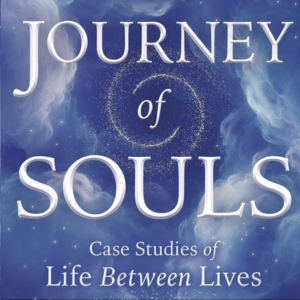
What happens to human consciousness after physical death? Is a single lifetime the entire story, or does the soul experience a structured existence between physical incarnations?
In Journey of Souls by Michael Newton, the late hypnotherapist explores these timeless questions through 29 client case studies gathered during hypnotic regression sessions. Rather than presenting abstract philosophy, the book documents what his subjects reported experiencing in the spiritual realm between lifetimes—including encounters with spiritual guides, soul groups, life reviews, and preparations for rebirth.
Whether you approach the book from spiritual curiosity or philosophical inquiry, it remains a landmark title in modern afterlife literature. Below, we examine all 15 chapters, Newton’s core concepts, scientific skepticism, and whether this book belongs on your reading list.
Table of Contents
ToggleJourney of Souls – Book Overview and Details
Book Detail | Information |
Book Title | Journey of Souls: Case Studies of Life Between Lives |
Author | Dr. Michael Newton |
First Published | 1994 |
Publisher | Llewellyn Publications (Indian edition via Jaico Publishing House) |
Genre | Spirituality / Afterlife / Reincarnation |
Number of Chapters | 15 |
Case Studies Featured | 29 |
Central Subject | Reported spiritual experiences between physical lifetimes |
Follow-up Book | Destiny of Souls (2000) |
Who Was Dr. Michael Newton?
Dr. Michael Newton (1931–2016) was a counseling psychologist and certified master hypnotherapist in California. Early in his career, he held traditional, skeptical views regarding past lives and spiritual realms, focusing primarily on conventional behavioral therapy and age regression.
His trajectory shifted when a client undergoing deep hypnosis spontaneously began describing an interval between past lifetimes rather than an earthly memory. Over the ensuing decades, Newton reportedly conducted over 7,000 regression sessions in his clinical practice, selecting 29 representative client transcripts to construct the narrative framework of Journey of Souls.
What Is Journey of Souls About?
At its core, Journey of Souls by Michael Newton maps out a sequential model of what happens to a soul from the moment of physical death until its next birth. Using question-and-answer transcripts from his regression sessions, Newton organizes client accounts into a chronological travelogue of the spirit world.
Across these 29 cases, subjects describe leaving their physical bodies, feeling drawn toward a warm light, reconnecting with familiar spiritual companions, and evaluating their earthly choices. While Newton presents these recurring patterns as evidence of an organized spiritual universe, readers should understand the book as a collection of subjective hypnotic narratives rather than empirical proof.
Chapter-by-Chapter Summary of Journey of Souls
Chapter 1 – Death and Departure
This opening chapter explores the immediate moments following physical death. Clients describe feeling a sudden release from physical pain, floating above their bodies, and observing loved ones or medical teams before feeling gently pulled upward toward a bright light.
Chapter 2 – Gateway to the Spirit World
As souls move away from Earth, they pass through what subjects describe as a tunnel or transitional portal. Newton notes that feelings of confusion quickly fade into deep peace, stillness, and sensory expansion as the soul enters a non-physical environment.
Chapter 3 – Homecoming
Upon arriving in the spirit world, departing souls rarely feel alone. Case studies in this chapter recount emotional reunions with spiritual guides and departed loved ones who appear in recognizable forms to offer comfort and reassurance.
Chapter 4 – The Displaced Soul
Not every transition happens smoothly. Newton examines accounts of souls who struggle to let go of earthly attachments due to sudden trauma, unresolved grief, or deep confusion, explaining how spiritual guides patiently assist them in moving forward.

Chapter 5 – Orientation
Once acclimated, the soul undergoes an initial debriefing—often compared to a gentle healing shower or restorative energy bath. Here, lingering emotional residue from earthly hardships is cleared away, allowing the soul to regain its broader spiritual perspective.
Chapter 6 – Transition
In this phase, souls travel from arrival stations toward their designated spiritual communities. Clients describe perceiving colors, vibrations, and landscapes of thought as they adjust from dense physical existence back to pure energetic awareness.
Chapter 7 – Placement
Every soul belongs to a primary spiritual community, often referred to as a cluster or soul group. Newton illustrates how souls return to familiar classrooms or gathering spaces populated by peers of similar developmental maturity.
Chapter 8 – Our Guides
This chapter focuses on personal spiritual mentors—experienced souls assigned to support specific individuals across multiple lifetimes. Unlike authoritarian judges, these guides are described as patient teachers who ask reflective questions rather than issuing commands.
Chapter 9 – The Beginner Soul
Newton categorizes newer souls into early developmental stages. According to his case studies, beginner souls often display impulsive decision-making on Earth, require closer guidance between lives, and focus on mastering basic emotional resilience and empathy.
Chapter 10 – The Intermediate Soul
Intermediate souls demonstrate greater self-awareness and begin incarnating less frequently. They take on more complex interpersonal responsibilities, start mentoring younger souls, and focus on specialized virtues like patience, forgiveness, and integrity.
Chapter 11 – The Advanced Soul
Advanced souls have reportedly completed numerous earthly cycles and radiate deep calm and wisdom. Newton’s subjects describe these beings as near the end of their physical incarnations, preparing to transition into full-time teaching or advisory roles.
Chapter 12 – Life Selection
Before returning to Earth, souls enter a preview space—sometimes described as a ring of screens or holographic possibilities—to evaluate potential future lifetimes. Here, they weigh specific challenges, family dynamics, and opportunities for spiritual growth.
Chapter 13 – Choosing a New Body
Once a life path is selected, the soul examines prospective physical bodies and genetic temperaments. Newton highlights how souls deliberately match their spiritual goals with specific physical strengths, limitations, or personality traits.
Chapter 14 – Preparation for Embarkation
In the final stage before birth, souls meet with their guides and soul-group companions to review key “recognition signs” or synchronicities they hope to notice on Earth. They say farewell to their spiritual home and prepare to enter the physical timeline.
Chapter 15 – Rebirth
The closing chapter describes the soul joining the developing fetus before birth. Clients recount gradually adapting to the physical brain’s boundaries while retaining an intuitive, subconscious connection to their deeper spiritual purpose.

Seven Major Themes in Journey of Souls
The Journey of the Soul After Death
Newton portrays death not as an abrupt extinction, but as a gentle return home. In his case studies, souls immediately recognize their true identity once freed from physical limitations. For readers, this theme offers a comforting lens through which to reflect on grief and mortality.
Soul Groups and Spiritual Connections
According to the book, we rarely travel through human history alone. Souls incarnate repeatedly alongside a close-knit peer group, swapping roles as parents, siblings, friends, or rivals. This perspective encourages us to view challenging relationships as shared learning agreements.
The Role of Spiritual Guides
Throughout the transcripts, guides act as compassionate mirrors rather than harsh disciplinarians. When a client recalls a painful mistake, their guide helps them examine the root motivation behind the choice. Practically, this invites readers to cultivate self-compassion alongside personal accountability.
Life Review and Spiritual Learning
Rather than facing external condemnation, souls evaluate their own earthly actions during a restorative life review. Subjects report feeling the emotional impact their choices had on others. This underscores how everyday kindness and empathy carry lasting spiritual weight.
Different Stages of Soul Development
Newton organizes his subjects’ accounts along a continuum of beginner, intermediate, and advanced learning stages. It is worth noting that these labels belong strictly to Newton’s interpretive framework, not an objective hierarchy of human worth. Everyone is simply learning different lessons at their own pace.
Choosing the Next Incarnation
A central premise of the book is that human challenges are not random punishments. Instead, souls actively participate in selecting difficult circumstances to build resilience and wisdom. Viewing hardship through this lens can shift a person’s mindset from helplessness to purposeful endurance.
Reincarnation and the Purpose of Human Existence
In Newton’s model, reincarnation serves as an ongoing school for consciousness rather than a mechanistic cycle of punishment. Each lifetime offers fresh opportunities to practice unconditional love and overcome fear, grounding spiritual growth in ordinary human responsibilities.

What Does the Book Say About Soul Groups and Spiritual Guides?
Newton draws clear distinctions between three types of spiritual relationships described across his 29 case studies:
- Primary Soulmates: Close companions from the same core soul group who frequently share pivotal, supportive roles across multiple lifetimes.
- Soul Groups: Small clusters—often numbering between three and twenty-five souls—who learn together at a comparable developmental level.
- Spiritual Guides: More advanced entities who no longer need regular physical incarnations and dedicate themselves to coaching younger souls.
While Eastern traditions like Hinduism describe karma and rebirth through ancient scriptural frameworks, Newton’s model presents a distinctly Western, therapeutic view of spiritual mentorship and collaborative planning.
What Are the Different Soul Levels in Journey of Souls?
Soul Category | Newton’s Proposed Interpretation |
Beginner Souls | Described as having fewer earthly incarnations, focusing on foundational lessons like empathy, self-control, and overcoming fear. |
Intermediate Souls | Described as possessing greater emotional maturity, taking on complex relational responsibilities, and occasionally assisting newer souls. |
Advanced Souls | Described as having extensive experience, deep inner stillness, and readiness to transition into full-time spiritual guidance. |
These classifications reflect patterns Michael Newton observed within his client interviews. They are interpretive categories within his spiritual model—not objective labels for judging anyone’s personal value or spiritual maturity.
How Does Michael Newton Explain Life Between Lives?
In Newton’s framework, the interval between physical lives is far from an empty void or passive sleep. Instead, he describes it as an active, vibrant realm of rest, study, reflection, and creative planning.
Souls reportedly spend this time healing from earthly trauma, debriefing with teachers, and collaborating with fellow souls to design future opportunities for growth. Physical life on Earth is viewed as a brief, intense field trip, whereas the spirit world represents our permanent home.
What Is Life Between Lives Regression?
Life Between Lives (LBL) regression is a specialized form of deep hypnosis pioneered by Dr. Michael Newton. While standard past-life regression aims to uncover memories from earlier historical eras, LBL regression guides clients into an even deeper trance state to explore the spiritual interval after a past-life death.
During these sessions, the hypnotherapist asks open-ended questions about the client’s surroundings, guides, and decisions prior to birth. However, because hypnotic states heighten imagination and responsiveness to subtle cues, these accounts remain deeply personal experiences rather than verifiable historical records.
Journey of Souls: Research, Criticism and Controversy
Evaluating Journey of Souls by Michael Newton responsibly requires distinguishing between what clients reported and what science can verify.
- The Author’s Perspective: Newton believed that when 29 unrelated clients independently described remarkably similar spiritual structures, it pointed toward an objective reality beyond physical death.
- The Spiritual Perspective: Many readers find the book profoundly comforting, noting that its emphasis on personal responsibility, forgiveness, and purposeful living aligns with broader spiritual wisdom.
- The Skeptical Perspective: Psychologists and neuroscientists point out that hypnosis is unreliable for recovering literal memories. Suggestibility, cultural expectations, and unconscious imagination can easily shape vivid, coherent narratives during trance states.
Ultimately, the book documents fascinating subjective experiences, though Newton’s spiritual interpretations remain outside established scientific consensus.
My Review of Journey of Souls
What Makes Journey of Souls Compelling?
- Accessible Format: Presenting concepts through real dialogue transcripts makes complex spiritual ideas easy to follow.
- Empowering Philosophy: Framing life’s struggles as voluntary learning opportunities encourages resilience and self-reflection.
- Consistent Narrative Arc: Moving chronologically from death to rebirth gives the book the engaging momentum of a well-crafted documentary.
What Readers May Find Challenging
- Lack of Empirical Proof: Readers expecting hard scientific data or verifiable historical records will find the methodology speculative.
- Repetitive Transcripts: Because all 29 cases follow a similar conversational pattern, certain middle chapters can feel slightly repetitive.
- Unverifiable Claims: Descriptions of spiritual hierarchies and life planning require open-minded suspension of disbelief.
Is Journey of Souls Worth Reading?
If you approach Journey of Souls by Michael Newton with an open yet discerning mind, it is a thought-provoking and memorable read. It succeeds best not as a literal textbook on the afterlife, but as a catalyst for reflecting on how we treat others and respond to life’s hardships.
Who should read this book?
- Readers curious about past-life regression, reincarnation, and near-death literature.
- Individuals seeking philosophical comfort while processing grief or major life transitions.
- Spiritual seekers interested in comparing Western regression models with traditional Eastern views on the soul.
Frequently Asked Questions About Journey of Souls
What is Journey of Souls by Michael Newton about?
Journey of Souls explores Dr. Michael Newton’s model of what happens to human consciousness between physical lifetimes. Through 29 hypnotic regression case studies, the book documents client accounts of spiritual guides, soul groups, life reviews, and preparations for future rebirth.
Is Journey of Souls based on real case studies?
Yes. The book presents transcripts from 29 real clients who participated in hypnotic regression sessions with Dr. Michael Newton. However, while the sessions were real, the reported experiences are subjective hypnotic accounts rather than scientifically verified proof of an afterlife.
What happens between lives according to Michael Newton?
According to Newton’s framework, souls leave the physical body at death, pass through a transitional light, and reunite with spiritual guides and soul groups. They then review their previous life, heal emotionally, and plan their next physical incarnation.
What are soul groups in Journey of Souls?
Soul groups are described as close-knit communities of souls who share similar levels of developmental experience. Members of a soul group frequently incarnate together across different lifetimes as family members, friends, or partners to support each other’s growth.
Who are the spiritual guides in Journey of Souls?
In Newton’s accounts, spiritual guides are mature, experienced souls who no longer need regular earthly incarnations. They serve as compassionate mentors who help younger souls evaluate past choices and prepare for upcoming life lessons.
What are the different levels of souls described by Michael Newton?
Newton categorizes souls into beginner, intermediate, and advanced stages based on their reported experience and emotional maturity. These categories belong strictly to his proposed spiritual framework and are not objective measures of personal worth.
Is Journey of Souls scientifically proven?
No. While Newton documented recurring patterns across his clinical sessions, hypnotic regression cannot scientifically verify the existence of reincarnation or a spirit world. Mainstream science views these accounts as subjective psychological experiences.
What should I read after Journey of Souls?
Readers who enjoy Journey of Souls typically move on to Dr. Michael Newton’s follow-up book, Destiny of Souls (2000). It builds upon the original 29 cases with additional regression accounts exploring spiritual healing, soul connections, and life selection in greater depth.
Conclusion
Journey of Souls by Michael Newton invites readers to pause and look at human existence from a broader horizon. Regardless of whether one views its 29 case studies as literal glimpses into a spirit world or profound metaphors from the subconscious mind, its core message resonates deeply: love, empathy, and personal growth matter most.
By encouraging us to take responsibility for our choices and treat every relationship as meaningful, this classic book offers enduring food for thought for anyone exploring the mysteries of life and consciousness.