
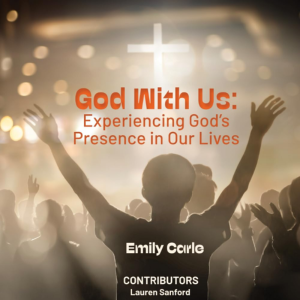
What does it mean to experience God's presence in everyday life? Is God present only during prayer and worship, or can we recognise His presence in our relationships, difficult decisions, moments of suffering, and acts of courage?
God With Us: Experiencing God's Presence in Our Lives is a youth Bible-study curriculum that explores these questions through familiar and lesser-known stories from Scripture. Associated with Mission u and United Women in Faith, the study invites young people and their leaders to look beyond traditional biblical narratives and reflect on how God's presence, or Emmanuel, can be recognised in ordinary human experiences. (Note: Verify exact cover attribution for Emily Carle alongside contributors Lauren Sanford and Nica Sy).
The eight sessions explore the stories of Mary, Hagar, Job, Esther, the Samaritan woman, Shiphrah and Puah, biblical genealogies, and Jesus' teaching about being the light of the world. Each theme offers an opportunity to consider relationships, emotions, identity, courage, community, and faith.
In this article, we explore the central message of God With Us, summarise its eight sessions with Scripture references, examine eight practical spiritual lessons, and review who will benefit most from this Bible-study resource.
Overview of the 8 Biblical Sessions
Rather than treating faith as an abstract concept, this youth Bible study curriculum grounds the meaning of Emmanuel ("God with us") in real human dilemmas. Below is a session-by-session breakdown designed for youth leaders, small groups, and individual reflection.
Session 1: Mary – Experiencing God's Presence Through Relationships
The first session explores Mary's experience of accepting God's call and how that decision affected her closest relationships, particularly her bond with Joseph and her supportive connection with Elizabeth.When facing an overwhelming calling, divine reassurance often arrives through trusted people who walk beside us. Mary's story shows young people that God's presence in the Bible is frequently experienced in community, mutual encouragement, and shared faith rather than isolation.
Read the Bible passage: Luke 1:26–56
Session 2: Hagar – Hagar and El Roi: The God Who Sees Us
Hagar's journey in the wilderness highlights what happens when someone feels rejected, powerless, and forgotten. Abandoned and alone, she encounters God not in a temple, but in the middle of despair and uncertainty.In response, Hagar names God El Roi—"the God who sees me." This session reassures youth that experiencing God's presence in everyday life includes moments of loneliness and exclusion, proving that no one is invisible to God.
Read the Bible passage: Genesis 16:1–16; Genesis 21:8–21
Session 3: Job – Finding God in Pain, Grief and Difficult Emotions
Many young people assume that strong faith requires hiding sadness, anger, or confusion. Job's story challenges that assumption by making room for raw grief, honest lament, and unanswered questions during severe suffering.
Through Job's dialogue and eventual encounter with God, the curriculum demonstrates that God does not abandon people when life hurts. Instead, honest struggle can become a doorway to deeper trust and authentic spiritual resilience.
Read the Bible passage: Job 1–2; Job 38–42
Session 4: Esther – Recognising God's Presence in Difficult Decisions
Interestingly, the Book of Esther never explicitly mentions God's name, yet divine providence shapes every turning point. Placed in a position of influence during a crisis, Esther must choose between personal safety and speaking up for her people.This session teaches students how to discern God's presence in the Bible even when He feels silent. Courageous choices, careful preparation, and standing up for others become tangible expressions of faith in action.
Read the Bible passage: Esther 4:1–17
Session 5: Samaritan Woman – Experiencing God's Grace Beyond Social Barriers
At a well in Samaria, Jesus crosses deep cultural, religious, and social divides to speak with a woman marginalised by her community. Instead of judging her past, Jesus offers living water, dignity, and genuine restoration.
This encounter shows how Emmanuel—God with us—breaks down prejudice and social labels. Transformed by grace, the Samaritan woman immediately becomes a bold witness to her entire town, illustrating how personal renewal sparks community impact.
Read the Bible passage: John 4:1–42
Session 6: Shiphrah and Puah – Faith, Courage and Standing Against Injustice
Shiphrah and Puah, two Hebrew midwives in Egypt, receive a royal decree to destroy newborn boys. Driven by reverence for God rather than fear of Pharaoh, they quietly resist oppression and protect innocent lives.
Their story reminds young readers that faithful courage does not always look loud or dramatic. Everyday integrity, moral conviction, and protecting the vulnerable reflect God's active presence in the face of injustice.
Read the Bible passage: Exodus 1:15–21
Session 7: Genealogies – Discovering God's Presence Through Generations
Biblical genealogies are often skipped during casual reading, yet Matthew's account of Jesus' family tree tells a powerful story of continuity and grace. It includes flawed leaders, outsiders, and unexpected heroes woven into God's larger plan.
Exploring these lineages helps youth see that their personal faith is connected to generations before and after them. God works steadily across history, redeeming imperfect family stories and shaping a shared spiritual heritage.
Read the Bible passage: Matthew 1:1–17
Session 8: Light of the World – Becoming a Reflection of God's Light
The final session shifts focus from recognising God's presence to carrying it outward into daily life. In the Sermon on the Mount, Jesus calls His followers the light of the world—a beacon meant to shine visibly rather than remain hidden.
For youth navigating school, friendships, and modern pressures, reflecting God's light means practising everyday compassion, honesty, and service—the very core of building meaningful spiritual habits.
Read the Bible passage: Matthew 5:14–16
8 Practical Lessons About Experiencing God's Presence
Beyond summarising the curriculum, these eight core lessons offer actionable takeaways for youth groups, families, and individual readers seeking to notice God in daily routines:
Core Lesson -> Practical Reflection for Everyday Life
1. God meets us through relationships: Look for opportunities to offer steady support to friends and receive help when overwhelmed.
2. God sees those who feel invisible: Remember Hagar's encounter with El Roi whenever you experience loneliness, rejection, or exclusion.
3. Faith allows honest emotions: Make room for grief, doubts, and lament without feeling guilty for struggling through hard seasons.
4. Courage can be an expression of faith: Consider Esther's resolve to speak up when silent compliance feels easier than doing right.
5. Grace crosses social boundaries: Follow Jesus' example with the Samaritan woman by welcoming people outside your usual circle.
6. Doing what is right requires courage: Reflect on Shiphrah and Puah by choosing integrity and protecting others when facing peer or social pressure.
7. Our stories connect across generations: Recognise how family, mentors, and church community shape your spiritual journey over time.
8. We can reflect God's light: Practise intentional kindness, empathy, and service so others experience hope through your actions.
Personal & Group Reflection Exercise
Use these four questions for journaling or small-group discussion to apply the lessons of God With Us:Where do you notice God's presence in your own life right now?In the people who support you? Think of a friend, mentor, or family member who encouraged you during a stressful week.In difficult experiences that deepen your understanding? Consider a past challenge that taught you patience, empathy, or resilience.In decisions that require courage? Identify one area where standing up for fairness or kindness feels intimidating.In opportunities to help someone else? Look for one practical way you can bring light to someone feeling overlooked today.
God With Us Review: Key Strengths and Limitations
Evaluating God With Us: Experiencing God's Presence in Our Lives requires viewing it through its intended purpose as an interactive youth Bible study curriculum rather than a traditional adult book.
What Makes This Curriculum Valuable?
Inclusivity and representation: It highlights diverse biblical figures—including Hagar, the Samaritan woman, and Shiphrah and Puah—rather than focusing solely on standard heroes.
Practical reflection and discussion: Lessons connect Scripture directly to relatable adolescent realities like identity, peer dynamics, emotional health, and moral courage.
A consistent theme of Emmanuel: Every session reinforces that God is actively present in ordinary human moments, helping students connect strengthening faith and self-belief with daily action.
Community-oriented design: Built around group dialogue, it equips facilitators to spark open, judgment-free conversations rather than one-way lectures.
Who May Benefit From It?
Young people exploring Christian faith and asking honest questions about how Scripture applies to modern life.
Youth-group leaders and Bible-study facilitators seeking structured, discussion-ready lessons with clear biblical anchors.
Churches and ministries participating in Mission u or looking for engaging small-group study material.
Families interested in exploring biblical stories and reflective questions together at home.
What Should Readers Know Before Using It?
Designed specifically for youth: The tone, pacing, and activities are tailored for young learners and youth group settings.
Discussion over deep exegesis: Its primary focus is personal reflection and group conversation rather than exhaustive historical-critical commentary.
Alternative needs: Readers seeking an in-depth adult devotional, a quiet contemplative guide for finding peace through reflection, or an academic theology textbook may prefer a different resource.
Frequently Asked Questions (FAQs)
Q1. What is God With Us: Experiencing God's Presence in Our Lives about?I
It is a youth Bible-study curriculum associated with Mission u and United Women in Faith that explores how God's presence can be recognised through biblical stories and everyday experiences. Its eight sessions examine relationships, emotions, choices, community, and spiritual identity.
Q2. Who is God With Us designed for?
The curriculum is intended for young people and their leaders. It encourages open discussion, personal reflection, and fresh perspectives on both familiar and lesser-known biblical stories.
Q3. What does Emmanuel mean in Christianity?
Emmanuel means "God with us." In Christian belief, the name expresses the promise of God's active presence among His people and is directly associated with the birth and life of Jesus Christ.
Q4. Which biblical stories are explored in God With Us?
The eight sessions explore Mary, Hagar, Job, Esther, the Samaritan woman, Shiphrah and Puah, biblical genealogies, and Jesus' teaching about being the light of the world.
Q5. Can God With Us be used for group Bible study?
Yes. Its youth-focused format is specifically built to help participants and group leaders explore Scripture together, share perspectives, and apply biblical lessons to everyday life.