
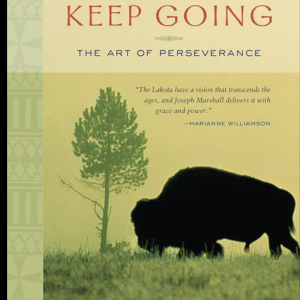
How do we find the strength to continue when life brings grief, uncertainty, or deep disappointment? In Keep Going: The Art of Perseverance, Lakota author, historian, and storyteller Joseph M. Marshall III explores this timeless question through an intimate dialogue between a grieving young man and his grandfather.
Rooted in Indigenous Lakota oral tradition, philosophy, and personal reflection, the book frames endurance not as stubborn resistance or mere grit, but as an organic, quiet renewal. It invites readers to examine how patience, humility, and ancestral perspective sustain the spirit through inevitable trials.
Below is an in-depth examination of the book’s central themes, cultural framework, narrative strengths, and everyday life applications.
Detail | Information |
Book Title | Keep Going: The Art of Perseverance |
Author | Joseph M. Marshall III |
Publisher | Sterling Ethos (Sterling Publishing Co., Inc.) |
Publication Date | 2006 (Hardcover); 2009 (Paperback Edition) |
Page Count | ~131–144 pages (edition-dependent) |
Core Themes | Perseverance, grief and healing, Lakota storytelling, generational wisdom |
Table of Contents
ToggleBook Overview: Keep Going by Joseph M. Marshall III
Joseph M. Marshall III was raised on the Rosebud Sioux Indian Reservation in South Dakota by his maternal grandparents, where he learned the Lakota language and oral traditions firsthand. In Keep Going, Marshall draws upon this upbringing to deliver a tender, contemplative guide to enduring emotional pain.
The book is structured cleanly around a framing sequence—beginning with “The Question,” transitioning through six sequential chapters (labeled simply Chapter One through Chapter Six), and resolving in a reflective “Closing.” Rather than using clinical self-help jargon, Marshall relies on parable, personal memory, and pastoral imagery to convey lasting truths.
What Is Keep Going About?
At its core, Keep Going documents an afternoon of guidance between two generations. A young man, devastated by an unbearable loss and questioning the purpose of moving forward, seeks refuge in his grandfather’s cabin. Overwhelmed by sorrow, he asks how one can possibly keep walking when hope appears entirely depleted.
Instead of dismissing the young man’s despair with empty platitudes, the grandfather honors his sorrow. Through unhurried narratives, traditional parables, and quiet observations of the natural world, the elder walks his grandson through the seasons of difficulty, illustrating that struggle is neither a punishment nor a permanent state, but an inherent dimension of human existence.
Key Themes in the Book
Perseverance Through Hardship
Perseverance in this text is stripped of modern hustle culture. The grandfather illustrates that enduring does not mean forcing progress when broken; it means refusing to surrender one’s footing entirely. Surviving a storm often means simply standing steady, bending with the gale, and waiting for the winds to pass.
Grief and Healing
Marshall treats grief as a sacred passage rather than a problem to be solved quickly. The grandfather emphasizes that sorrow must be acknowledged fully before renewal can occur. Healing requires patience, self-forgiveness, and the grace to take one hesitant step at a time without demanding immediate joy.
Lakota Wisdom and Storytelling
The book explicitly reflects Lakota philosophy, illustrating how stories function as living vessels of survival. Rather than offering abstract theoretical maxims, the grandfather uses accounts of ancestors, animal behavior, and natural cycles to demonstrate how Indigenous communities have persevered through generations of adversity.
Finding Meaning in Life’s Journey
Life is described not as a linear sprint toward a trophy, but as a circular journey woven with valleys and ridges. Meaning emerges not from avoiding rough terrain, but from how one responds to the climb. The journey itself, with all its bruises, provides character, empathy, and purpose.
What the Book Teaches About Perseverance
Modern culture frequently equates resilience with aggressive stoicism—suppressing pain, working harder, and moving forward regardless of emotional toll. Keep Going dismantles that exhausting paradigm. The teachings emphasize that true endurance requires humility, softness, and an acceptance of human vulnerability.
Marshall underscores that nature never rushes, yet everything is accomplished. Just as winter gives way to spring without force, human recovery requires seasonal patience. You do not need to leap across chasms; surviving the hardest days often means waking up, taking a quiet breath, and deciding to remain present for another sunrise.
My Review: Strengths and Limitations
Strengths
- Quiet, Poetic Authenticity: Marshall’s writing is gentle, spare, and deeply grounding, avoiding the transactional tone common in commercial self-help literature.
- Cultural Grounding: The narrative honors specific Lakota oral customs and relational worldviews without commodifying them as generic “folk wisdom.”
- Emotional Resonancy: The dialogue feels earned and personal, making the grief palpable while offering authentic, comforting perspective.
Limitations
- Gentle Pacing: Readers seeking rapid tactical exercises, cognitive frameworks, or rigid checklists will not find them here; the wisdom is woven organically into parables.
- Brief Scope: At under 150 pages, the book is an extended meditation rather than a comprehensive historical or philosophical treatise.
Related Articles


How to Apply the Book’s Lessons in Daily Life
- Honor the Stillness During Difficult Periods: When exhaustion sets in, avoid forcing immediate solutions. Give yourself permission to pause, breathe, and rest without feeling guilty about halting forward motion.
- Anchor Yourself in Daily Cycles: Look to the physical rhythm of day and night. Focus solely on carrying yourself through the current morning or afternoon rather than carrying the weight of the entire year ahead.
- Turn to Story and Perspective: During difficult seasons, speak with trusted elders, read accounts of those who survived heavy trials, or reflect on hardships you have previously outlasted. Context restores perspective.
Who Should Read Keep Going?
This book is well-suited for anyone carrying the weight of personal loss, burnout, career uncertainty, or prolonged family difficulty. It speaks to readers who feel alienated by aggressive motivational speaking and prefer contemplative, earth-centered reflection.
It is also an engaging introduction for readers interested in how Lakota storytelling preserves ethical values, family bonds, and resilience across generations.
Is Keep Going Worth Reading?
Yes. Keep Going: The Art of Perseverance is a warm, enduring companion piece for difficult seasons of life. Its brevity makes it easy to read in a single sitting, yet its reflections linger long afterward.
Joseph M. Marshall III does not promise that pain will vanish overnight, nor does he offer simple shortcuts. Instead, he offers something far more durable: the reminder that we come from resilient bloodlines, that storms run out of rain, and that taking one quiet step forward is always enough.
Final Thoughts
Keep Going: The Art of Perseverance by Joseph M. Marshall III is a masterpiece of wisdom, compassion, and cultural insight. In just over 200 pages, it offers a lifetime of lessons on how to endure, grow, and thrive in the face of life’s inevitable challenges.
It’s a book for anyone who has ever felt like giving up. For the student facing failure, the parent struggling with loss, the professional battling burnout, or the dreamer who feels unseen—this book is a companion, a teacher, and a reminder that you are not alone.
Marshall’s message is simple but profound: Keep going. Not because it’s easy, but because it’s meaningful. Not for glory, but for the quiet dignity of showing up, again and again, as long as you’re here.
In a world that often measures worth by speed and success, Keep Going teaches us to value presence, patience, and perseverance. It’s a book that doesn’t just change your mind—it can change your life.
By weaving cultural insight, personal narrative, and timeless wisdom, Keep Going earns its place as a modern classic on the art of living with courage and grace. Whether you’re facing a personal crisis or simply seeking deeper meaning, this book is a beacon—reminding us all to keep going, one step at a time.
FAQs
1. What is the main message of Keep Going: The Art of Perseverance?
The book teaches that resilience is a lifelong journey, not a sprint. Joseph M. Marshall III uses traditional Lakota wisdom and grandfatherly storytelling to show that perseverance isn’t about brute force or suppressing emotions. Instead, it’s about enduring hardship through quiet courage, active patience, and staying grounded in your life’s purpose. Even on hard days, taking a single step forward is enough to keep going.
2. How does Lakota wisdom define true perseverance?
In Lakota philosophy, perseverance goes far deeper than stubborn persistence. It requires connecting with something greater than yourself—your ancestors, community, and core values. Marshall explains that true strength involves vulnerability, asking for help, and learning to sit patiently with uncertainty. Rather than walking the road completely alone, spiritual connection and shared stories help carry you through life’s inevitable storms.
3. Is Keep Going helpful if you are dealing with burnout or emotional fatigue?
Yes, it is practically written for that. Modern society often pushes non-stop hustle, which leads to burnout and stress. Marshall challenges this mindset by framing patience as active endurance and rest as part of healing. His lessons remind you to drop self-criticism, practice self-compassion, and focus on moving forward at your own pace without comparing your journey to others.
4. Can readers without a Native American background relate to this book?
Absolutely. While the teachings are rooted in authentic Lakota culture, the life lessons apply to universal human struggles. Whether you are navigating career burnout, grief, relationship hurdles, or personal doubt, the book acts like a compassionate mentor. Marshall’s gentle stories bridge cultural gaps, offering timeless spiritual guidance that anyone facing difficult life transitions can easily adopt.
5. How can I apply Marshall’s lessons on perseverance to daily life?
Start small by honoring your personal story and accepting your feelings without judgment. When life feels overwhelming, define your deeper “why” rather than chasing surface goals. Lean into your community for support, practice patience when results take time, and remember that progress is rarely linear. Simply showing up and taking the next right step is a victory in itself.