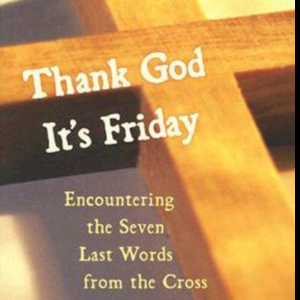
What can Jesus’ final words from the cross teach us about forgiveness, suffering, faith, and redemption? In Thank God It’s Friday: Encountering the Seven Last Words from the Cross, theologian and preacher William H. Willimon reflects on the seven sayings traditionally associated with Jesus’ final hours.
Drawing on the Gospel accounts, Willimon explores how these words challenge readers to reconsider the cross, human nature, and the core message of Christianity. In this comprehensive review and study guide, we examine the book’s central themes, biblical foundations, and practical insights for modern spiritual life.
Table of Contents
ToggleBook Overview: Thank God It’s Friday
Detail | Information |
Title | Thank God It’s Friday: Encountering the Seven Last Words from the Cross |
Author | William H. Willimon |
Publisher | Abingdon Press |
Publication Date | October 2006 |
Subject | Jesus’ final sayings from the cross, biblical interpretation, and Christian reflection |
Thank God It’s Friday is a collection of thoughtful reflections rooted in Willimon’s seasoned pulpit ministry and academic scholarship. Rather than treating Good Friday as a somber historical reenactment, Willimon presents the cross as an active, disruptive confrontation between divine love and human brokenness.
Willimon divides the book into seven chapters, dedicating each to one of Christ’s final declarations. His conversational prose balances theological precision with pastoral warmth, inviting readers to examine their vulnerabilities alongside the suffering of Christ.
What Are the Seven Last Words of Jesus?
The “Seven Last Words” refer to the seven brief sayings attributed to Jesus during his crucifixion. It is important to note that no single Gospel contains all seven declarations. Instead, they are harmonized from the separate witness accounts of the Evangelists.
Matthew and Mark record a single, agonizing lament of abandonment. Luke records three intimate prayers of mercy, promise, and trust. John records three statements addressing human relationship, physical thirst, and spiritual completion.
Taken together, these seven statements form a profound mosaic of Christ’s earthly climax. For centuries, churches have gathered on Good Friday to contemplate these sayings through prayer, music, and liturgical devotion.
The Seven Last Words and Their Biblical Meaning
“Father, forgive them”
- The biblical passage: Luke 23:32–38
- Meaning in context: As soldiers drive nails into his hands and bystanders jeer, Jesus intercedes on behalf of his executioners, declaring that their violence stems from profound spiritual blindness.
- Willimon’s interpretation: Willimon notes that Jesus’ first impulse on the cross is not anger, but scandalous pardon. Forgiveness here is not sentimental; it exposes our moral helplessness and establishes divine mercy before any apology is offered.
- Practical reflection: Who in your life feels hardest to forgive, and how does Christ’s unprompted pardon challenge your standards of reconciliation?
“Today you will be with me in paradise”
- The biblical passage: Luke 23:39–43
- Meaning in context: Flanked by two dying criminals, Jesus responds to the humble plea of one who recognizes his innocence, promising immediate entrance into God’s heavenly presence.
- Willimon’s interpretation: Willimon emphasizes the radical ease of redemption. The penitent thief brings no credentials, pious deeds, or moral reform—only a raw plea for remembrance that Jesus answers with immediate grace.
- Practical reflection: Do you secretly attempt to earn God’s favor through moral achievement rather than simply receiving his gift of grace?
“Behold your son”
- The biblical passage: John 19:25–27
- Meaning in context: Looking down at his weeping mother and John, the beloved disciple, Jesus entrusts Mary to John’s care, forging a new bond of mutual protection.
- Willimon’s interpretation: For Willimon, the cross actively reconstitutes the meaning of family. Jesus forms the Church at Calvary: an adoptive fellowship bound not by biology, but by shared allegiance to the crucified Lord.
- Practical reflection: How can your local church community better function as a supportive family for those experiencing grief, isolation, or estrangement?
“My God, why have you forsaken me?”
- The biblical passage: Matthew 27:45–46 (see also Psalm 22:1; Mark 15:33–34)
- Meaning in context: Crying out in Aramaic during midday darkness, Jesus vocalizes the raw opening words of Psalm 22, taking on the terrifying reality of sin and divine abandonment.
- Willimon’s interpretation: Willimon rejects simplistic explanations that soften this cry. Jesus genuinely enters our deepest godforsaken spaces. Even in absolute desolation, Christ directs his anguish toward God rather than turning away into nihilism.
- Practical reflection: When you walk through periods of spiritual dryness or silence, can you voice your honest pain to God as an act of faith?
“I thirst”
- The biblical passage: John 19:28–29
- Meaning in context: Acknowledging severe dehydration and fulfilling Messianic prophecy, Jesus voices his raw bodily need before receiving a sponge dipped in cheap sour wine.
- Willimon’s interpretation: Willimon sees this as the ultimate vindication of the Incarnation. God does not remain an abstract philosopher; he bleeds, cramps, parches, and aches. Christ’s thirst mirrors God’s intense desire for reconciled humanity.
- Practical reflection: In what ways can caring for the basic physical needs of others serve as a direct expression of your devotion to Christ?
“It is finished”
- The biblical passage: John 19:30
- Meaning in context: With his final breath, Jesus proclaims the Greek word tetelestai—a commercial and legal term signifying a debt paid in full and an assigned task successfully completed.
- Willimon’s interpretation: Rather than a whimper of defeat, Willimon reads this as a shout of victory. The redemptive mission is complete; human salvation rests entirely on what Christ has accomplished, leaving nothing for us to add.
- Practical reflection: Are you still carrying burdens of guilt or self-justification that Christ has already declared settled and paid in full?
“Into your hands I commend my spirit”
- The biblical passage: Luke 23:44–46 (quoting Psalm 31:5)
- Meaning in context: Having endured the physical and spiritual trial of the crucifixion, Jesus closes his life by deliberately entrusting his spirit into the care of his loving Father.
- Willimon’s interpretation: Willimon observes that Jesus dies praying the evening prayer taught to Jewish children. Surrender to God is not an admission of weakness, but the ultimate act of courageous trust.
- Practical reflection: What control, relationship, or long-term plan do you need to entrust into God’s faithful hands today?
Related Articles

How William H. Willimon Interprets the Seven Words
Willimon approaches these seven sayings not as dry ethical maxims, but as divine interruptions into our daily lives. He continuously refuses to let readers reduce the crucifixion to comfortable sentimentality or abstract dogma.
Instead, Willimon highlights the paradox of the cross: power revealed through vulnerability, majesty disguised in shame, and salvation accomplished through sacrificial death. His interpretations push past surface devotion to expose human pride and self-sufficiency.
Throughout the book, Willimon writes with a distinctively prophetic voice. He calls the Church out of cultural complacency, reminding believers that following a crucified Lord requires personal surrender and everyday cross-bearing.
Key Themes: Forgiveness, Suffering, Grace and Redemption
Four biblical themes anchor both the scriptural narratives and Willimon’s exposition:
- Forgiveness as Divine Initiative: Forgiveness flows outward before anyone repents, establishing grace as an unearned gift rather than a reward for good behavior.
- The Reality of Suffering: The Gospel accounts do not shield Jesus from agonizing physical and psychological trauma, affirming that God enters human grief from the inside.
- Radical Grace: From pardoning executioners to rescuing a dying thief, the cross dismantles social hierarchies and self-righteousness.
- Definitive Redemption: Christ’s final declarations affirm that reconciliation between God and humanity is decisive, secure, and eternally finished.
Book Review: Strengths and Limitations
What Works Well
Willimon’s greatest strength is his rare gift for translating theological concepts into compelling, down-to-earth prose. His background as a United Methodist bishop and Duke University chapel dean brings rich homiletical rhythm to every chapter.
The book excels at linking ancient biblical texts to contemporary moral struggles. Willimon avoids dry academic analysis, preferring vivid pastoral illustrations that make readers feel the immediate weight of the crucifixion scene.
What Readers May Find Challenging
Readers seeking an exhaustive verse-by-verse historical commentary may find the book brief and homiletical rather than analytical. Willimon frequently relies on sermon-style anecdotes rather than formal Greek word studies.
Additionally, Willimon’s provocative, anti-complacency tone may challenge Christians accustomed to sweeter, purely devotional Holy Week literature. He directly confronts self-satisfied religiosity, which might unsettle readers looking for purely comforting reflections.
Who Should Read It
- Preachers and Worship Leaders: An excellent source of inspiration for Holy Week preaching and Good Friday Tenebrae services.
- Small Groups and Bible Studies: Short, standalone chapters make it well-suited for a seven-week Lenten curriculum.
- Curious Seekers and Believers: Anyone wanting a deeper, mature look at the theology of the cross will find it clear and spiritually nourishing.
What Christians Can Learn from the Seven Last Words
Studying Jesus’ final words anchors Christian identity in the reality of sacrificial love. These sayings reveal how believers ought to pray, forgive, handle physical frailty, and face mortality.
Christ’s cross reminds us that vulnerability is not the opposite of divine power, but the chosen vessel for it. When believers echo Jesus’ prayers, they learn to lament without despair and forgive without bitterness.
Ultimately, these sayings redirect our focus from self-preservation to self-giving service. They invite the Church to walk alongside the suffering, embody reconciliation, and trust God in life’s darkest hours.
Is Thank God It’s Friday Worth Reading?
Yes. Thank God It’s Friday is a valuable, refreshing contribution to Lenten and Holy Week literature. William H. Willimon manages to make ancient, familiar sayings feel immediate and deeply personal.
The book is accessible enough to finish over a weekend, yet theological enough to prompt long-term introspection. It challenges Christians to look squarely at Calvary and rediscover the costliness of divine grace.
Whether preparing for Good Friday services or refreshing your personal prayer life, Willimon’s reflections provide pastoral wisdom, scriptural clarity, and spiritual depth.
FAQ – Thank God It’s Friday
What is the main message of Thank God It’s Friday by William H. Willimon?
The book explores the Seven Last Words of Jesus to reveal how the cross disrupts human pride and offers radical grace. William H. Willimon shows that Good Friday is not a passive historical tragedy, but an active demonstration of divine love. Through Christ’s final sayings, readers are challenged to embrace unmerited forgiveness, honest prayer, and sacrificial faith in their everyday Christian walk.
Are the Seven Last Words of Jesus found in a single Gospel?
No single Gospel lists all seven sayings together. Matthew and Mark record the cry of spiritual forsakenness, Luke shares three prayers of pardon and trust, and John preserves three intimate statements addressing relationship and completion. The Church harmonizes these separate Gospel accounts to form the traditional Seven Last Words, providing a complete picture of Jesus’ final hours on the cross.
Is Thank God It’s Friday suitable for personal Lenten devotion or small group study?
Yes, it works exceptionally well for both. Because the book is organized into seven concise, self-contained chapters—one for each word from the cross—readers can easily pace themselves through a seven-week Lenten devotional. Small groups and Bible studies will also find Willimon’s provocative questions and pastoral insights ideal for weekly discussion and personal spiritual reflection.
Why does Willimon interpret Christ’s cry of thirst as deeply significant?
Willimon emphasizes that “I thirst” affirms the reality of the Incarnation. God did not remain an abstract, distant deity; in Jesus, God experienced bodily weakness, dehydration, and human frailty on the cross. For Willimon, this physical cry connects Jesus directly to human suffering and mirrors God’s deep spiritual thirst for reconciliation with broken humanity.
Who will benefit most from reading Thank God It’s Friday?
Pastors preparing Holy Week and Good Friday sermons will appreciate Willimon’s homiletical depth and fresh pastoral illustrations. Lay Christians seeking more than surface-level devotion will also benefit, as the book avoids sentimental clichés. If you want an accessible, thoughtful study of Jesus’ final sayings that links biblical theology to modern discipleship, this book is well worth reading.