
Table of Contents
ToggleThe Art of Letting Go: Find True Inner Peace (2026)
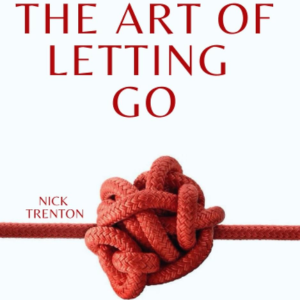
“The Art of Letting Go: Stop Overthinking, Stop Negative Spirals, and Find Emotional Freedom” by Nick Trenton is a psychology-based self-help book designed to help people free themselves from mental clutter and emotional suffering. The book focuses on practical strategies to reduce overthinking, silence the inner critic, and cultivate a calmer mindset. Trenton, who holds a background in behavioral psychology, combines psychological research with simple everyday exercises that readers can easily apply in their lives.
The central premise of the book is simple yet powerful: your mind should be your safe place, not the loudest and most chaotic environment you experience daily. Many people live trapped in cycles of rumination, anxiety, and negative thinking. They replay past mistakes or obsess over uncertain futures. According to Trenton, these mental loops are the main reason people feel emotionally exhausted.
The book argues that emotional freedom is not achieved by controlling everything in life. Instead, it comes from learning what to release. When you stop clinging to regrets, expectations, and perfectionism, the mind naturally becomes lighter and more peaceful.
Nick Trenton structures the book into several practical chapters that gradually teach readers how to let go. These chapters explore ideas like the dichotomy of control, nonjudgmental thinking, self-distancing, growth mindset, and psychological reframing techniques. The techniques are simple yet effective, offering a toolkit for dealing with stress, negativity, and toxic emotional patterns.
The ultimate goal of the book is not just stress reduction. Trenton wants readers to rebuild their internal dialogue and create a healthier relationship with their thoughts.
Why Letting Go Is the Key to Emotional Freedom
Before diving into the chapter breakdown, it’s important to understand the philosophy behind the book. According to Trenton, most emotional pain is created not by events themselves but by our interpretation of those events.
Think about a simple example. Two people lose their jobs. One views it as a disaster and spirals into anxiety. The other sees it as an opportunity for change. The situation is the same, yet the emotional response is completely different.
This is why Trenton emphasizes mental flexibility and emotional detachment. Humans tend to cling tightly to control, certainty, and perfection. When life inevitably becomes unpredictable, we feel overwhelmed.
One of the central themes of the book is that overthinking is a survival mechanism gone wrong. Our brains evolved thousands of years ago to detect threats quickly. In modern life, however, this mechanism causes unnecessary worry about emails, relationships, careers, and social status.
Letting go does not mean becoming passive or indifferent. Instead, it means:
- Accepting uncertainty
- Releasing unrealistic expectations
- Observing thoughts without reacting to them
Once people learn this skill, they gain mental clarity and emotional resilience. Instead of reacting impulsively, they begin responding thoughtfully.
Chapter 1 – The Art of Letting Go
Dichotomy of Control
The first major concept introduced in the book is the dichotomy of control, a principle borrowed from Stoic philosophy. The idea is straightforward: some things are within our control, and some are not. Understanding this difference is essential for emotional peace.
Things within our control include:
- Our thoughts
- Our actions
- Our responses
- Our attitudes
Things outside our control include:
- Other people’s opinions
- Past events
- The future
- External circumstances
Most stress arises because people waste energy trying to control things they cannot influence. For instance, worrying about how others perceive you is pointless because you cannot fully control their judgment.
Trenton encourages readers to develop a habit of asking one simple question: “Is this within my control?”
If the answer is yes, take action.
If the answer is no, practice acceptance.
This simple mindset shift dramatically reduces anxiety and mental exhaustion.
Nonjudgmental Thinking
Another powerful concept discussed in the chapter is nonjudgmental thinking. This technique encourages individuals to observe their thoughts without labeling them as “good” or “bad.”
Many people fall into the trap of judging themselves constantly. They criticize their emotions, their mistakes, and even their thoughts. Ironically, this self-criticism only strengthens negative thinking.
Nonjudgmental thinking works like mindfulness meditation. Instead of fighting thoughts, you simply notice them.
For example:
Instead of thinking
“I shouldn’t feel anxious.”
You observe:
“I notice that anxiety is present.”
This subtle shift creates psychological space. It prevents thoughts from escalating into emotional storms.
Self-Distancing
The third technique introduced is self-distancing. This involves mentally stepping back from your emotions and viewing them from an outsider’s perspective.
Imagine watching your thoughts like a movie instead of being trapped inside them.
Self-distancing helps reduce emotional intensity because it creates separation between you and your thoughts.
Some practical techniques include:
- Writing thoughts in third person
- Imagining advice you would give a friend
- Taking a physical break from stressful situations
By distancing yourself, you gain clarity and rational thinking.
Chapter 1 Key Takeaways
This chapter establishes the mental framework for the rest of the book.
Key lessons include:
- Focus on what you can control
- Observe thoughts without judgment
- Create distance from overwhelming emotions
These three ideas serve as the foundation for emotional freedom.
Chapter 2 – Breaking the Chains of Negativity
Letting Go of Your Inner Critic
One of the most destructive mental patterns is the inner critic. This internal voice constantly tells you that you are not good enough.
The problem is that many people assume this voice is truth.
Trenton explains that the inner critic is simply a learned mental habit, often formed through childhood experiences, social comparison, or cultural pressure.
Instead of silencing it completely, the goal is to recognize it without believing it.
Once you detach from this voice, its power fades. Trenton’s emphasis on outcome independence closely mirrors ancient spiritual wisdom on non-attachment, teaching us to act with full commitment while releasing the need to control results.
From Perfectionism to Excellentism
Perfectionism is another major theme in the book. Trenton explains that perfectionism is not a sign of high standards. Instead, it is often rooted in fear of failure.
Perfectionists believe they must perform flawlessly to be worthy of success or approval.
The book introduces the idea of excellentism instead.
Perfectionism | Excellentism |
Fear-driven | Growth-driven |
Avoids mistakes | Learns from mistakes |
Unrealistic standards | High but flexible standards |
By embracing excellentism, individuals maintain ambition while allowing room for growth.
Practicing Non-Attachment
Another key idea in the chapter is non-attachment, which means not defining your identity by outcomes.
For example:
Instead of saying
“I failed, therefore I am a failure.”
You recognize
“This outcome didn’t work out.”
Non-attachment allows people to pursue goals without being emotionally devastated by setbacks.
Curating Your Media Consumption
Trenton also highlights the importance of media consumption.
Modern media feeds the brain with negativity, outrage, and unrealistic comparisons. Social media especially fuels insecurity and perfectionism.
Curating media consumption means intentionally choosing what information you expose yourself to.
This includes:
- Limiting social media
- Avoiding toxic news cycles
- Following positive content creators
Small changes in media habits can significantly improve mental health.
Chapter 2 Key Takeaways
Key lessons include:
- The inner critic is not truth
- Perfectionism creates unnecessary pressure
- Non-attachment helps build resilience
- Media consumption influences mental health
Chapter 3 – The Growth Mindset
Embracing Change
Change is one of the most uncomfortable experiences for humans. Our brains crave stability and predictability.
However, growth always requires change.
Trenton encourages readers to adopt a growth mindset, which views challenges as opportunities rather than threats.
Instead of asking
“Why is this happening to me?”
Ask
“What can I learn from this?”
Shifting from a scarcity mindset to an expansive growth mindset can be accelerated through a regular gratitude meditation practice that gently redirects mental energy. This mindset turns obstacles into stepping stones.
Brain Dumping
One practical technique discussed in the chapter is brain dumping.
Brain dumping simply means writing down all your thoughts without filtering them.
When thoughts remain inside your head, they often loop endlessly. Writing them down creates mental space and clarity.
Benefits include:
- Reduced anxiety
- Clearer thinking
- Improved decision-making
It’s like decluttering a messy room — except the room is your mind.
Chapter 3 Key Takeaways
Important lessons include:
- Growth requires embracing change
- Challenges can be learning opportunities
- Brain dumping helps organize chaotic thoughts
Chapter 4 – Psychological Strategies for Letting Go
Letting Go of Negative Self-Scripts
Many people live according to negative self-scripts, which are unconscious beliefs about who they are.
Examples include:
- “I’m bad at relationships.”
- “I always fail.”
- “I’m not confident.”
These scripts become self-fulfilling prophecies.
Trenton encourages readers to challenge these narratives and rewrite them.
Externalization (Narrative Therapy)
Externalization is a technique used in narrative therapy. Instead of identifying with a problem, you separate yourself from it.
For example:
Instead of saying
“I am anxious.”
You say
“I am experiencing anxiety.”
This subtle shift reduces shame and makes problems easier to manage.
Chapter 4 Key Takeaways
The chapter teaches readers to:
- Identify harmful beliefs
- Rewrite personal narratives
- Separate identity from problems
Chapter 5 – Moving Beyond the Hurt
Break Free from Toxic People
Toxic relationships often drain emotional energy.
Trenton emphasizes the importance of recognizing toxic behaviors such as:
- Manipulation
- Constant criticism
- Emotional control
Sometimes letting go means setting boundaries or walking away entirely.
Learn to Forgive
Forgiveness is another key step in emotional freedom.
Holding grudges keeps people mentally connected to painful experiences.
Forgiveness does not excuse harmful behavior. Instead, it frees the person holding the resentment.
Letting Go of Resentment Through Perspective-Taking
Perspective-taking helps reduce anger by encouraging empathy.
When you understand the motivations or struggles of others, resentment often softens.
This doesn’t justify wrongdoing, but it reduces emotional suffering.
Chapter 5 Key Takeaways
Key lessons include:
- Protect your emotional boundaries
- Forgiveness is a form of self-healing
- Perspective reduces resentment
Related Articles


Summary Guide of the Book
Here is a simplified guide to the book’s core ideas:
Principle | Meaning |
Dichotomy of Control | Focus on what you can control |
Nonjudgmental Thinking | Observe thoughts without labeling |
Self-Distancing | Step back from emotions |
Excellentism | Replace perfectionism with growth |
Brain Dumping | Write thoughts to clear mental clutter |
Externalization | Separate identity from problems |
These techniques work together to help readers achieve emotional clarity and peace.
Final Review — What Message Nick Trenton Wants to Convey
Nick Trenton’s message throughout the book is simple yet profound:
Peace does not come from controlling everything. It comes from letting go.
Most people spend their lives trying to eliminate uncertainty, avoid mistakes, and control outcomes. Ironically, this effort creates more stress.
The book teaches that emotional freedom comes from:
- Accepting uncertainty
- Observing thoughts without judgment
- Releasing unrealistic expectations
- Practicing compassion toward yourself
The real power of the book lies in its practicality. Instead of abstract philosophy, Trenton provides actionable tools that readers can apply immediately.
Ultimately, “The Art of Letting Go” is a guide to building a calmer mind and a healthier relationship with your thoughts.
Conclusion
“The Art of Letting Go” is a powerful self-help book that teaches readers how to escape the trap of overthinking and negative spirals. Through psychological strategies such as the dichotomy of control, nonjudgmental thinking, and self-distancing, Nick Trenton provides a roadmap for emotional freedom.
The book shows that letting go is not weakness. It is a skill — one that allows people to focus on what truly matters in life.
By practicing the techniques discussed in the book, readers can develop resilience, clarity, and inner peace.
FAQs
Q1. What is the core lesson behind The Art of Letting Go?
A: At its heart, The Art of Letting Go shows that true emotional freedom doesn’t come from controlling every outcome, but from releasing mental clutter. Instead of spiraling into overthinking and perfectionism, the book teaches you to detach from negative self-talk and focus strictly on what is in your control so your mind becomes a calm, peaceful space.
Q2. How does the “dichotomy of control” help reduce daily anxiety?
A: The dichotomy of control is a simple Stoic mindset that separates life into things you can control (your actions, thoughts, and attitudes) and things you cannot (other people’s opinions or the future). By directing your energy only toward your own choices and practicing acceptance for the rest, you eliminate unnecessary stress and emotional exhaustion.
Q3. How is “excellentism” better than striving for perfectionism?
A: Perfectionism is rooted in the fear of failure, leading to rigid, unrealistic standards that cause chronic burnout. In contrast, “excellentism” is growth-driven. It encourages you to aim high and deliver quality work while staying flexible enough to make mistakes, learn from setbacks, and maintain a healthy, balanced relationship with your goals.
Q4. What is “brain dumping,” and how does it stop mental spirals?
A: Brain dumping is a quick journaling exercise where you write down every thought racing through your mind without editing or judging it. When thoughts remain trapped in your head, they create endless worry loops. Transferring them onto paper declutters your mental space, breaks negative spirals, and brings instant clarity to your day.
Q5. How do psychological strategies like externalization help you let go?
A: Externalization helps you separate your true self from your emotional struggles. Instead of identifying with an emotion by saying “I am anxious,” you reframe it as “I am experiencing anxiety.” This subtle shift creates psychological distance, lowers self-criticism, and makes it much easier to process heavy feelings without letting them define who you are.