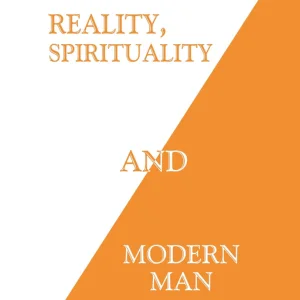
Reality, Spirituality and Modern Man by Dr. David R. Hawkins addresses core human inquiries: What constitutes ultimate reality? How do our perceptions distort truth? What role does consciousness play in everyday modern life?
Building on his renowned body of work, Hawkins examines the friction between linear human intellect and non-linear spiritual awareness. This comprehensive guide breaks down the book’s core themes, foundational models, practical applications, and editorial critiques to help you evaluate Hawkins’ unique metaphysical framework.
Table of Contents
ToggleAbout the Author: David R. Hawkins, MD/PhD
Dr. David R. Hawkins was a renowned psychiatrist, spiritual teacher, and researcher in the field of consciousness. His work bridges science and spirituality, offering a unique framework for understanding human behavior, perception, and enlightenment. Hawkins dedicated his life to mapping the terrain of human consciousness.
Book at a Glance
Attribute | Details |
Title | Reality, Spirituality and Modern Man |
Author | David R. Hawkins, M.D., Ph.D. |
Publisher | Hay House / Veritas Publishing |
Original Publication | 2008 |
Genre | Spirituality, Non-Duality, Philosophy of Mind |
Core Themes | Ego mechanics, calibration of truth, subjective vs. objective reality |
What Is Reality, Spirituality and Modern Man About?
At its foundation, Reality, Spirituality and Modern Man bridges ancient mystical wisdom and contemporary life. Hawkins argues that modern civilization struggles because it relies excessively on linear, intellectual logic while neglecting the non-linear essence of consciousness.
The book serves as both a philosophical examination and an existential compass. Hawkins analyzes how individual and collective illusions shape human society, politics, and religious paradigms. Rather than offering abstract dogma, the text urges seekers to transcend the deceptive filters of ego-based perception to access spiritual discernment.
Key Teachings of David R. Hawkins
The Illusion of Objective Perception
A fundamental premise in the text is that humans rarely experience reality directly. Instead, we perceive a sensory interpretation filtered through personal conditioning, emotional agendas, and ego defense mechanisms. Hawkins asserts that what the average person terms “objective reality” is often subjective projection.
The Mechanics of the Ego
Hawkins frames the ego not as an enemy to be brutally destroyed, but as an evolutionary mechanism designed for survival. The modern problem arises when identity becomes fused with this survival apparatus. By observing the ego’s cravings for control, righteousness, and validation, the spiritual seeker gradually detaches from its limitations.
Discerning Truth from Falsehood
In an era dominated by information overload and ideological conflict, Hawkins emphasizes spiritual discernment. He challenges modern intellectualism, proposing that authentic truth cannot be deduced purely through mental debate; it must be recognized through refined spiritual awareness.
Understanding Hawkins’ Map of Consciousness
Throughout his literature, Hawkins references the Map of Consciousness, a logarithmic scale ranging from 1 to 1,000 intended to represent various levels of awareness.
In Reality, Spirituality and Modern Man, this map helps categorize human behavior:
- Below 200: Force-based fields characterized by survival instincts, fear, anger, pride, and guilt.
- 200 (The Threshold of Courage): The critical transition point where personal responsibility and integrity emerge.
- Above 200: Power-based fields marked by neutrality, willingness, acceptance, and reason.
- 500 and Above: States rooted in unconditional love, joy, peace, and ultimate non-dual realization.
Editorial Note: While Hawkins described this scale through applied kinesiology, it remains a philosophical and spiritual model rather than a peer-reviewed scientific taxonomy. Readers gain the most value by using it as a reflective mirror for self-observation.
Science vs. Spiritual Interpretation
One of the strengths of Hawkins’ work is his attempt to speak to contemporary minds. However, modern readers benefit from distinguishing between verified natural science and spiritual metaphysics:
- Consciousness and the Brain: Hawkins posits consciousness as an infinite field independent of biological hardware. Neuroscience currently studies consciousness as deeply correlated with neurological function.
- Quantum Terminology: The author frequently invokes principles from quantum mechanics and non-linear dynamics to articulate mystical unity. In rigorous physics, these phenomena apply primarily to subatomic systems, making their spiritual application an evocative analogy rather than empirical proof.
- Vibrational Frequencies: Hawkins often uses terms like “energetic frequencies” metaphorically to represent emotional states, not as measurable electromagnetic radiation on standardized lab equipment.
Acknowledging these distinctions does not diminish Hawkins’ spiritual insights; rather, it preserves analytical integrity while exploring non-physical concepts.
Related Articles


What Can Readers Apply to Everyday Life?
Hawkins’ text is intensely practical when treated as an inner discipline.
Surrendering the Need to Be “Right”
The ego thrives on defending viewpoints. A direct application from the book is noticing the sudden surge of defensiveness during everyday debates and deliberately letting go of the demand to win or convince others.
Shifting from Blame to Responsibility
Instead of interpreting circumstances through victimhood, Hawkins encourages viewing external challenges as opportunities to clean up inner reactions. Taking radical accountability for your inner state shifts consciousness above the 200 threshold.
Cultivating Non-Judgmental Awareness
Practice viewing interpersonal conflict with compassionate detachment. Recognizing that people act from their present level of awareness reduces resentment and fosters emotional stability.
Strengths and Limitations of the Book
Strengths
- Uncompromising Depth: Hawkins provides a clear framework for non-dual spirituality without retreating into vague cliches.
- Relevant to Modern Dilemmas: It directly addresses contemporary culture, politics, and consumerism through an awareness-first lens.
- Practical Introspection: Offers powerful conceptual tools for understanding emotional triggers and ego attachments.
Limitations
- Kinesiological Premise: Hawkins relies on muscle-testing as an infallible indicator of objective truth, an assertion not supported by mainstream scientific methodology.
- Dogmatic Tone in Later Chapters: The prose can occasionally shift from contemplative inquiry to authoritative assertions regarding historical events and political systems.
Who Should Read This Book?
- Dedicated Seekers of Non-Duality: Readers who appreciate Advaita Vedanta, A Course in Miracles, or the works of Eckhart Tolle and Ramana Maharshi.
- Students of Human Psychology: Anyone fascinated by the intersection of psychological defense mechanisms and transcendent awareness.
- Readers Familiar with Hawkins: Those who have read Power vs. Force or The Eye of the I and want Hawkins’ mature synthesis on modern socio-spiritual landscapes.
Who might skip it? Strict materialists seeking empirical laboratory proof of non-local consciousness, or readers seeking light, introductory self-help.
Final Thoughts
If you’re ready to take your spiritual journey seriously, what is Reality, Spirituality and Modern Man should be at the top of your reading list. It’s not a passive read; it’s a catalyst for change. Let it challenge you, provoke you, and ultimately transform you.
As Dr. Hawkins once said:
“The greatest tragedy in life is not death, but a life lived in fear and illusion.”
Let this book be your invitation to live fully, consciously, and authentically.
FAQs
What is the core message of Reality, Spirituality and Modern Man?
In Reality, Spirituality and Modern Man, Dr. David R. Hawkins explores how human perception is clouded by the ego. The central message is that modern society relies too heavily on linear, intellectual logic. By transcending these mental filters and understanding consciousness, readers can move beyond subjective illusions and align with authentic spiritual truth in everyday life.
How does David R. Hawkins’ Map of Consciousness work in this book?
The Map of Consciousness is Hawkins’ logarithmic scale ranging from 1 to 1,000, categorizing human awareness from fear and anger up to unconditional love and enlightenment. In this book, it serves as a self-reflective framework rather than a clinical tool, helping seekers identify ego traps, overcome emotional reactivity, and consciously choose higher states of integrity.
Is Reality, Spirituality and Modern Man a good starting point for beginners?
While the book offers valuable insights for any seeker, beginners might find it dense. It builds heavily on concepts introduced in Hawkins’ earlier work, Power vs. Force. If you are new to Hawkins’ teachings on consciousness, reading an introductory summary or his earlier titles first can help you better grasp his philosophical frameworks.
Are the concepts in Reality, Spirituality and Modern Man scientifically proven?
No, Hawkins’ models are metaphysical and spiritual frameworks rather than peer-reviewed science. Although Dr. Hawkins held conventional psychiatric credentials, his theories on consciousness calibrations, energetic frequencies, and applied kinesiology represent philosophical perspectives. Readers gain the most value by approaching them as reflective spiritual models rather than established empirical facts.
What practical lessons can I apply from Reality, Spirituality and Modern Man?
The most practical takeaway is observing the ego instead of identifying with it. You can immediately apply Hawkins’ teachings by surrendering the need to win arguments, taking full accountability for your emotional reactions, and letting go of hidden resentments. Shifting from blame to compassion helps elevate personal awareness in daily modern interactions.