
Table of Contents
ToggleTake It Easy Osho: Find Zen Inner Peace in 2026

In a world obsessed with productivity, deadlines, and endless hustle, Osho’s Take It Easy: Talks on Zen Buddhism emerges as a soothing balm for the weary soul. This transformative book invites readers to pause, breathe, and rediscover the art of living fully in the present moment. Osho, the enigmatic spiritual teacher known for blending ancient wisdom with modern insights, distills the essence of Zen Buddhism into profound yet accessible teachings. Through a series of talks, he guides readers toward inner peace, urging them to “take it easy” as a radical act of self-liberation.
This blog post serves as a comprehensive summary and review of Take It Easy , diving deep into its core themes, philosophical underpinnings, and practical applications. Whether you’re new to Zen Buddhism or a seasoned seeker, this exploration will illuminate Osho’s vision for embracing life with mindfulness, simplicity, and joy.
About the Author: Osho – The Rebel Mystic
Before delving into the book, it’s essential to understand the man behind the teachings. Osho Rajneesh (1931–1990) was an Indian mystic, philosopher, and spiritual leader whose unorthodox approach to spirituality challenged conventional norms. Known for his sharp intellect and provocative style, Osho drew inspiration from diverse traditions—Buddhism, Taoism, Sufism, and existentialism—while addressing contemporary issues like stress, anxiety, and the search for meaning.
His talks, later transcribed into books, emphasize meditation, self-awareness, and the dissolution of ego. Take It Easy, part of his vast literary legacy, reflects his belief that true happiness arises not from striving but from surrendering to the flow of life.
Book Overview: What Is Take It Easy About?
Take It Easy is a compilation of discourses delivered by Osho, structured as a dialogue between the author and his audience. The book’s central thesis is simple yet revolutionary: life becomes effortless when we stop resisting it. Drawing from Zen parables, Osho illustrates how attachment to outcomes, overthinking, and the need for control create suffering. Instead, he advocates for a life lived with “relaxed awareness,” where one acts fully in the present without clinging to the past or future.
The book is divided into thematic sections, each addressing a facet of Zen philosophy. Let’s explore these sections in detail.
Section 1: The Art of Letting Go
Key Message: Surrender Is Strength
Osho opens the book by challenging the Western ideal of “fighting” for success. He argues that struggle stems from our refusal to accept life as it is. Using Zen koans (paradoxical riddles used to provoke enlightenment), he demonstrates how clinging to desires and fears traps us in a cycle of dissatisfaction.
One story recounts a monk who spends years trying to “attain” enlightenment, only to realize it was always within him. Osho uses this to emphasize that peace isn’t something to be earned—it’s our natural state. Letting go isn’t passive resignation but an active choice to trust life’s unfolding.
Practical Takeaway:
- Practice “witnessing” your thoughts without judgment.
- Replace “I must” with “I choose” to reclaim agency without pressure.
Section 2: Mindfulness and the Power of Now
Key Message: Be Here, Now
Zen Buddhism prioritizes mindfulness , and Osho expands on this by urging readers to anchor themselves in the present. He critiques the modern habit of multitasking, which fragments attention and breeds anxiety. Instead, he proposes doing one thing at a time with total involvement—whether sipping tea, walking, or listening.
A poignant anecdote involves a swordsman who achieves mastery not through force but by being utterly present in each moment of combat. Osho draws a parallel to daily life: when we focus fully on the task at hand, we tap into a reservoir of energy and clarity.
Practical Takeaway:
- Try “mindful pauses” throughout the day to check in with your breath.
- Engage your senses fully during routine activities (e.g., notice the texture of food, the sound of footsteps).
Related Articles
Section 3: The Illusion of Control
Key Message: Life Cannot Be Managed
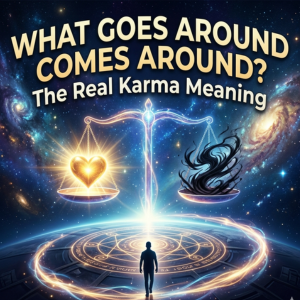
Osho confronts the myth of control head-on. He argues that our attempts to micromanage life lead to frustration because reality is inherently unpredictable. Quoting Zen master Bankei, he writes, “The Unborn is the source of all creation—flow with it, and you’ll never struggle.” Often, the struggle to control life stems from a misunderstanding of our path; you can learn more about navigating these cycles in The Karmic Journey: A Guide to Understanding & Transforming Karma.
This section resonates deeply in today’s age of overplanning and fear of uncertainty. Osho uses the metaphor of a river: trying to control its course creates turbulence, but floating with the current leads to harmony.
Practical Takeaway:
- Distinguish between what you can and cannot control.
- Use affirmations like “I release what I cannot change” to cultivate acceptance.
Section 4: The Trap of Thinking
Key Message: Silence the Inner Chatter
The mind, Osho warns, is both a tool and a tyrant. While analytical thinking has its place, overthinking becomes a prison. He cites the Zen story of a student who asks his teacher, “How can I stop doubting?” The teacher replies, “Who is doubting?” This shifts the student’s focus from the content of thoughts to the observer behind them.
Osho introduces meditative techniques to transcend mental noise, such as dynamic meditation and laughter therapy. By observing thoughts without identification, we realize we are not our minds—we are the consciousness witnessing them.
Practical Takeaway:
- Set aside 10 minutes daily for silent meditation.
- Journal to externalize overwhelming thoughts and gain perspective.
Section 5: Love and Compassion in Action
Key Message: Serve Without Attachment
While Take It Easy focuses on inner peace, Osho doesn’t advocate detachment from the world. Instead, he redefines compassion as action rooted in love, not obligation. He shares the story of a healer who treats patients selflessly, finding joy not in outcomes but in the act of caring itself. Osho’s focus on serving without attachment mirrors the concept of Karma Yoga, which we explore in detail in our article on Bhagavad Gita Chapter 3.
This aligns with the Zen concept of “no-self” (anatta) —recognizing interconnectedness and acting without egoic motives. Osho challenges readers to serve others not to “fix” them but to share in their humanity.
Practical Takeaway:
- Practice small acts of kindness without expecting gratitude.
- Listen deeply to others without interrupting or judging.
Section 6: Death as a Teacher
Key Message: Embrace Impermanence
A surprising yet vital theme in Take It Easy is the role of death in shaping life. Osho encourages readers to contemplate mortality not as a morbid exercise but as a way to appreciate the present. He references the Zen practice of memento mori (“remember you must die”), which fosters gratitude for each moment.
By accepting impermanence, we stop postponing joy and learn to live fully. As Osho puts it, “Die to the past every moment, and be reborn anew.”
Practical Takeaway:
- Reflect daily on what truly matters to you.
- Release grudges and unresolved conflicts to avoid carrying emotional baggage.
Section 7: Meditation: The Gateway to Freedom
Key Message: Know Thyself Through Meditation
No Osho book would be complete without a deep dive into meditation. In Take It Easy , he presents meditation not as a religious ritual but as a scientific method to explore consciousness. He outlines several techniques, including:
- Dynamic Meditation: A high-energy practice to release suppressed emotions.
- Chakra Meditation: Focusing on energy centers to awaken spiritual potential.
- Walking Meditation: Turning movement into a meditative act.
Osho insists that meditation isn’t about achieving trance-like states but about cultivating awareness that permeates daily life.
Practical Takeaway:
- Experiment with different meditation styles to find what resonates.
- Integrate mindfulness into mundane tasks (e.g., washing dishes, driving).
Section 8: The Joy of Doing Nothing
Key Message: Rest Is Not Laziness
In a culture that glorifies busyness, Osho champions “doing nothing” as a radical act of self-care. He shares the Zen tale of a gardener who spends hours watching clouds instead of weeding his plot. When asked why, he replies, “I am working—tending to the garden of my soul.”
Osho argues that true creativity and insight arise from stillness. By allowing ourselves to rest, we reconnect with our innate wisdom.
Practical Takeaway:
- Schedule “unplugged” time daily—no screens, no agendas.
- Embrace boredom as an opportunity for introspection.
Section 9: Relationships and the Ego
Key Message: Love Without Possession
Osho explores how ego sabotages relationships through possessiveness and expectations. He recounts a Zen story about a couple whose marriage falters because each insists on being “right.” Through meditation, they learn to listen without defensiveness, transforming conflict into connection.
He emphasizes that healthy relationships require space for individual growth. Love, in Zen terms, is freedom—not fusion.
Practical Takeaway:
- Communicate needs without blame using “I” statements.
- Celebrate your partner’s independence rather than fearing it.
Section 10: The Path of the Warrior
Key Message: Courage Is Living Fully
Osho redefines courage as the willingness to embrace life’s uncertainties. Borrowing the metaphor of the Zen warrior, he describes a person who acts decisively without attachment to victory or defeat. This mindset eliminates paralyzing fear, allowing us to pursue our purpose with equanimity.
The concept of equanimity regardless of outcome is a universal truth, similar to the teachings in our post on Bhagavad Gita Life Lessons.
Practical Takeaway:
- Focus on effort, not outcomes.
- Reframe failure as feedback rather than a reflection of self-worth.
What Is the Core Message of Take It Easy ?
At its heart, Take It Easy is a call to live authentically and effortlessly. Osho synthesizes Zen Buddhism’s core tenets—mindfulness, non-attachment, and presence—into a roadmap for modern living. His central message is clear: struggling against life only intensifies suffering, but surrendering to its flow reveals an innate peace that no external achievement can match.
Why This Book Stands Out
Unlike dry philosophical treatises, Osho’s talks are lively, humorous, and deeply relatable. He addresses universal struggles—stress, loneliness, existential dread—with compassion and wit. His use of stories and dialogues makes complex ideas accessible, while his emphasis on practical application ensures readers can integrate his teachings immediately.
Moreover, Take It Easy bridges Eastern spirituality and Western pragmatism, appealing to skeptics and devotees alike. It’s not about renouncing the world but about engaging with it more consciously.
Criticisms and Considerations
While Osho’s teachings are transformative for many, some critics argue that his rejection of traditional structures (religion, morality, societal norms) may feel destabilizing to those seeking clear guidelines. Additionally, his unapologetic style occasionally borders on provocative, which might alienate readers uncomfortable with his critique of mainstream values.
However, these aspects also make his work refreshing. Osho doesn’t offer quick fixes; he invites a radical reevaluation of how we think, feel, and exist.
Take It Easy: A Totally Different Approach Towards Life
Conclusion: A Timeless Guide to Inner Peace
Take It Easy: Talks on Zen Buddhism is more than a book—it’s a companion for anyone yearning to escape the tyranny of stress and rediscover life’s inherent joy. Osho’s genius lies in his ability to articulate profound truths with simplicity and warmth, making Zen Buddhism feel less like an esoteric tradition and more like a practical toolkit for everyday bliss.
Whether you’re navigating career pressures, relationship challenges, or simply the human condition, this book reminds you that peace is never far away. It’s waiting, silent and steadfast, beneath the noise of your mind. All you need to do is… take it easy.
Frequently Asked Questions (FAQs)
1. Is Take It Easy a good starting point if I’m new to Zen Buddhism?
Yes, absolutely! Osho breaks down complex Zen philosophy into simple, relatable language. Instead of dry academic theory, he uses stories, humor, and practical wisdom. This makes Take It Easy an incredibly accessible journey for beginners who want to explore Eastern spirituality without feeling overwhelmed by heavy jargon or complex rituals.
2. How can I actually practice “taking it easy” when my life is so busy?
You don’t need to quit your job to practice these teachings. Start by incorporating small acts of mindfulness, like focusing entirely on your breath for a minute or fully engaging in one task at a time. Osho emphasizes that “taking it easy” is a mental state of surrender; it’s about doing your work without the heavy burden of anxiety.
3. Why does Osho say that trying to control my life causes suffering?
In the book, Osho explains that life is inherently unpredictable and fluid. When we try to force specific outcomes or micromanage everything, we create resistance, which leads to stress. Zen teaches us that true peace comes from letting go of the need to control everything and instead choosing to flow with the natural rhythm of existence.
4. Are Osho’s meditation techniques really effective for managing daily stress?
Many readers find his techniques highly effective. Osho offers dynamic, active meditation methods designed to release pent-up energy and emotional tension, which is perfect for a modern, high-stress lifestyle. By shifting focus away from overthinking and into the body, these practices help you clear mental chatter and reconnect with a sense of inner calm.
5. Does Take It Easy suggest I should just be passive and lazy?
Not at all! Osho makes a clear distinction between being lazy and “doing nothing” as a conscious act of soul-tending. Real creativity and insight require periods of stillness to recharge. By taking time to rest, you aren’t avoiding life; you are cultivating the awareness needed to engage with the world more fully and authentically.
Final Thoughts
In a world that glorifies burnout, Take It Easy is a manifesto for sanity. Osho doesn’t just teach Zen—he embodies it, urging us to slow down, look inward, and reclaim the peace that’s always been ours. If you’re ready to trade chaos for calm, this book is your first step.
So, take a deep breath. Put down your phone. And remember: the art of living lies not in hurrying forward, but in learning to pause.