
Table of Contents
ToggleSelf Less Self: Elzie Dickens & Radical Self-Honesty
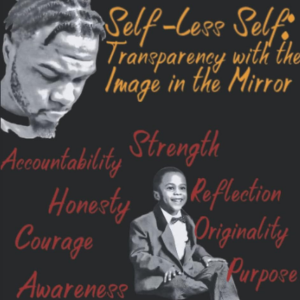
In a world saturated with self-help books promising quick fixes, viral affirmations, and surface-level positivity, Elzie Leo Dickens III’s Self Less Self: Transparency with the Image in the Mirror stands apart—not as a manual for self-optimization, but as a soul-stirring invitation to radical honesty, vulnerability, and inner alignment. This isn’t just another motivational read; it’s a philosophical excavation of the ego, a spiritual audit of the self, and a compassionate call to dismantle the illusions we’ve mistaken for identity.
With poetic clarity, psychological insight, and deeply personal storytelling, Dickens III—no relation to Charles, though sharing his gift for moral storytelling—guides readers through twelve transformative chapters that collectively form a roadmap to what he terms “transparency”: the state of being so authentically aligned with one’s truth that the mirror no longer reflects a curated persona, but the raw, unfiltered self—flaws, fears, and all.
At its core, Self Less Self challenges the modern obsession with self-actualization and proposes a counterintuitive path: self-lessness—not as erasure or martyrdom, but as liberation from the tyrannical narratives we construct to protect our pride, soothe our insecurity, and justify our suffering.
Let’s explore each chapter in depth, uncovering the author’s profound insights, practical wisdom, and the overarching message that makes this work indispensable in today’s era of curated identities and existential exhaustion.
Introduction: The Mirror That Lies (And the Truth It Can Reveal)
Dickens begins not with answers, but with a question: “Who do you see when you look in the mirror?”
For most, the reflection is a composite—a collage of roles (parent, professional, partner), achievements (degrees, promotions), and defenses (humor, stoicism, ambition). We mistake this mosaic for who we are. But Dickens argues this is a mirage—a self-image, not the self.
The introduction sets the tone: this book isn’t about building a better self. It’s about unbuilding the false one. The “self-less self” isn’t someone without identity; it’s someone whose identity isn’t dependent on external validation, past trauma, or future fantasies. It’s the self that remains when the performance ends.
Crucially, Dickens introduces the central metaphor: the mirror as both prison and portal. When we use it to curate, it confines us. When we use it to confront, it liberates us. Transparency—his guiding principle—means seeing through the distortion, not with it.
Chapter 1: Barren Soil — The Fertility of Disillusionment
Here, Dickens dismantles the myth of constant growth. Modern wellness culture tells us our lives should be ever-blooming gardens—but what if fallow periods are sacred?
“Barren soil” is the necessary pause after harvest, the quiet before regrowth. Dickens shares his own season of professional failure, relational rupture, and spiritual dryness—not as setbacks, but as cleansing. In barrenness, the weeds of ego wither. There’s nothing left to prop up the facade.
He invites readers to stop pathologizing emptiness. Instead, ask: What is this emptiness making space for?
“A field plowed and left fallow isn’t dead—it’s preparing. So are you.”
This chapter is a balm for those feeling “stuck.” Dickens reframes stagnation as strategic surrender—a prerequisite for authentic renewal.
Chapter 2: The Shackles of Pride — How Ego Builds Prisons, Not Thrones
Pride, Dickens argues, isn’t confidence—it’s armor masquerading as strength. He distinguishes between healthy self-respect and toxic pride: the latter clings to being right, superior, or unaffected—even at the cost of connection and truth.
Using vivid analogies (e.g., pride as a gilded cage that looks like a crown), he dissects how pride manifests:
- Refusing to apologize (even when you know you’re wrong)
- Dismissing feedback as “jealousy” or “ignorance”
- Performing humility (“I’m not perfect, but at least I’m not like them”)
The liberation comes not in losing pride, but in seeing it—naming it as the fear of exposure. When you stop defending your image, you reclaim your energy for living.
Chapter 3: Point the Finger at Yourself — Accountability as Radical Freedom
In a culture quick to assign blame outward (“They made me angry,” “The system failed me”), Dickens proposes a countercultural act: pointing inward first.
This isn’t self-blame—it’s self-inquiry.
“Before you ask why the world wounded you, ask: What wound did I bring to the encounter?”
He shares a powerful exercise:
*When triggered, write down:
- What happened (facts only)
- What story I told myself about it
- What unmet need or old fear it stirred
- What I contributed—intentionally or not*
This practice, he insists, isn’t about guilt. It’s about agency. When you recognize your role—even 1%—you regain 100% of your power to change the dynamic.
Chapter 4: Is Your Treasure Taxing Your Life? — The Hidden Cost of Prized Possessions
Materialism isn’t just about money—it’s about any attachment that demands sacrifice of peace, integrity, or presence.
Dickens expands “treasure” to include:
- Status (e.g., title, follower count, reputation)
- Relationships (toxic bonds we cling to “for the kids” or “out of loyalty”)
- Identities (“I’m the strong one,” “I’m the broken one”)
- Regrets (hoarding guilt like heirlooms)
“A treasure that costs you joy, sleep, or authenticity isn’t wealth—it’s debt.”
He challenges readers to audit their “treasures”:
Does this add life to my days—or just days to my life?
The goal isn’t asceticism, but alignment. Keep what serves your soul. Release what taxes it.
Chapter 5: Pinocchio Syndrome — When Lies Grow Long Noses (and Heavy Souls)
A brilliant reimagining of the classic tale: Pinocchio’s nose grows not from one big lie—but from countless “harmless” ones:
- “I’m fine.”
- “Sure, I’ll do it.”
- “I don’t mind.”
Dickens identifies three layers of self-deception:
- The White Lie (to spare others’ feelings)
- The Grey Lie (to avoid conflict or responsibility)
- The Black Lie (to preserve a false image)
Over time, these accumulate into a composite lie—a life built on pretense. The “syndrome” is chronic dissonance: the growing gap between who you are and who you present.
The antidote? Micro-truths: small, courageous acts of honesty—e.g., saying “I need time” instead of “I’m busy,” or “That hurt” instead of “It’s fine.” Each one shrinks the nose—and lightens the soul.
Chapter 6: Envy vs. Joy — The Battle of Perception
Envy, Dickens clarifies, isn’t desire—it’s comparison + scarcity. Joy, conversely, is appreciation + abundance.
He reframes envy not as a moral failing, but as a signal:
“Envy points to a value you’ve disowned. Don’t suppress it—interrogate it.”
“I envy her confidence” → “Where have I silenced my own voice?”
“I envy his freedom” → “What cage have I built for myself?”
The battle isn’t won by eliminating envy, but by translating it. When you reclaim the disowned part, envy dissolves into inspiration—or even celebration.
Joy, then, becomes accessible not when you “have more,” but when you perceive fully: the warmth of sun on skin, the weight of a loved one’s hand, the quiet hum of being enough.
Chapter 7: Happiness vs. Fear — The Two Currents That Shape Your Life
Dickens presents a striking metaphor: life is a river with two undercurrents—happiness (flow, presence, connection) and fear (contraction, projection, isolation). Every choice aligns with one.
Crucially, he distinguishes happiness (temporary emotion) from happiness-current (a way of being). You can feel sad within the happiness-current (e.g., grieving while held in love). You can feel excited within the fear-current (e.g., chasing validation).
Ask: Is this decision coming from expansion or contraction?
- Choosing a job for security (fear) vs. purpose (happiness)
- Staying silent to avoid conflict (fear) vs. speaking to deepen trust (happiness)
The goal isn’t to eliminate fear—but to notice its current before it charts your course.
Chapter 8: Time — CPR for Your Most Precious Resource
Time, Dickens insists, isn’t money—it’s life. And most of us are letting ours flatline.
He introduces Time CPR:
- C = Clarity: What truly matters? (Not what should matter—but what does, in your bones?)
- P = Presence: Are you in your life—or watching it scroll by?
- R = Ruthlessness: What must you stop doing to protect your vitality?
Dickens challenges hustle culture with a radical idea: busyness is often avoidance. We over-schedule to outrun stillness—where the mirror waits. True time management isn’t calendars and hacks; it’s integrity: aligning minutes with meaning.
“You will never ‘find’ time. You must fight for it—like your life depends on it. Because it does.”
Chapter 9: Is Your Complaining Justified? — The Cost of Catharsis Without Change
Complaining, Dickens argues, isn’t inherently wrong—it’s necessary. But like fire, it must be contained. Unchecked, it becomes a feedback loop of helplessness.
He offers a litmus test:
✅ Justified complaining seeks solutions, support, or release—then moves forward.
❌ Toxic complaining seeks allies in misery, validation of victimhood, or excuses for inaction.
The shift? From “This is awful” to “This is awful—what’s one thing I can do, however small?”
Or, when action isn’t possible: “This is awful—and I’m allowing myself to grieve it fully, for 20 minutes, then I’ll tend to my garden.”
Compassion, he reminds us, includes compassion for yourself—which means not letting resentment calcify into identity.
Chapter 10: Looking on the Bright (Honest) Side — Beyond Toxic Positivity
Dickens fiercely criticizes “toxic positivity”—the demand to only see silver linings, especially amid pain. His alternative: radical honesty with hope.
The “bright honest side” isn’t denial. It’s context:
- “I’m devastated by this loss—and I’m grateful for the love that made it possible.”
- “This illness is terrifying—and I’m discovering resilience I didn’t know I had.”
He introduces the Both/And Practice:
Name the hard truth and the glimmer—without diminishing either. This isn’t optimism. It’s wholeness.
“Hope isn’t pretending the storm isn’t there. It’s remembering you’ve weathered storms before—and this one, too, will pass.”
Chapter 11: The Boiling Pot — Let It Out (Before It Explodes)
Unexpressed emotion doesn’t vanish—it pressurizes. Dickens uses the metaphor of a pot on the stove: steam needs release, or the lid blows off.
He validates anger, grief, and frustration—not as “negative,” but as energy seeking expression. The danger isn’t feeling them; it’s suppressing them (leading to burnout, illness, or outbursts) or venting them (hurting others).
His solution: Sacred Release—private, intentional outlets:
- Writing unsent letters
- Physical movement (punching a pillow, sprinting, dancing wildly)
- Art (painting the rage, singing the sorrow)
- Nature (screaming into a canyon, burying written pain in soil)
“Let the steam out in safe ways—so it doesn’t scald you or others.”
Conclusion: The Transparent Self — Living Beyond the Reflection
The final chapter synthesizes the journey: transparency isn’t perfection. It’s imperfect courage. It’s looking in the mirror and saying:
“I see you—the fear, the longing, the tenderness. I’m not fixing you today. I’m with you.”
Dickens’ ultimate message: Self-less isn’t self-less. It’s self-full.
When you stop performing, you reclaim energy for presence.
When you stop defending, you open space for connection.
When you stop curating, you discover who you’ve been all along.
The Author’s Core Message: A Symphony of Truth
Elzie Leo Dickens III isn’t offering a 12-step plan to “fix” yourself. He’s inviting you into a lifelong practice: transparency as devotion—to truth, to others, and most radically, to yourself.
His message is threefold:
- You Are Not Your Story
The narratives you tell about your past, your worth, your limits—are interpretations, not facts. Rewrite them with compassion. - Freedom Lives in the Uncomfortable
Growth isn’t found in affirmations, but in the trembling yes to feeling what you’ve avoided: grief, shame, longing. - Connection Begins with Self-Honesty
You cannot truly meet others until you’ve stopped hiding from yourself. Vulnerability isn’t weakness—it’s the birthplace of belonging.
Why This Book Matters Now
In 2025—amid AI-generated personas, political polarization, and epidemic loneliness—Self-Less Self arrives as an antidote to fragmentation. It doesn’t ask you to be more productive, more liked, or more “spiritual.” It asks you to be real.
It’s not a quick read. It’s a companion for the long haul—a book to return to when the mirror fogs over again (as it will). Each chapter is a mirror wipe, revealing clearer reflections of who you are beneath the dust of expectation.
Dickens writes not as a guru on a pedestal, but as a fellow traveler—stumbling, healing, and choosing transparency, one honest breath at a time.
Final Thought: The Gift of the Unvarnished Self
Self Less Self ends with a quiet challenge:
“Go look in the mirror. Not to fix. Not to judge. Just to witness.
Say: ‘I see you. I’m here. Let’s begin again.’
That—right there—is where freedom starts.”
In a world of filters, that unfiltered moment may be the most revolutionary act of all.
📚 Ready to meet your transparent self?
Self Less Self: Transparency with the Image in the Mirror by Elzie Leo Dickens III is available wherever books are sold. Let the mirror become your ally—not your judge.
— Because the world doesn’t need more perfect images. It needs more honest humans.
FAQs
Q1. Is this book religious or spiritual?
It is spiritual in nature but not tied to any specific religion.
Q2. Can beginners in self-help benefit from this book?
Yes, the language is simple and deeply relatable.
Q3. Is the book motivational or reflective?
It is more reflective, leading to organic motivation.
Q4. Does the book provide exercises or actions?
It focuses more on mindset shifts than structured exercises.
Q5. What is the biggest takeaway from the book?
True growth begins when self-deception ends.