
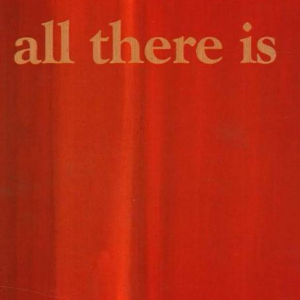
What if the life we spend searching for meaning is already complete as it is? Tony Parsons’ All There Is explores this provocative question through the uncompromising perspective of radical non-duality. Published in 2003, the book challenges the familiar idea that spiritual awakening is something a separate individual can achieve through a particular method, practice or future experience. Instead, Parsons points toward the possibility that what we are seeking is not separate from what is already happening.
In this review and explanation, we explore what All There Is means by non-duality, why the book rejects the conventional spiritual search, how its ideas relate to love, loss and ordinary life, and what readers may find challenging—or liberating—about its message.
Table of Contents
ToggleAll There Is by Tony Parsons at a Glance
Detail | Information |
Author | Tony Parsons |
Book | All There Is |
Published | 2003 |
Main subject | Radical non-duality |
Spiritual tradition/context | Often discussed in relation to Advaita/Neo-Advaita |
Core question | Is there really a separate individual who can attain enlightenment? |
Type of book | Spiritual/philosophical exploration |
Best for | Readers interested in non-duality, consciousness and spiritual inquiry |
What Is All There Is by Tony Parsons About?
Most spiritual books follow a familiar formula: a person realizes they are unfulfilled, embarks on a journey, adopts meditative practices, and eventually reaches enlightenment. Tony Parsons upends this entire roadmap.
In All There Is, Parsons presents a radical non-dual perspective that questions the core foundation of self-improvement: the assumption that an independent “person” exists to achieve enlightenment in the first place. Rather than giving you tools to build a better spiritual identity, the book suggests that the search itself reinforces the illusion of separation. This fundamental shift is what sets All There Is apart from ordinary self-help and traditional spiritual literature.
What Does Non-Duality Mean in All There Is?
Non-duality, or “not-two,” points to an undivided reality where the observer and the observed are not truly separate. Parsons strips away traditional religious dogma to explore non-duality in its most uncompromised form.
The Idea of Separation
From early childhood, we are conditioned to believe we are isolated entities moving through an external world. Parsons suggests this sense of an internal “me” navigating an “outside” universe is an acquired perspective rather than an absolute fact. In his view, life is a seamless whole, and the boundary separating the individual from the rest of existence is largely conceptual.
Why the Spiritual Seeker Is Questioned
Most spiritual traditions validate the “seeker”—an individual striving to reach a higher state of consciousness. Parsons challenges this premise entirely. If there is no separate individual at the center of experience, who is left to attain awakening? The book suggests that the seeker is not on the way to freedom; the seeker is the apparent obstacle.
Why There Is No Prescribed Path
Because the book rejects the idea of a spiritual destination, it offers no sequence of practices, rituals, or milestones. In conventional paths, following steps implies that liberation belongs to tomorrow. For Parsons, prescribing a method only keeps the mind trapped in endless preparation, chasing a future outcome that never arrives.
What “Already Present” Means
In Parsons’ philosophy, reality is not something to be earned, uncovered, or reached through effort. What people seek is simply what is already occurring right now—the natural, unmediated flow of everyday experience. Rather than treating this as a scientific doctrine, the book presents it as an immediate perspective: wholeness is never absent; it is simply overlooked.
What All There Is Is—and Isn’t
To understand the book, it helps to understand what it deliberately avoids doing.
It isn’t a conventional self-help book
Readers looking for actionable life improvements will not find them here. The book does not provide:
- Daily breathwork or focus exercises
- Productivity frameworks or habit trackers
- Manifestation rules or visualization techniques
- Positive affirmations
- Structured meditation routines
It isn’t an enlightenment manual
Most guides promise that diligent practice yields transformation. All There Is refuses to offer a curriculum. It consistently reminds the reader that a manufactured technique cannot reveal what is already unconditioned and complete.
It isn’t simply “think positively”
The book is not an invitation to reframe negative thoughts into optimistic ones. Non-duality does not attempt to polish the personal story or cultivate emotional comfort; it questions the reality of the self claiming ownership of those thoughts.
Love, Loss, and the Experience of Life
While All There Is is firmly a text on non-duality, it naturally touches upon human vulnerability: love, separation, grief, uncertainty, and the persistent longing for home.
Parsons does not frame his work as an emotional healing program or a grief recovery system. Instead, he addresses human heartache at its conceptual root: the belief that we are separate fragments trying to hold onto other separate fragments. When life brings painful transitions, reading Parsons invites us to observe how deeply our suffering is tied to our assumptions about identity, possession, and permanence.
How Can the Ideas in All There Is Be Applied to Everyday Life?
While Parsons writes from an uncompromising non-dual view that rejects practical utility, his insights can still provide grounded philosophical clarity in day-to-day living.
Breaking the “Next Thing” Trap
Many people spend decades living in waiting mode: “I will finally relax once I land the job, find the right partner, or reach financial security.” Parsons’ perspective challenges the illusion that lasting peace lives in a future scenario. By recognizing that fulfillment cannot be postponed to an imagined tomorrow, the compulsion to rush past the present moment softens.
Loosening the Grip on Rigid Identity
It is easy to define our entire worth through job titles, relationship statuses, and social achievements. When these labels wobble, existential panic follows. Viewing life through a non-dual lens reminds us that our identity is far more fluid and spacious than the narrow roles we play, making setbacks far less devastating.
A Healthier Relationship with Loss
Rather than relying on cliches like “everything happens for a reason,” a non-dual perspective invites an honest inquiry into separation itself. When we recognize that permanence was never guaranteed, we can meet grief with presence and honesty, without demanding that life conform to our expectations of control.
Is All There Is Difficult to Read?
Yes, it can be—especially for readers accustomed to standard spiritual self-help. Conventional personal growth follows a reassuring pattern: problem → practice → solution.
Parsons breaks that rhythm completely. His writing relies on paradoxes that can feel baffling to the analytical mind, primarily because the book continuously dismantles the very “seeker” trying to comprehend it. Approached with an open, reflective mind rather than an intellectual need for answers, the reading experience becomes strikingly direct and thought-provoking.
Who Is All There Is For?
Highly Recommended For:
- Readers exploring non-duality and radical Neo-Advaita
- Thinkers curious about consciousness, philosophy, and the nature of perception
- Long-term spiritual seekers who feel burnt out by endless techniques and rules
- Anyone open to questioning foundational assumptions about selfhood
Not Recommended For:
- Anyone seeking a step-by-step meditation curriculum
- Readers looking for practical life-coaching or productivity advice
- Those wanting manifestation formulas or goal-setting systems
SpiritualKhazaana’s Take
What makes All There Is genuinely unique is not that it introduces another method for spiritual evolution, but that it investigates the mechanism behind the search itself.
For seasoned seekers tired of chasing elusive milestones, Parsons’ directness can feel like a breath of fresh air. For those expecting a structured program, it will likely feel disorienting. Its greatest value is also its central provocation: it does not hand you a new destination—it asks you to look closely at who is trying to get there.
Related Articles

All There Is vs. Conventional Spiritual Self-Help
Dimension | Conventional Spiritual Self-Help | All There Is (Tony Parsons) |
Core Goal | Improve or heal the self | Questions the reality of a separate self |
Methodology | Follow daily practices, rules, and steps | Questions the necessity of a path |
The Seeker | Empowers the individual seeking truth | Inquires into whether the seeker exists |
Timeline | Promises future awakening or transformation | Emphasizes what is already present |
Worldview | Focuses on an individual personal journey | Challenges the foundation of individual separation |
Note: This table serves as a conceptual comparison to highlight core philosophical differences, not as a claim that all spiritual lineages share identical methods.
The Final Verdict: A Breathtaking, Brutal, and Blissful Read
“All There Is” is a spectacular work that stands apart from the crowded landscape of spiritual literature. It is not an easy read, not because of complex language, but because of its brutal simplicity. It is a direct assault on the reader’s most fundamental and cherished identity: the ‘me’.
Why this book is a must-read
- Uncompromising Clarity: Unlike teachings that offer a “path,” Parsons offers a communication that closes all doors to personal effort and future achievement. For those frustrated and exhausted by years of seeking, this message can be profoundly liberating.
- Intellectual Jolt: It provides an intense intellectual and existential challenge. It forces the mind to confront its deeply ingrained, habitual belief in free will, personal purpose, and the reality of time.
- The Sound of Silence: When the mind is exhausted from trying to grasp the paradox, the communication can suddenly drop the reader into the recognition of the Wholeness. It is a book designed to short-circuit the intellect.
Potential Drawbacks and Criticisms
- Confrontational: Parsons’ style is highly confrontational to the ego. Readers attached to their spiritual progress, practices, or belief in free will may find the book dismissive or arrogant.
- Misinterpretation (The “Do Nothing” Trap): The message can be easily misinterpreted by the ego as a license for nihilism or spiritual laziness (“If there’s no one, I don’t have to do anything”). Parsons’ point is that the doing stops spontaneously when the doer is seen as illusory, not that the illusory me decides to stop doing.
- Lacks ‘Heart’ (as per some critics): Critics of Radical Non-Duality sometimes argue that this “absolute” view neglects the need for human development, ethics, and compassion. Parsons would counter that compassion, love, and ethical behavior are natural overflows of Wholeness, not virtues to be cultivated by an individual.
In conclusion, “All There Is” is a powerful and essential text in the cannon of non-dual philosophy. It’s a book to be heard rather than merely read, and it will appeal most strongly to those who have reached a point of exhaustion and despair in their spiritual search—those who are ready for the seeker to simply collapse. It speaks directly to those who are exhausted by the endless cycle of spiritual seeking and are ready for the search to end.” or “This perspective offers a different kind of peace for anyone navigating a spiritual awakening process.
FAQs
What is All There Is by Tony Parsons about?
All There Is by Tony Parsons is an exploration of radical non-duality that challenges conventional spirituality. Instead of presenting a step-by-step path to self-improvement or enlightenment, the book questions whether an independent individual exists to attain anything at all. It points directly to wholeness as an already present, unconditioned reality rather than a future spiritual achievement.
Is All There Is a book about non-duality?
Yes, All There Is is fundamentally a book about radical non-duality. It strips away religious dogma, rituals, and traditional milestones to communicate an uncompromising perspective: life is undivided, and the sense of an isolated self navigating an outside world is purely illusory. Everything happening right now is already the complete expression of oneness.
What does Tony Parsons mean by non-duality?
For Tony Parsons, non-duality is not an intellectual theory or a meditative state to achieve. It simply means “not-two”—an undivided, boundless reality without a separate observer. Parsons suggests that life is seamless, meaning there is no isolated “me” controlling events or seeking liberation; there is only whatever is happening in the immediate present.
Is All There Is a self-help book?
No, All There Is is not a conventional self-help book. It provides no productivity hacks, daily affirmations, meditation techniques, or manifestation guides. While standard self-help aims to improve and empower the personal ego, Parsons’ non-dual message does the opposite by questioning the very validity and permanence of that separate identity.
Is All There Is related to Advaita Vedanta?
While All There Is shares the core premise of non-separation found in Advaita Vedanta, it belongs to the modern current often called Neo-Advaita. Unlike classical Advaita Vedanta, which outlines extensive scriptures, guru-disciple traditions, and preparatory spiritual disciplines, Parsons rejects the necessity of any formal path, teacher, or practice.
Who should read All There Is?
All There Is is ideal for open-minded thinkers, philosophy enthusiasts, and seasoned spiritual seekers feeling exhausted by endless meditation techniques and self-improvement goals. However, readers seeking step-by-step emotional healing frameworks, structured meditation exercises, or traditional self-help advice may find its direct, paradoxical style disorienting.