
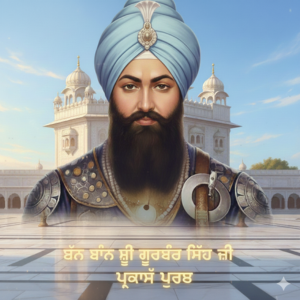
Guru Gobind Singh Jayanti is one of the most sacred festivals celebrated by Sikhs and admirers of spirituality across the world. It marks the birth anniversary of Guru Gobind Singh Ji, the tenth guru of Sikhism, a warrior saint, philosopher, poet, and the founder of the Khalsa Panth, who dedicated his life to righteousness, justice, and the spiritual liberation of humanity.
The 2025 celebration of Guru Gobind Singh Jayanti will be observed with immense devotion on December 27, 2025, according to the Nanakshahi calendar, which governs Sikh religious events.
Table of Contents
ToggleWho Was Guru Gobind Singh Ji?
Guru Gobind Singh Ji was born on 22 December 1666 (according to the Gregorian calendar) in Patna Sahib, Bihar, which is now known as Takht Sri Patna Sahib, one of the five Takhts (seats of authority) in Sikhism.
His birth name was Gobind Rai, and he was the son of the ninth Sikh Guru, Guru Tegh Bahadur Ji, and Mata Gujri Ji. Guru Gobind Singh ascended to the position of the tenth Sikh Guru on 11 November 1675, at the young age of nine, following the martyrdom of his father, who sacrificed his life to protect religious freedom.
Early Life and Spiritual Training
From childhood, Guru Gobind Singh showed signs of exceptional intellect, spirituality, and leadership. He studied philosophy, history, martial arts, Sanskrit, Persian, and Gurmukhi scripts.
Growing up in a time of social turmoil under the Mughal rule, the young Guru learned that courage and compassion must coexist. His education blended spiritual wisdom with martial readiness, laying the foundation for what would later define Sikh identity — a balanced life of devotion and defense of the oppressed.
Guru Gobind Singh’s Vision: The Birth of the Khalsa
Guru Gobind Singh Ji’s most revolutionary contribution came in 1699 at Anandpur Sahib. On Vaisakhi, he called upon Sikhs from all parts of India to gather for a special congregation.
In a dramatic and divine moment, he asked the crowd who among them was willing to sacrifice their life for truth and justice. One by one, five courageous men stepped forward — Bhai Daya Singh, Bhai Dharam Singh, Bhai Himmat Singh, Bhai Mohkam Singh, and Bhai Sahib Singh.
These five became known as the “Panj Pyare” (Five Beloved Ones) — the first members of the Khalsa Panth, symbolizing equality, purity, and fearlessness.
Guru Gobind Singh prepared Amrit (holy nectar) and initiated the Panj Pyare into a new order called the Khalsa, meaning ‘the pure.’ The Guru then knelt before them and received initiation himself — an act that highlighted the equality between the Guru and his followers.
The Five K’s of Sikh Identity
Guru Gobind Singh Ji gave the Khalsa five distinct symbols, known as the Five Ks (Panj Kakar), to maintain spiritual and moral discipline:
The Five Ks: More Than Symbols—A Code of Living
K | Name | Meaning | Spiritual & Practical Significance |
Kesh | Uncut Hair | Acceptance of God’s will; natural state | Discipline, identity, rejection of vanity |
Kangha | Wooden Comb | Order, cleanliness, self-respect | Daily routine of care and mindfulness |
Kara | Steel Bangle | Eternal God (circle), restraint | Reminder of moral accountability |
Kachera | Cotton Undergarment | Self-restraint, chastity | Readiness for action; practical for warriors |
Kirpan | Ceremonial Sword | Duty to protect justice | Symbol of dharam yudh—not violence, but defence of truth |
These five articles became the uniform of the Khalsa, uniting spiritual devotion with discipline, honor, and valor.
Contrary to popular misconception, the Kirpan is not a weapon of aggression. Sikh theology strictly forbids initiating violence. It is a defensive tool—like a police officer’s baton—meant only to intervene when injustice occurs.
Guru Gobind Singh as a Warrior and Poet
Guru Gobind Singh was both a spiritual leader and a fearless warrior. He led several battles against Mughal and hill rulers who persecuted the Sikhs, standing firm on principles of righteousness rather than conquest.
He emphasized that self-defense and resistance against oppression were sacred duties, but only when all peaceful means had failed — a philosophy rooted in Dharam Yudh (righteous war).
Beyond warfare, Guru Gobind Singh was also a prolific poet and philosopher. His writings, preserved in texts such as the Dasam Granth, include hymns, philosophical discourses, and martial narratives that inspire courage, wisdom, and devotion. Guru Gobind Singh composed over 7,000 verses of poetry—including the majestic Jaap Sahib, Tav-Prasad Savaiye, and Chandi di Var—much of it still recited daily in Sikh prayers (Nitnem). His literary output rivals the greatest spiritual poets of world history.
He translated divine principles into poetry, emphasizing strength blended with humility — a unique hallmark of Sikh philosophy.
Guru Gobind Singh’s Core Teachings
Guru Gobind Singh Ji’s teachings transcend time, religion, and geography. Below are his central principles that continue to guide millions worldwide:
- Faith in One God: “Recognize all human race as one.”
- Equality: No one is high or low in God’s eyes; all are equal.
- Courage and Righteousness: Fight injustice but never lose compassion.
- Selflessness: Serve humanity without expecting recognition.
- Discipline and Devotion: A Sikh must combine meditation with action.
He taught that spirituality isn’t about renouncing the world but living within it with honor, service, and love.
Related Articles


Martyrdom and the Spirit of Sacrifice
Guru Gobind Singh’s life was marked by immense personal sacrifices. He lost all four of his sons — Sahibzada Ajit Singh, Jujhar Singh, Zorawar Singh, and Fateh Singh — to martyrdom, each symbolizing unshakable faith and valour.
Despite tremendous loss, the Guru never turned bitter; instead, he remained steadfast in faith, saying:
“In the will of God, I am eternally joyful.”
His unwavering spirit continues to inspire humanity to face adversities with grace and conviction.
Establishment of Guru Granth Sahib as the Eternal Guru
Before his passing in 1708 at Nanded Sahib, Maharashtra, Guru Gobind Singh Ji made a monumental declaration — he conferred Guruship on the Guru Granth Sahib, the holy scripture of Sikhism.
He proclaimed:
“Guru Granth Ji Maniyo Prakash”
“Let the Guru Granth Sahib be your everlasting Guru.”
This act signified the end of human succession of Sikh Gurus and established the Holy Scripture as the eternal source of divine wisdom.
How Guru Gobind Singh Jayanti is Celebrated
Across India and around the world, Guru Gobind Singh Jayanti is celebrated with profound reverence. Common practices include:
1. Nagar Kirtan (Religious Processions)
Devotees organize processions led by the Panj Pyare, accompanied by singing of kirtans (devotional hymns), martial arts demonstrations (Gatka), and spiritual discourses.
2. Akhand Path and Kirtan
Continuous readings (Akhand Path) of the Guru Granth Sahib take place in Gurdwaras, spreading messages of peace, service, and courage.
3. Langar (Community Kitchen)
One of the most powerful symbols of Sikhism — Langar — is served to all, regardless of religion, caste, or status, reflecting the Guru’s vision of equality.
4. Gatka Demonstrations
Martial arts displays showcase the courage and discipline inspired by Guru Gobind Singh’s Khalsa tradition.
5. Illumination and Decorations
Gurdwaras and homes are decorated with lights, flowers, and flags. The spiritual atmosphere radiates positivity and unity.
Guru Gobind Singh Jayanti Around the World
While the major celebrations are in Punjab, Haryana, Bihar, and Delhi, Sikh communities across Canada, the UK, the USA, and Australia also observe the day with grand devotion. Gurdwaras across the world organize spiritual talks, seva (community service), langar, and blood donation drives to honor the Guru’s message of compassion and service.
Modern Relevance: What Guru Gobind Singh Teaches Us Today
The relevance of Guru Gobind Singh Ji’s life and teachings extends to modern times and challenges. His philosophy offers valuable lessons for today’s world:
- Embrace Courage: In an era of fear and doubt, his life reminds us to face challenges fearlessly.
- Practice Equality: Promote unity and respect across religions, genders, and communities.
- Seek Knowledge: Like the Guru, enlighten your mind through education and spirituality.
- Balance Strength with Compassion: True strength comes from inner peace and love.
- Selfless Service: Serve humanity beyond barriers — the essence of true spirituality.
Guru Gobind Singh’s message beautifully blends spiritual depth with worldly responsibility — teaching that devotion and action must walk hand in hand.
Interesting Facts about Guru Gobind Singh Ji
- He was not only a warrior but also a scholar fluent in Persian, Sanskrit, and Gurmukhi.
- His literary works include Jaap Sahib, Akal Ustat, and hymns that appear in the Dasam Granth.
- He introduced a democratic system of leadership among Sikhs — the Sarbat Khalsa, or collective decision-making.
- His life inspired countless freedom fighters, including those of India’s independence movement.
- His spiritual and martial values continue to shape Sikhs’ identity globally.
Guru Gobind Singh’s Message for Humanity
Guru Gobind Singh’s message transcends religion and region. His teachings echo universal truths:
- Stand up for righteousness, even if you stand alone.
- View all human beings as reflections of the same divine light.
- Lead life with humility while serving humanity selflessly.
- Balance spiritual wisdom with practical courage.
He envisioned a society guided by compassion, equality, and divine awareness.
Conclusion
Guru Gobind Singh Jayanti is not just a day of religious observance — it’s a reminder of the indomitable spirit of truth, justice, and devotion. His life stands as a timeless example of courage combined with compassion, of leadership born from love, and faith tested through sacrifice.
As the world celebrates Guru Gobind Singh Jayanti 2025, let us remember his immortal words and live by his principles:
“When all other means have failed,
it is righteous to draw the sword.”
May the teachings of Guru Gobind Singh Ji inspire us to embrace truth, serve humanity, and unleash the spiritual power within us all.
FAQs
1. Who was Guru Gobind Singh Ji?
Answer: Guru Gobind Singh Ji was the 10th Sikh Guru, a visionary spiritual leader, warrior, poet, and philosopher. He became the leader of Sikhs at just nine years old following the martyrdom of his father, Guru Tegh Bahadur Ji. He transformed Sikhism by establishing the Khalsa Panth in 1699, instilling courage, equality, and devotion while fiercely standing against oppression and injustice.
2. What is the significance of Guru Gobind Singh Jayanti?
Answer: Guru Gobind Singh Jayanti marks the birth anniversary of the 10th Sikh Guru. It is a sacred occasion celebrated worldwide with immense devotion, Nagar Kirtans, and Akhand Path recitations. The day honors his profound sacrifices, military leadership, and spiritual teachings. It serves as a powerful reminder to uphold righteousness, fight social inequality, and live selflessly with moral courage.
3. What is the Khalsa Panth and why did Guru Gobind Singh Ji create it?
Answer: Guru Gobind Singh Ji established the Khalsa Panth in 1699 on Vaisakhi to unite Sikhs into a disciplined community of warrior-saints. Facing tyranny and religious persecution, he created the Khalsa to protect the innocent and uphold justice. He introduced the 5 Ks (Kesh, Kangha, Kara, Kachera, and Kirpan) as symbols of faith, equality, purity, and readiness to defend righteousness.
4. Why did Guru Gobind Singh Ji declare Guru Granth Sahib as the eternal Guru?
Answer: Before his passing in 1708, Guru Gobind Singh Ji declared the holy scripture, Guru Granth Sahib, as the final and living Guru of Sikhism. He ended the line of human Gurus and instructed all Sikhs to seek guidance directly from its sacred hymns and spiritual teachings, ensuring eternal unity, moral clarity, and timeless divine wisdom for future generations.
5. How is Guru Gobind Singh Jayanti traditionally celebrated?
Answer: Devotees celebrate Guru Gobind Singh Jayanti by visiting Gurudwaras for special prayers, kirtans, and community meals known as Langar. In many regions, vibrant Nagar Kirtans (grand processions) are organized with devotional singing and martial arts displays called Gatka. Families decorate their homes, light lamps, and reflect deeply on the Guru’s teachings of righteousness, service, and sacrifice.