
Oneness Great Principles Shared by All Religions Book Summary
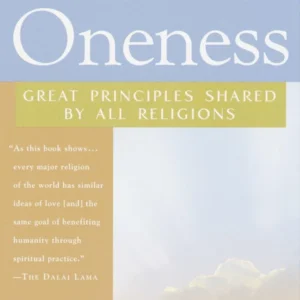
Oneness: Great Principles Shared by All Religions is an interfaith classic that collects universal spiritual teachings from the world’s major religions and presents them side by side to show how deeply they agree on core moral and spiritual truths. Jeffrey Moses uses direct quotations from scriptures and spiritual teachers to highlight shared principles—like the Golden Rule, honoring parents, compassion, humility, and the inner nature of heaven—that can guide anyone toward inner peace and spiritual richness.
Book Structure and Core Idea
Oneness is not organized as a typical narrative but as a series of thematic “principles,” each functioning like a chapter built around one universal teaching. For each principle, Moses introduces the idea and then presents passages from Christianity, Judaism, Islam, Hinduism, Buddhism, Confucianism, Sikhism, and other traditions that affirm the same truth in different words.
According to the publisher’s description, some of the central principles include:
- The Golden Rule
- Honor Thy Father and Thy Mother
- Heaven Is Within
- As We Sow, We Shall Reap
- Judge Not
- God Is Love
These repeat across traditions and form the backbone of the book’s “chapters” or sections.
The Golden Rule
Moses opens with the Golden Rule, calling it the cornerstone of religious understanding and the most complete expression of human oneness. He shows how it appears almost word‑for‑word in many religions:
- Christianity: “Do unto others as you would have them do unto you.”
- Judaism (Rabbi Hillel): “What is hurtful to yourself do not to your fellow man. That is the whole of the Torah and the remainder is but commentary.”
- Hinduism: “This is the sum of all true righteousness—treat others as thou wouldst thyself be treated.”
- Buddhism and Confucianism express nearly identical sentiments.
Moses emphasizes that the Golden Rule is not just a noble ideal but a practical principle: if people truly saw others as extensions of themselves, personal and social conflicts would dramatically decrease, creating the conditions for peace and prosperity.
Honor Thy Father and Thy Mother
Another principle‑chapter gathers scriptural teachings on honoring parents and elders. Moses cites the familiar biblical commandment “Honor thy father and thy mother,” then parallels it with teachings from other traditions that stress respect, gratitude, and care for those who gave us life.
The underlying message is that gratitude and respect for parents are near‑universal moral duties, and that honoring them cultivates humility and continuity between generations. This respect for elders appears as a cultural bedrock across very different societies.
Heaven Is Within
In the “Heaven Is Within” section, Moses explores the shared idea that the ultimate spiritual reality—heaven, the kingdom of God, enlightenment, nirvana—is not just a far‑off place but a state accessible within the human heart.
He highlights teachings where:
- Christianity speaks of the “kingdom of God” being within or among us.
- Eastern religions describe enlightenment as awakening to a reality already present.
The common point is that inner transformation—rather than external rituals alone—is the key to spiritual fulfillment. By aligning one’s thoughts, intentions, and actions with love and truth, a person begins to experience “heaven” here and now.
As We Sow, We Shall Reap
This chapter focuses on the universal law of moral causation—often known as karma or “reaping what you sow.”
Moses shows that:
- Christian scriptures speak of sowing and reaping in moral and spiritual terms.
- Hindu and Buddhist texts describe karma: actions have consequences that shape one’s experience.
- Other traditions echo the same cause‑and‑effect logic in moral life.
The core teaching is that our choices matter: kindness, honesty, and generosity lead toward inner peace and harmony, while hatred and cruelty lead to suffering for ourselves and others. This shared principle invites personal responsibility and long‑term thinking about how we live.
Judge Not
“Judge Not” collects teachings that warn against harsh judgment, condemnation, and self‑righteousness. Moses includes:
- Jesus’ teaching: “Judge not, that ye be not judged.”
- Parallel statements from other faiths urging humility, empathy, and refusal to condemn others hastily.
The unifying idea is that limited human perspective makes us poor judges of others’ hearts and circumstances. Most traditions instead recommend self‑examination, compassion, and leaving ultimate judgment to God or the moral law.
This principle, Moses suggests, is crucial for interfaith harmony: when people stop demonizing those of other religions, the shared core becomes easier to see.
God Is Love
In “God Is Love,” Moses gathers verses and sayings that present the divine not merely as a ruler or judge, but as love itself.
- Christian scripture famously states “God is love.”
- Other religions personify the ultimate reality as boundless compassion, mercy, or benevolence.
By placing these side by side, Moses argues that love is the heart of genuine religion across cultures. This love is not sentimental but active—expressed in service, forgiveness, generosity, and care for all beings.
Additional Shared Principles
While the publisher blurbs highlight only a few, the full book contains many more principles that function like chapters, each supported by cross‑religious quotations. Lesson plans and secondary descriptions note themes such as:
- Be good to those around you.
- It is better to give than to receive.
- Respect and care for the elderly.
- Compassion for the poor and vulnerable.
- The unity of humanity despite outward differences.
Each principle is unpacked briefly in Moses’ commentary, then reinforced by original scriptural passages, allowing readers to see how strongly they recur across faiths.
Style and Approach
Moses writes as a researcher and bridge‑builder, not as a preacher for one tradition. The book’s format is simple and meditative:
- Short introductory reflections on each principle.
- Followed by clusters of quotations from multiple scriptures and teachers.
Mother Teresa’s involvement (she provides an introduction and special prayer in some editions) underscores the book’s intention as a “gift of love” and a tool for unity. Educators and interfaith programs use it to help students recognize common moral ground and cultivate respect across religions.
What Message Does Jeffrey Moses Want to Convey?
Across all its principle‑chapters, Oneness delivers a clear, consistent message: beneath the surface differences of world religions lies a deep pool of shared wisdom and compassion.
Key points Moses conveys include:
- Humanity is more similar than different. When you compare core doctrines side by side, you see that most religions encourage love, respect, generosity, and humility.
- Universal principles can guide anyone. Teachings like the Golden Rule, honoring parents, not judging, and understanding moral cause and effect are accessible regardless of your specific faith.
- Religion’s highest goal is spiritual richness, not division. The shared principles, when lived, lead to inner peace and a sense of connection with others and with the divine.
- Recognizing oneness reduces conflict. When adherents of different religions see that their deepest values align, it becomes harder to justify hatred or violence in the name of faith.
Moses explicitly states that when inherent similarities are revealed, the collected wisdom of the world’s religions shows a profound “Oneness” of the human spirit. His aim is not to erase differences, but to shift attention from division to common ground, helping readers of any or no religion to live more ethically and lovingly.
Review: Is Oneness Worth Reading?
Reviewers and publishers describe Oneness as:
- “A celebration of humanity and the eternal truths shared by all religions.”
- “A rare testimony to the universal beliefs shared by people around the world.”
- “An impressive array of selections” that serve as a guide to inner development and spiritual richness.
For readers interested in spirituality, interfaith dialogue, or moral education, the book is especially valuable because:
- It presents original texts, not just paraphrases, allowing you to encounter scriptures directly.
- Its short, thematic sections make it ideal for daily reflection or group discussion.
- It works as a bridge between believers of different faiths and also speaks to seekers who want universal ethics without heavy dogma.
In essence, Oneness: Great Principles Shared by All Religions is both a spiritual reader and a quiet manifesto for compassion, showing that love, respect, and responsibility are not the property of any one religion but the shared heritage of humanity.
FAQs
Q1. Is this book affiliated with any religion?
No, it is completely interfaith and inclusive.
Q2. Can beginners in spirituality read this book?
Yes, the language is simple and accessible.
Q3. Does the book criticize any religion?
No, it respects all faiths equally.
Q4. What is the main theme of the book?
Unity, love, and shared spiritual principles.
Q5. Is this book relevant in modern times?
Absolutely. Its message is more relevant than ever.