Table of Contents
ToggleBuild the Life You Want: A Deep Dive into Brooks & Winfrey’s Blueprint for Lasting Joy
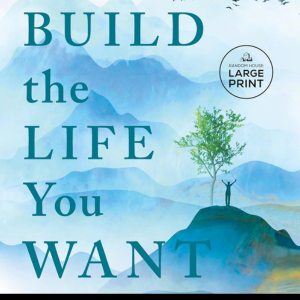
In a world obsessed with the pursuit of “perpetual bliss,” Arthur C. Brooks and Oprah Winfrey have delivered a much-needed reality check. Their collaborative masterpiece, Build the Life You Want: The Art and Science of Getting Happier, isn’t just another self-help book—it is a research-backed blueprint for emotional sovereignty.
This deep-dive blog post explores the core philosophies and actionable strategies presented in the book. Whether you’re feeling stuck in your career, struggling with family dynamics, or simply wondering why “getting everything you wanted” hasn’t made you happy, this summary will guide you through the art and science of “getting happier.”
The Core Premise: Happiness is a Skill, Not a Destination
The book opens by shattering the most common myth about well-being: that happiness is a state we “arrive” at once our circumstances are perfect. Instead, Brooks and Oprah argue that happiness is a direction, not a destination. They introduce the concept of “Happierness”—the idea that no matter where you are starting from, you can always improve your baseline by mastering the tools of emotional self-management.
Albina’s Secret: The Power of Choice
The book begins with the moving story of Albina Quevedo, Arthur Brooks’ mother-in-law. Albina lived a life marked by significant hardship: the Spanish Civil War, poverty, and being abandoned by her husband to raise children alone. Yet, in her 90s, she was the happiest person Arthur knew.
Albina’s Secret was simple but profound: “My circumstances are not the boss of me.” At age 45, Albina realized that waiting for the world to change was a losing game. She decided to take charge of her inner world, eventually going back to school to become a teacher and reclaiming her life. Her story serves as the foundational “proof of concept” for the book—that your happiness is determined more by your internal management than your external environment.
Redefining the Pursuit
Happiness Is Not the Goal
The authors clarify that “perfect happiness” is an impossibility on this side of heaven. In fact, seeking it as a goal often leads to frustration. Instead, they break down happiness into three “Macronutrients”:
- Enjoyment: Not just pleasure, but pleasure shared with others and experienced with consciousness.
- Satisfaction: The reward for hard work and struggle.
- Purpose: The sense that your life has meaning and direction, often found through overcoming challenges.
Unhappiness Is Not the Enemy
One of the most radical ideas in the book is that unhappiness is necessary. Negative emotions like fear, anger, and sadness are evolutionary signals designed to keep us alive.
- Fear protects us from danger.
- Sadness signals that we have lost something valuable and need support.
- Anger tells us that someone has violated our boundaries.
When we try to “fix” or numb these emotions, we lose the information they provide. The goal isn’t to eliminate unhappiness, but to learn to live alongside it while building a life of meaning.
Managing Your Emotions
The middle section of the book shifts from philosophy to the “science” of the brain. If you want to build the life you want, you must become the “CEO of your own emotions.”
The Power of Metacognition
Metacognition is “thinking about thinking.” Most people are “fused” with their feelings—they feel an emotion and immediately react. Brooks and Oprah teach the skill of putting space between the stimulus and the response.
When you practice metacognition, you observe your anger or sadness as if it were a weather pattern passing through. You don’t say, “I am angry.” You say, “I am experiencing a feeling of anger.” This subtle shift allows the prefrontal cortex (the rational brain) to take over from the amygdala (the emotional brain).
Choose a Better Emotion
Once you have achieved distance through metacognition, you can actively choose a better emotion. This isn’t about “fake positivity.” It’s about recognizing that there are multiple ways to interpret any situation.
- Envy vs. Admiration: Instead of resenting someone’s success, you can consciously choose to admire their hard work and use it as motivation.
- Resentment vs. Forgiveness: Forgiveness isn’t a gift to the person who hurt you; it’s a “self-jailbreak” for your own mind.
Focus Less on Yourself
We live in the “age of the selfie,” where we are constantly monitoring our own feelings, appearances, and social status. Paradoxically, the more we focus on ourselves, the unhappier we become.
The authors suggest that the path to happiness is “looking out” rather than “looking in.” By focusing on the needs of others and the beauty of the world (the sense of Awe), we diminish the “I” and connect with the “We.” This reduces the weight of our own problems and places us in a larger, more meaningful context.
Building What Matters: The Four Pillars
The second half of the book focuses on the “Four Pillars of Happiness.” These are the areas where you must invest your time and energy to build a sturdy foundation.
Build Your Imperfect Family
The authors are Refreshingly honest: there is no such thing as a perfect family. Family is often the primary source of our greatest stress, yet it is essential for deep meaning.
- Management Tip: Treat your family like “friends.” We are often more polite and patient with strangers than with our own siblings or parents.
- Conflict Resolution: Use “we” language. Instead of “You did this,” try “We have a challenge we need to solve together.”
Friendship That Is Deeply Real
Brooks distinguishes between two types of friends:
- “Deal” Friends: These are transactional friendships—work colleagues or people we know because they are useful to us.
- “Real” Friends: These are people we love for their own sake, not for what they can do for us.
To get happier, you must prioritize “real” friendships. These require “useless” time—time spent just being together without an agenda.
Work That Is Love Made Visible
You don’t need a high-paying, prestigious job to be happy. According to the research, professional satisfaction comes from two things:
- Earned Success: The feeling that you are creating value through your skills.
- Service to Others: The knowledge that your work is making someone else’s life better.
Whether you are a CEO or a janitor, if you can see how your work serves others, it becomes “love made visible.”
Find Your Amazing Grace
The final pillar is Spirituality or Faith. This doesn’t necessarily mean organized religion (though it can). It means finding a sense of Transcendence—a connection to something bigger than yourself. This could be found in nature, philosophy, meditation, or a higher power. It provides the “big picture” perspective that makes daily trials feel manageable.
Notes from the Authors
In this reflective section, Arthur and Oprah share personal anecdotes about their own struggles with happiness.
- Arthur Brooks shares his struggle with “success addiction” and the fear of becoming irrelevant as he ages.
- Oprah Winfrey discusses how her career was built on the foundation of service and how she had to learn to set boundaries to protect her own peace.
Their “Notes” humanize the science, showing that even the most successful people in the world have to work at these skills every single day.
Conclusion: Now, Become the Teacher
The final chapter, “Conclusion—Now, Become the Teacher,” offers a vital instruction: the best way to solidify these lessons is to teach them to someone else.
When you share the principles of metacognition or the importance of the four pillars with a friend, you move the information from your “short-term memory” to your “long-term identity.” By helping others get happier, you naturally increase your own well-being.
The Main Message: You Are the Architect
The overriding message of Arthur C. Brooks and Oprah Winfrey is one of Empowerment.
You are not a victim of your biology, your past, or your circumstances. You are the architect of your own emotional life. By using the “science” of the brain and the “art” of spiritual wisdom, you can build a life that is deeply satisfying, regardless of the storms that come your way.
Take the Next Step
The “Build the Life You Want” journey is ongoing. If you’re ready to start, a great first step is the PANAS Test (Positive and Negative Affect Schedule) mentioned in the book, which helps you identify your emotional baseline—whether you are a “Poet,” a “Cheerleader,” a “Mad Scientist,” or a “Judge.”
Frequently Asked Questions (FAQs)
Q1. Is this book practical or just philosophical?
It is highly practical, combining science-backed strategies with real-life examples.
Q2. Who should read this book?
Anyone seeking emotional balance, purpose, and long-term happiness—especially in stressful modern life.
Q3. Does the book talk about mental health?
Yes, it addresses emotions, anxiety, sadness, and resilience with compassion and clarity.
Q4. Is this a religious book?
No, but it includes spiritual insights that are universal and inclusive.
Q5. What is the biggest takeaway from the book?
Happiness is not something you chase—it’s something you build through meaning, love, and emotional wisdom.