Table of Contents
ToggleA Deep Dive into “Then Sings My Soul”: The Melodies of Faith
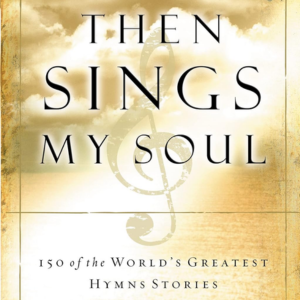
Music has a way of bypassing the intellect and heading straight for the heart. For centuries, hymns have served as the spiritual backbone of the church, providing a vocabulary for worship, grief, and celebration. In his seminal work, “Then Sings My Soul: 150 of the World’s Greatest Hymn Stories,” Robert J. Morgan doesn’t just list lyrics; he unearths the raw, human experiences that birthed them.
If you’ve ever found yourself humming Amazing Grace or felt a chill during It Is Well With My Soul, this book is the “behind-the-scenes” pass you didn’t know you needed. In this comprehensive review and summary, we will explore the structure of the book, the moving stories behind the songs, and the profound message Morgan seeks to convey to a modern audience.
Understanding the Structure: A Journey Through Time
Unlike a traditional narrative book, Then Sings My Soul is organized as a devotional-style anthology. It is designed to be read slowly—perhaps one hymn a day—allowing the reader to soak in the history and the theology.
The book is generally categorized chronologically, moving through distinct eras of Christian history. This structure allows the reader to see how the “sound” of faith has evolved while the core message remains steadfast.
The Early Church and Ancient Roots
The book begins with the foundational chants and early Greek and Latin hymns. Morgan highlights how the earliest Christians used music as a form of resistance and a declaration of creed in the face of Roman persecution.
The Reformation and the Birth of Congregational Singing
A significant portion of the book focuses on the 16th and 17th centuries. Before Martin Luther, the congregation was often a silent audience. Morgan details how Luther’s A Mighty Fortress Is Our God revolutionized the church by putting the “song” back into the hands of the common person.
The Great Awakenings and the Golden Age of Hymnody
This is where we meet the heavy hitters: Isaac Watts, Charles Wesley, and John Newton. Morgan explains how these writers shifted hymns from purely objective theological statements to personal expressions of experience and grace.
The Gospel Songs of the 19th and 20th Centuries
The latter half of the book covers the era of Fanny Crosby and the “evangelistic” songs that defined camp meetings and Billy Graham crusades. These stories often focus on themes of comfort, personal salvation, and the hope of Heaven.
Chapter Highlights: The Stories Behind the Songs
While we cannot cover all 150 hymns in a single blog post, certain chapters stand out as the emotional anchors of the book. Here are the defining stories Morgan shares:
Amazing Grace: The Slave Trader’s Transformation
Perhaps the most famous hymn in history, Morgan recounts the life of John Newton. He wasn’t always a man of God; he was a profane, hardened slave ship captain. During a violent storm at sea, Newton cried out for mercy. The “grace” he wrote about wasn’t an abstract concept—it was the literal force that snatched him from a life of cruelty and gave him a new purpose.
It Is Well With My Soul: Peace Amidst Tragedy
The story of Horatio Spafford is arguably the most heart-wrenching in the book. After losing his fortune in the Great Chicago Fire and his four daughters in a shipwreck in the Atlantic, Spafford penned these words near the very spot where his children perished. Morgan uses this story to show that hymns are not just for the mountain tops, but for the darkest valleys of the soul.
Great Is Thy Faithfulness: The Quiet Devotion
In contrast to the dramatic survival stories, Morgan shares the story of Thomas Chisholm, a man of fragile health who lived a relatively “ordinary” life. He wrote Great Is Thy Faithfulness not after a miracle, but as a testament to the “morning by morning” mercies he experienced in his daily routine. This chapter serves as a reminder that God is found in the mundane.
Just As I Am: The Power of Invitation
Charlotte Elliott was an invalid who felt useless to the Kingdom of God. In a moment of depression and spiritual struggle, she wrote Just As I Am. Morgan details how this simple poem became the anthem for millions of people making their way to the altar to start a new life.
The Author’s Core Message: Why These Stories Matter
Robert J. Morgan didn’t write this book merely for historical preservation. There is an intentional, underlying message that resonates throughout the pages:
The Persistence of Faith Through Suffering
If there is one recurring theme in Then Sings My Soul, it is that great faith is often forged in the furnace of affliction. Most of the greatest hymns were not written by people living comfortable lives. They were written by widows, orphans, the persecuted, and the grieving. Morgan wants the reader to see that their own trials can be the catalyst for a “new song.”
Theology is Meant to be Sung
Morgan posits that hymns are “theology set to music.” While a textbook on grace might inform the mind, a hymn about grace moves the spirit. The author encourages a return to these “greatest hits” of the faith because they contain deep, biblical truths that sustain the believer far longer than shallow, repetitive choruses might.
Connection to the “Great Cloud of Witnesses”
In a fast-paced, digital world, we often feel isolated. Morgan uses these 150 stories to bridge the gap between the modern believer and the saints of old. By singing the same words that Martin Luther or Fanny Crosby sang, we join a global, historical choir. The message is clear: You are not alone in your journey.
Why You Should Read “Then Sings My Soul”
Whether you are a worship leader, a history buff, or someone looking for a fresh way to approach your daily devotions, this book offers immense value.
- Humanizes the Giants of Faith: It turns names on a page into real people with doubts, fears, and triumphs.
- Enhances Your Worship: You will never sing these songs the same way again once you know the “why” behind the “what.”
- A Resource for Teaching: It is an invaluable tool for pastors and teachers who want to add depth to their lessons.
Final Thoughts: The Song That Never Ends
Robert J. Morgan’s Then Sings My Soul is more than a book; it is a monument to the enduring power of the Christian faith. It reminds us that while styles of music change—from Gregorian chants to pipe organs to electric guitars—the human need for a Savior remains constant.
As you flip through the pages, you’ll find that these stories aren’t just about the authors; they are about the God who inspired them. They remind us that even in our darkest moments, there is a melody to be found.
Frequently Asked Questions (FAQs)
Q1. Is this book suitable for daily devotional reading?
Yes, each hymn story works perfectly as a short devotional.
Q2. Do you need musical knowledge to enjoy this book?
Not at all. The book focuses on stories, not music theory.
Q3. Is the book emotionally heavy?
Some chapters are deeply moving, but they always lead to hope.
Q4. Can non-Christians read this book?
Yes, especially those interested in history, faith journeys, and human resilience.
Q5. What makes this book different from other Christian books?
Its storytelling approach—combining history, emotion, and worship—makes it truly unique.