
Table of Contents
ToggleHow to Read the Bible Like a Seminary Professor: A Transformative Guide to Scripture Engagement
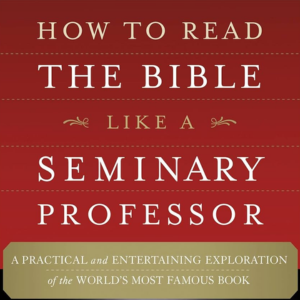
The Bible is the most influential book in human history, yet for many, it remains the most intimidating. We often approach it with a mix of reverence and confusion, wondering if we need a PhD in ancient languages just to understand a single parable.
In “How to Read the Bible Like a Seminary Professor,” Mark M. Yarbrough pulls back the curtain. He demystifies the process of biblical interpretation, proving that while the Word is profound, the tools to understand it are accessible to everyone. This isn’t a dry academic textbook; it’s a witty, engaging, and deeply practical guide that moves from the “How” to the “Wow.”
Introduction: Shelly, I Have a Question for You…
Yarbrough begins not with a theological dissertation, but with a relatable human moment. The introduction introduces us to the “Shelly” in our lives—the person we turn to when we are stuck. This sets the tone for the entire book: The Bible was meant to be understood.
The author argues that many Christians suffer from “interpretive paralysis.” We are afraid of getting it wrong, so we don’t try at all. Yarbrough’s mission is to bridge the gap between the ivory tower of the seminary and the wooden pew of the local church. He posits that reading the Bible like a professor doesn’t mean being cold or clinical; it means being observant, intentional, and humble.
Step One: Know It! – The Power of Observation
The first phase of Yarbrough’s method is Observation. Before we can ask “What does this mean?”, we must master the art of asking “What does this say?”
Basic Things, Puzzles, Pictures, and Practice
In this section, Yarbrough emphasizes that reading is a skill. He compares biblical study to solving a puzzle. Most of us rush to find the “meaning” (the completed picture) without looking at the individual pieces (the words, the grammar, the historical context).
He introduces the concept of active reading. This involves:
- Looking for repetitions.
- Noting contrasts and comparisons.
- Identifying “cause and effect” relationships within the text.
Chuck and the Country Corn Maze (Parts 1 & 2)
Through the hilarious and metaphorical story of “Chuck” navigating a corn maze, Yarbrough illustrates the importance of structure.
- Part 1 focuses on the “Big Picture.” Just as you need an aerial view of a maze to find the exit, you need to understand the overarching narrative of the Bible to understand individual verses.
- Part 2 dives into the “Micro-View.” Once you know where you are in the maze, you have to pay attention to the specific turns. In biblical terms, this means understanding the literary genre. You don’t read a Psalm (poetry) the same way you read Romans (a logical argument) or Judges (historical narrative).
My Number is 55-Two-341-Zero
This quirky chapter title highlights the importance of Context. If someone gives you a string of numbers, they are meaningless until you know if it’s a phone number, a bank account, or a coordinates.
Yarbrough teaches that “context is king.” A verse taken out of its surrounding paragraph, book, or historical era can be made to say almost anything. To “Know It,” we must respect the boundaries the author originally intended.
Step Two: Work It! – The Art of Interpretation
Once we have observed the facts, we move to Interpretation. This is the “Work It” phase, where we bridge the 2,000-year gap between the ancient world and our modern lives.
Bonus Pieces and “Honey… Where are my Black Socks?”
Interpretation often feels like looking for something that is right in front of you but hidden by your own biases. Yarbrough uses the “black socks” analogy to show how our cultural “clutter” prevents us from seeing the plain meaning of Scripture. We often “read into” the text (eisegesis) rather than “drawing out” from the text (exegesis).
Love Notes and Lockers
Here, the author explores the Authorial Intent. When you find a love note in a locker, you want to know what the writer meant, not what you want it to mean. Yarbrough argues that the primary meaning of a passage is what the original human author, under the inspiration of the Holy Spirit, intended to communicate to the original audience.
A is for Apple… Except When It’s Not
This chapter tackles the complexities of Metaphors and Figures of Speech. The Bible is rich with imagery. When Jesus says He is “the door,” He isn’t made of wood and hinges. Yarbrough provides a framework for identifying when the Bible is speaking literally and when it is using figurative language to point to a deeper literal truth.
Loony and Lavish… Language
Yarbrough dives into the “original languages” (Hebrew, Aramaic, and Greek) without making the reader feel like they need to learn the alphabet. He explains how word studies work and warns against the “root fallacy”—the idea that a word’s ancient origin always dictates its current meaning.
It is the Lord’s Will… For You to Go to Israel!
This chapter is a passionate plea for Geography and History. Understanding the physical world of the Bible—the mountains, the seasons, the political climate of the Roman Empire—transforms 2D black-and-white text into a 4D technicolor experience.
You Got It Good!
This is about Correlation. Scripture interprets Scripture. Yarbrough shows how to use cross-references to see how the New Testament explains the Old, and how the Old Testament provides the foundation for the New.
Everybody Loves a Good Story (Parts 1 & 2)
The Bible is largely composed of narrative.
- Part 1 teaches us how to track characters, plot, and conflict.
- Part 2 warns us not to assume every character’s action is an “example” to follow. Sometimes, the Bible records “descriptive” history (what happened) rather than “prescriptive” commands (what we should do).
Yep, I Stepped In It
A candid look at Difficult Passages. Yarbrough doesn’t shy away from the “weird” parts of the Bible. He provides a “survival guide” for when you encounter verses that seem contradictory or morally confusing, emphasizing patience and the “analogy of faith” (clearer passages should help interpret obscure ones).
The Weird, Wretched, and Wonderful
Continuing the theme of the Bible’s “strangeness,” the author explores the cultural gap. Things that were “wonderful” to an ancient Israelite might seem “wretched” or “weird” to us. By understanding ancient Near Eastern culture, we can move past the “ick factor” to find the theological gold.
Old-School Technology
Yarbrough wraps up the interpretation section by looking at the Tools of the Trade. He recommends concordances, commentaries, and Bible dictionaries, teaching the reader how to build a “seminary-lite” library without breaking the bank.
Step Three: Live It! – The Necessity of Application
The final step is Application. Knowledge without transformation is just intellectual pride. If we don’t “Live It,” we haven’t truly read it like a professor—or like a follower of Christ.
Dude, I’m Sorry… I’ll Try to Do a Better Job
This chapter focuses on Repentance and Change. The Bible is a mirror. When we see something wrong in the mirror, we don’t fix the mirror; we fix ourselves. Yarbrough explains that the goal of reading is to align our lives with God’s will.
Contaminated
Yarbrough warns against “partial application.” We often apply the Bible to the areas of our lives that are already “clean” while keeping the “contaminated” areas (our finances, our hidden habits, our grudges) off-limits. True application is holistic.
Things Unfinished (Should Be Finished)
The book concludes with a call to Perseverance. Bible study isn’t a one-time event; it’s a lifelong journey. Yarbrough encourages readers to finish what they started, moving from being “consumers” of the Word to “doers” of the Word.
The Core Message: What Mark M. Yarbrough Wants to Convey
The ultimate message of How to Read the Bible Like a Seminary Professor can be distilled into three main points:
- Confidence over Confusion: You do not need a specialized degree to hear from God. The Bible is “perspicuous” (clear) in its central message. By following a simple process—Observe, Interpret, Apply—any reader can find clarity.
- The Author’s Voice Matters: We must respect the Bible as a historical document. We aren’t looking for “what this means to me” in a vacuum; we are looking for what God said through His prophets and apostles.
- Transformation is the Goal: The “Seminary Professor” approach isn’t about winning theological debates. It’s about falling more deeply in love with the Author. We study the Word to know the God of the Word.
Final Review: Why You Should Read This Book
Mark Yarbrough has achieved something rare: a book about hermeneutics (the science of interpretation) that is actually funny. His self-deprecating humor and relatable anecdotes make the medicine of “grammar and syntax” go down easily.
Pros:
- Highly Accessible: Breaks down complex concepts into simple analogies.
- Actionable: Every chapter includes “Practice” sections to try the skills immediately.
- Spiritually Grounded: Never loses sight of the Bible’s divine nature.
Cons:
- If you are looking for a deep dive into advanced Greek linguistics, this is a “foundations” book, not an exhaustive academic tome.
Verdict: Whether you are a new believer or a seasoned Sunday School teacher, this book will revitalize your quiet time. It turns the “chore” of Bible reading into an “exploration” of discovery.
Frequently Asked Questions (FAQs)
Q1 What is How to Read the Bible Like a Seminary Professor about?
This book teaches readers how to understand the Bible clearly and responsibly using practical tools, real-life examples, and a simple three-step method: Know It, Work It, and Live It.
Q2 Is this book suitable for beginners who are new to the Bible?
Yes. The author intentionally writes in a simple, engaging, and humorous style, making it ideal for beginners as well as experienced readers who want to deepen their understanding.
Q3 Do I need any theological background to read this book?
No theological or academic background is required. The book explains biblical interpretation in an easy, human-friendly way without complex scholarly language.
Q4 What makes this book different from other Bible study guides?
Unlike many study guides, this book focuses on how to read the Bible rather than telling readers what to think, empowering them to interpret Scripture confidently on their own.
Q5 What is the main takeaway from this book?
The key message is that anyone can read the Bible well by using context, understanding language and genre, and applying Scripture thoughtfully to everyday life.