
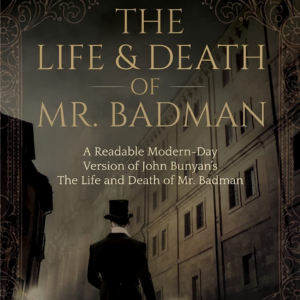
John Bunyan is a name synonymous with The Pilgrim’s Progress, the quintessential allegory of the Christian life. However, while The Pilgrim’s Progress shows us the narrow path to the Celestial City, its “companion” piece, The Life and Death of Mr. Badman, serves as a sobering, detailed map of the broad road to destruction.
In this modern-day version by Alan Vermilye, the archaic 17th-century prose is revitalized for today’s reader without losing the biting moral clarity of Bunyan’s original vision. This blog provides an exhaustive look at all 45 chapters, a critical review of the themes, and the core message the authors intend to convey.
Table of Contents
ToggleThe Premise: A Dialogue on Depravity
Unlike the journey-based narrative of Christian in The Pilgrim’s Progress, this book is structured as a dialogue between two characters: Mr. Wiseman and Mr. Attentive.
Sitting under a tree, the two men discuss the recent death of a neighbor, Mr. Badman. Through their conversation, we witness a “reverse biography”—a forensic look at a life lived entirely for the self, the world, and the devil.
Detailed Summary
Part 1: The Seeds of Wickedness
Chapter 1: The Introduction of Mr. Badman Mr. Wiseman introduces the subject. Badman was not just a sinner by nature, but a sinner by choice and habit.
Chapter 2: Badman’s Bad Childhood Even as a child, Badman displayed a “sinful soul.” He resisted all parental guidance and showed an early affinity for lying and stealing.
Chapter 3: The Sin of Lying Bunyan (through Wiseman) goes on a deep dive into lying. He argues that lying is the “alphabet to a bad life.”
Chapter 4: Stealing from Parents and Neighbors Badman began by stealing small things—fruit, pennies—gradually hardening his conscience against the property of others.
Chapter 5: Sabbath-Breaking He hated the Lord’s Day. For Badman, Sundays were for sports, drinking, and mocking those going to church.
Chapter 6: Swearing and Cursing Badman developed a “blasphemous tongue,” using God’s name to punctuate his anger or his jokes.
Chapter 7: The Dangers of Bad Company Wiseman explains how Badman sought out peers who validated his vices. “Birds of a feather” is the operative theme here.
Chapter 8: Resisting Good Counsel Whenever his parents or godly neighbors tried to warn him, Badman became more defiant.
Chapter 9: Badman’s First Apprenticeship He was placed with a godly master, whom he hated. He spent his time sabotaging the business and mocking his master’s prayers.
Chapter 10: Running Away Unable to handle the “constraints” of a holy household, Badman ran away to find a master as wicked as himself.
Part 2: Maturity in Vice
Chapter 11: The Second Master Badman finds a master who is a drunkard. Here, his vices are not just tolerated but encouraged.
Chapter 12: The Sin of Uncleanness Wiseman discusses Badman’s sexual immorality, warning that “the gate of the harlot is the gate to hell.”
Chapter 13: Drunkenness and Gluttony Badman becomes a “slave to the belly,” spending his earnings on excess while his character rots.
Chapter 14: Badman Sets Up Shop With money from his father, Badman opens his own business, but his primary goal is to use his trade as a cover for his lusts.
Chapter 15: Financial Ruin Due to his heavy drinking and “bad company,” Badman quickly runs through his capital.
Chapter 16: The Fraudulent Marriage Proposal To save his finances, Badman pretends to be “religious” to woo a wealthy, godly woman.
Chapter 17: The Deception of the Godly Woman The woman, believing his false repentance, marries him—a warning to all believers about “unequal yoking.”
Chapter 18: The Mask Falls Off Once the marriage is finalized and he has her money, Badman drops the religious act and becomes her “greatest cross.”
Chapter 19: Persecuting His Wife He forbids her from seeing her Christian friends and mocks her “whining” prayers.
Chapter 20: The Sin of Pride Badman’s pride grows with his wealth. He demands respect he hasn’t earned.
Part 3: The Art of Deceit
Chapter 21: Badman’s False Weights and Balances He becomes a master of “market sins,” using rigged scales to cheat his customers.
Chapter 22: Deceitful Trading Wiseman explains the theology of business—that cheating a neighbor in trade is a direct sin against God.
Chapter 23: The Sin of Extortion Badman takes advantage of the poor, raising prices when they are most desperate.
Chapter 24: Fraudulent Bankruptcy Badman creates a “planned” bankruptcy to wipe out his debts while hiding his assets, a common white-collar crime even today.
Chapter 25: Deceiving Creditors He uses “smooth words” to convince his creditors that he is the victim of bad luck, not bad character.
Chapter 26: Badman’s Conscience Hardens After getting away with financial fraud, Badman feels invincible. His conscience is “seared with a hot iron.”
Chapter 27: The Sin of Anger and Hatred He becomes a man of “fierce passions,” venting his rage on anyone who disagrees with him.
Chapter 28: Badman’s Broken Leg and “Repentance” A drunken fall leads to a broken leg. Fearing death, Badman cries out to God in a “sickbed repentance.”
Chapter 29: The Vanity of Sickbed Repentance Wiseman warns that most people repent out of fear of hell, not love for God. As soon as Badman heals, he returns to his sin.
Chapter 30: The Death of His Wife His godly wife dies of a broken heart, worn down by his cruelty. Her death is her gain, but his ultimate loss.
Part 4: The Final Descent
Chapter 31: Badman’s Second Marriage He marries a woman as wicked as himself. They spend their lives “sinning together.”
Chapter 32: The Judgments of God on Sinners Wiseman recounts stories of other “bad men” who met violent or sudden ends.
Chapter 33: The Sins of the Tongue Revisited Even in old age, Badman’s mouth remains a “fountain of filth.”
Chapter 34: Badman’s Physical Decay Years of excess begin to take their toll on his health.
Chapter 35: The Hypocrisy of “Peaceful” Deaths Wiseman addresses a difficult truth: many wicked men die quietly, without apparent agony.
Chapter 36: The “Quiet” Death of Mr. Badman Badman dies like a “lamb,” but Wiseman warns this is a “judgment of a numb heart.”
Chapter 37: The Danger of a Seared Conscience A lack of terror on a deathbed isn’t a sign of heaven; it’s a sign of a dead soul.
Chapter 38: The Comparison of the Righteous and the Wicked Wiseman contrasts the deaths of the godly (filled with hope) with the wicked (filled with delusion).
Chapter 39: The Legacy of Mr. Badman He leaves behind children who have learned his vices.
Chapter 40: The Sin of Parents A warning to parents: your children are more likely to follow your footsteps than your words.
Chapter 41: The Finality of Judgment Wiseman explains that after death, there is no second chance.
Chapter 42: The Reality of Hell A sober discussion on the eternal destination Badman chose for himself.
Chapter 43: Attentive’s Reflection Mr. Attentive realizes that he, too, has some of Badman’s traits within him.
Chapter 44: The Call to Repentance The dialogue shifts to the reader, urging a turning away from the “Badman path.”
Chapter 45: The Conclusion The two men part ways, having learned that a life lived without God is the greatest tragedy of all.
Review: Why Alan Vermilye’s Version Matters
Many modern readers find John Bunyan’s original 1680 text difficult to navigate. The sentence structures are long, and the cultural references can feel dated. Alan Vermilye does an exceptional job of “translating” the heart of the message into a readable format.
The Power of the Dialogue Format
The conversational style makes the heavy theological concepts accessible. Instead of a dry lecture on morality, the book feels like an investigative true-crime podcast. You are looking at the “evidence” of a wasted life.
Relatability in the 21st Century
While Badman lived in the 17th century, his sins—fraud, adultery, pride, and religious hypocrisy—are headlines in our current news cycles. Vermilye emphasizes that the “market sins” (cheating in business) are just as damnable as the “sensual sins” (drunkenness).
The “Quiet Death” Controversy
One of the most striking parts of the book is the climax. We expect the villain to die screaming in terror. Instead, Badman dies peacefully in his sleep. Bunyan’s insight here is profound: A quiet death is no proof of a quiet conscience. This remains one of the most chilling warnings in Christian literature.
What Message Does the Author Want to Convey?
John Bunyan, with the modern assistance of Alan Vermilye, wants to convey three primary messages:
The Deceptiveness of Sin
Sin is not just an act; it is a progressive hardening of the heart. Badman didn’t become a monster overnight. He started with small lies and small thefts. The author warns that neglected “small” sins are the seeds of ultimate destruction.
The Danger of “Religious” Hypocrisy
The most harrowing chapters are those where Badman uses religion as a tool for financial gain (wooing his first wife). The author wants to show that God is not mocked; using the “language of Canaan” to mask a heart of stone is a double sin.
The Sovereignty of Choice
Every chapter reinforces that Badman had “Good Counsel” available to him. He had a godly wife, a godly master, and a godly father. His path to hell was not a lack of opportunity for grace, but a persistent, willful rejection of it.
Conclusion
The Life and Death of Mr. Badman is a mirror. As Mr. Attentive realizes at the end of the book, we all find traces of Mr. Badman in our own hearts—our tendency to exaggerate, our desire for “easy” money, or our irritation with spiritual things.
Alan Vermilye has done the modern church a great service by bringing this “lost classic” back to the forefront. It is a sobering, necessary read for anyone who wants to understand the gravity of the soul’s journey.
Related Articles

Frequently Asked Questions (FAQs)
1. What is The Life and Death of Mr. Badman about?
The Life and Death of Mr. Badman is an allegory written by John Bunyan as a realistic counterpart to The Pilgrim’s Progress. Structured as an engaging dialogue between Mr. Wiseman and Mr. Attentive, the book explores the unrepentant life of Mr. Badman—from childhood sins and dishonest business dealings to his spiritual ruin. It serves as a stark moral warning against living in worldly deceit without repentance.
2. How does Mr. Badman differ from Christian in The Pilgrim’s Progress?
While Christian journeys through struggle toward redemption and the Celestial City, Mr. Badman chooses the opposite path straight toward damnation. Bunyan purposefully contrasts Christian’s sincere repentance with Badman’s hardened heart. Badman ignores every conviction and spiritual warning, demonstrating how stubborn pride, unchecked sin, and false security ultimately drag a person down the broad road to destruction.
3. What are the key moral and spiritual themes in the story?
The book highlights core themes like hypocrisy, dishonest trade, ungodly marriage, and the danger of dying in false peace. Bunyan uses Badman’s quiet, peaceful deathbed scene to challenge the popular belief that a calm death guarantees salvation. Instead, the narrative warns readers that spiritual apathy and persistent impenitence inevitably invite divine judgment.
4. Why is John Bunyan’s dialogue format significant in this work?
John Bunyan chose a conversational dialogue between Mr. Wiseman and Mr. Attentive to make deep theological and ethical lessons relatable to ordinary readers. This format allowed him to examine practical everyday sins—such as cheating customers, swearing, and breaking marriage vows—while providing thoughtful biblical commentary and pastoral counsel throughout their conversation.
5. What practical lessons can modern readers take away from Mr. Badman’s life?
Modern readers can learn that integrity in daily business, honesty in relationships, and genuine humility before God matter far more than temporary worldly success. Mr. Badman’s downward spiral reminds us that habitual sin hardens the conscience over time, showing the urgent need for self-examination, authentic faith, and immediate repentance before it is too late.