
Table of Contents
ToggleAnxious for Nothing : Finding Peace in the Chaos
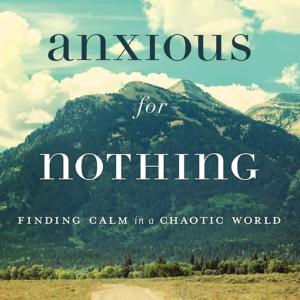
In an era of 24-hour news cycles, digital exhaustion, and global instability, anxiety has become the “new normal.” We aren’t just stressed; we are breathless. It’s in this climate that Max Lucado’s Anxious for Nothing: Finding Calm in a Chaotic World serves as more than just a book—it’s a rescue flare.
If you’ve ever felt like your mind is a browser with fifty tabs open—and one of them is playing music you can’t find—this summary is for you. Based on the biblical promise found in Philippians 4:6–7, Lucado provides a roadmap for moving from a life of “fret” to a life of “faith.”
The Core Message: What Max Lucado Wants You to Know
Before we dive into the chapters, we must understand the heartbeat of the book. Lucado isn’t suggesting that we can live a life entirely devoid of anxious moments. Instead, he argues that we don’t have to live a life of anxiety as a state of being.
The central message is this: Anxiety is not a sin; it is a signal. It is a signal that we have moved our focus away from God’s sovereignty and onto our own circumstances. Lucado wants to convey that while the world is chaotic, God is not. By practicing the presence of God and shifting our cognitive habits, we can experience a “peace that surpasses all understanding.”
Section 1: The Foundation of Calm
Less Fret, More Faith
Lucado opens with a startling statistic: anxiety is the most common mental health struggle in the world. He defines anxiety not as a temporary worry, but as a “low-grade dread” that hums in the background of our lives.
The prescription? Faith. Not a vague, “hope for the best” kind of faith, but a specific trust in the character of God. Lucado suggests that we “fret less” when we realize that we were never meant to carry the weight of the world on our shoulders.
Rejoice in the Lord’s Sovereignty
Sovereignty is a big theological word, but Lucado makes it personal. It means God is in control of the details. When we feel anxious, it’s usually because we feel out of control.
By rejoicing in God’s sovereignty, we acknowledge that while we might not know what the future holds, we know who holds the future. Lucado encourages readers to stop staring at the storm and start staring at the Pilot.
Rejoice in the Lord’s Mercy
Guilt is a primary fuel for anxiety. We worry about past mistakes and future judgments. Lucado pivots here to the “Mercy of God.”
He explains that we can’t be calm if we are constantly looking over our shoulders at our failures. Rejoicing in mercy means accepting that God’s grace is sufficient for our “messes.” When the past is settled at the Cross, the future looks much less threatening.
Rejoice in the Lord Always
This chapter focuses on the word “Always.” It’s easy to rejoice when the bank account is full and the kids are healthy. But Paul wrote Philippians—the source text for this book—while in a literal prison.
Lucado emphasizes that “rejoicing” is a choice, not a feeling. It’s an act of the will to find joy in God’s unchanging nature, regardless of the changing seasons of life.
Section 2: The Practical Application of Peace
Contagious Calm
Anxiety is contagious, but so is calm. Lucado explores the idea that our internal state affects those around us. When we lean into God’s peace, we become a “non-anxious presence” in our families and workplaces.
He challenges readers to be the person who brings the “calm” into the room rather than the “storm.” This starts with “The Lord is near”—a reminder that we are never acting alone.
Prayer, Not Despair
The biblical antidote to anxiety is specific: “In everything by prayer and supplication…” Lucado breaks down the difference between “vague wishing” and “supplication.”
Despair happens when we talk to ourselves about our problems. Prayer happens when we talk to God about them. Lucado argues that the very act of articulating our fears to a Creator who listens immediately de-escalates the physiological grip of anxiety.
Great Gratitude
You cannot be grateful and anxious at the same time. These two emotions cannot occupy the same space in the human heart.
Lucado highlights the “with thanksgiving” part of the Philippians passage. Gratitude is the “detergent” that cleans the windows of our souls. By listing our blessings—specifically and loudly—we force our brains to look for evidence of God’s goodness rather than evidence of impending doom.
Section 3: The Mind-Body Connection of Peace
God’s Peace, Your Peace
What is the “Peace of God”? Lucado describes it as a citadel. It’s a supernatural protection that guards our hearts and minds. It’s not a peace that comes from a problem-free life; it’s a peace that comes from a Presence-filled life.
He makes a distinction: there is the “Peace with God” (salvation) and the “Peace of God” (sanctification). This chapter helps readers claim the latter as a daily inheritance.
Think About What You Think About
This is perhaps the most “psychological” chapter of the book. Lucado aligns with modern Cognitive Behavioral Therapy (CBT) by suggesting that our thoughts determine our feelings.
If you meditate on the “what ifs,” you will be anxious. If you meditate on the “what is” (the truth of Scripture), you will be calm. He encourages “thought-catching”—the practice of identifying a toxic thought and replacing it with a divine truth.
Cling to Christ
In the final stretch, Lucado brings it all back to the person of Jesus. Peace isn’t a concept; it’s a Person.
“Clinging” implies a desperate, intentional holding on. When the waves are high, we don’t need a manual on swimming; we need a Life Raft. Lucado reminds us that Christ is not just a teacher of peace, but the Prince of Peace.
Section 4: The C.A.L.M. Method
To make the book’s teachings actionable, Lucado introduces the C.A.L.M. acronym, which serves as a summary of the entire process of overcoming anxiety:
Letter | Action | Description |
C | Celebrate | Celebrate God’s goodness and sovereignty. |
A | Ask | Ask God for help; be specific in your requests. |
L | Leave | Leave your concerns with Him; stop picking them back up. |
M | Meditate | Meditate on good things; curate your thought life. |
Deep Dive: Why This Book Resonates Today
The “Chaotic World” Context
We live in an “Age of Outrage.” Our phones notify us of every tragedy across the globe in real-time. Lucado acknowledges that the world is chaotic. He doesn’t gaslight the reader by saying things aren’t bad. Instead, he argues that because the world is chaotic, our need for a spiritual anchor is non-negotiable.
The Power of “Gentleness”
Lucado spends time on the verse “Let your gentleness be evident to all.” In a world of digital shouting, a calm, gentle spirit is a superpower. Lucado argues that when we are “anxious for nothing,” we have the emotional margin to be kind to others.
Addressing the “Why”
Why does God allow the chaos? While Lucado doesn’t claim to have every answer, he suggests that our anxiety often stems from a “throne-room” issue. We try to sit on the throne of our own lives. When we abdicate that seat and let God be God, the pressure disappears.
Critical Review: A Masterclass in Encouragement
Strengths
- Accessibility: Lucado writes in a way that feels like a conversation over coffee. He avoids dense academic jargon.
- Scripture-Based: Every claim is anchored in the text of Philippians 4, giving the book a solid theological foundation.
- Relatability: He shares his own struggles with anxiety, making him a “fellow traveler” rather than a distant lecturer.
Takeaway for the Reader
The book doesn’t promise that your problems will vanish. It promises that you can remain steady while they are happening. It’s about internal stability in the face of external volatility.
Final Thoughts: Moving Toward a Life of Calm
Max Lucado’s Anxious for Nothing is a timely prescription for a stressed-out generation. By following the C.A.L.M. framework and shifting our focus from our problems to our Provider, we can break the cycle of “low-grade dread.”
If you are tired of the racing heart, the sleepless nights, and the “what if” scenarios, this book offers a path forward. It isn’t a quick fix, but a lifestyle shift—a daily decision to trust that God is near, God is in control, and God is good.
FAQs
Q1. Is this book suitable for severe anxiety?
It’s best as spiritual support, not a replacement for professional help.
Q2. Do I need to be Christian to read this book?
The book is faith-centered, so familiarity with Christian beliefs helps.
Q3. Is the book practical or just theoretical?
Very practical, with actionable steps and reflections.
Q4. Can this book be read slowly as a devotional?
Yes, many readers use it as a daily devotional.
Q5. What makes this book different from other anxiety books?
Its blend of scripture, storytelling, and compassion.