Table of Contents
ToggleSeeking Allah Finding Jesus:Truth & Faith (2026)
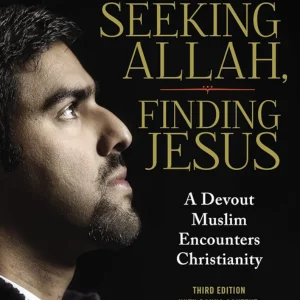
In the landscape of religious memoirs, few books have resonated as deeply or as widely as “Seeking Allah, Finding Jesus: A Devout Muslim Encounters Christianity” by the late Nabeel Qureshi. This is not merely a theological textbook; it is a heartfelt, intellectual, and emotional autobiography that chronicles one man’s painful yet transformative journey from devout Islam to evangelical Christianity.
For readers searching for a “Seeking Allah Finding Jesus summary” or a detailed “Nabeel Qureshi book review,” this post offers a comprehensive breakdown. We will walk through every section of the book, from the Prologue to the Appendices, analyzing the arguments, the relationships, and the spiritual milestones that defined Qureshi’s life. Whether you are a skeptic, a believer, or simply curious about interfaith dialogue, understanding this book provides crucial insight into the complexities of faith conversion in the modern world.
About the Author: Nabeel Qureshi
Before diving into the chapters, it is essential to understand the man behind the words. Nabeel Qureshi (1983–2017) was an American author and apologist. Born into an Ahmadiyya Muslim family, he was deeply devout from a young age. He later co-founded “Acts 17 Apologetics” and worked with RZIM (Ravi Zacharias International Ministries). Tragically, Nabeel passed away from stomach cancer at the age of 34, shortly after the release of this book. His legacy remains in his writings, which are characterized by immense respect for his Muslim heritage while rigorously defending Christian truth claims.
Detailed Chapter-by-Chapter Breakdown
The book is structured into ten distinct parts, followed by an epilogue and several appendices. Below is an in-depth explanation of each section.
Prologue: Seeking Allah
The book opens with Nabeel establishing the stakes. He describes his lifelong devotion to Allah. This isn’t a story of a lukewarm Muslim drifting away; it is a story of a passionate believer who loved God with his whole heart. The prologue sets the tone of respect. Nabeel makes it clear that his conversion was not due to a lack of faith, but due to an abundance of it—a desire to find the ultimate truth.
Part One: Called to Prayer
This section lays the foundation of Nabeel’s upbringing.
- Prayers of my Fathers: Nabeel details the spiritual legacy passed down from his father. Prayer was not a chore but a privilege and a connection to the Divine.
- A Mother’s Faith: His mother’s influence is highlighted, showing the gentle, nurturing side of his Islamic upbringing.
- A Community of Four: He describes the close-knit nature of his family unit and their religious community.
- The Perfect Book: Here, Nabeel discusses the Islamic view of the Quran as the literal, uncreated word of God, perfect and preserved.
- Stories of the Prophet: The life of Muhammad is presented as the ideal example for humanity, a source of moral guidance.
- Righteous Through Ritual Prayer: The importance of Salah (ritual prayer) is explained as a means of maintaining constant awareness of God.
- Diversity in Islam: Nabeel touches upon the different sects within Islam, hinting at the complexities he would later face.
- The Path of Sharia: Life was governed by Islamic law, which provided structure and holiness.
- Dreams of the Faithful: Even early on, dreams played a role in his spiritual life, a theme that becomes crucial later.
- The Month of Blessing: Ramadan is described with warmth, highlighting the discipline and community of fasting.
Related Articles


Part Two: An Ambassador for Islam
As Nabeel grew older, he didn’t just practice Islam; he defended it.
- Third Culture: Growing up in the West while holding Eastern religious values created a “third culture” identity.
- Muslims in the West: He discusses the challenges and opportunities of being Muslim in America post-9/11.
- Swoons and Substitutions: Nabeel learned Islamic apologetics regarding the crucifixion. The dominant Islamic view is that Jesus did not die on the cross but was substituted or swooned. Nabeel was trained to defend this.
- The Father is Greater than Jesus: He explores the Islamic rejection of the Trinity and the Fatherhood of God, viewing it as shirk (idolatry).
- Heaven’s Gates and Hell’s Flames: Concepts of the afterlife in Islam are contrasted with what he would later learn of Christianity.
- Treasured Traditions: Cultural and religious traditions were deeply ingrained in his identity.
- Signs in the Sky: He recounts looking for spiritual confirmations in the world around him.
- Honor and Authority: The social cost of leaving Islam is introduced here; honor is paramount in Muslim communities.
- The Religion of Peace: Nabeel grappled with the narrative of Islam as a religion of peace versus the violence seen in history and current events.
Part Three: Testing the New Testament
This marks the turning point where intellectual curiosity meets friendship.
- Becoming Brothers: Nabeel meets David Wood, a Christian apologist. Their friendship is the engine of the book. They agree to study together honestly.
- Opening My Eyes: Nabeel begins to read the New Testament without Islamic filters.
- Textual Evolution: They discuss how the Bible was transmitted. Nabeel had been taught the Bible was corrupted, but the evidence suggested otherwise.
- Revisiting Reliability: Historical reliability of the Gospels is examined. Nabeel realizes the New Testament documents are early and trustworthy.
Part Four: Coming to the Crux
The central conflict of the book: The Crucifixion.
- Litmus Tests: Nabeel and David set criteria for truth. If Jesus rose from the dead, Islam is false.
- Crucifying the Swoon Theory: Nabeel intellectually dismantles the Islamic theory that Jesus survived the cross. The medical and historical evidence points to death.
- A Muslim at Church: Nabeel experiences Christian worship firsthand. The atmosphere of grace contrasts with the ritualism he knew.
- Debating the Resurrection: The historical case for the resurrection is presented. Nabeel finds the empty tomb and the post-mortem appearances difficult to deny.
Part Five: Jesus: Mortal Messiah or Divine Son of God?
Having accepted the resurrection, Nabeel must now tackle the Divinity of Christ.
- Genetics and Jesus: A metaphorical look at how Jesus is unique, distinct from all other prophets.
- Jesus Creates, Carpenters: Exploring the miracles of Jesus as signs of divine authority, not just prophetic power.
- The Divine Son of Man: Nabeel studies the title “Son of Man” in Daniel and the Gospels, realizing it implies divinity, not just humanity.
- Polemics and the Earlier Jesus: He addresses the claim that Jesus’ divinity was a later invention by the Church. Historical analysis suggests Jesus claimed divinity himself.
Part Six: The Case for the Gospel
Now the theology shifts from Jesus to the nature of God and Salvation.
- Tension and the Trinity: The doctrine of the Trinity is often a stumbling block. Nabeel works through the logic of one God in three persons.
- Resonating with the Trinity: He begins to see the Trinity not as math, but as a relationship of love within God.
- Salvation in the Balance: In Islam, salvation is a scale of deeds. In Christianity, it is a gift of grace. This was a massive shift for Nabeel.
- Assessing the Gospel: He weighs the message of grace against the message of law.
Part Seven: The Truth About Muhammad
To follow Jesus, Nabeel had to re-evaluate Muhammad.
- Muhammad Revisited: He returns to the Sira (biography of Muhammad) with new eyes.
- The Picture Perfect Prophet: He questions the moral perfection of Muhammad, specifically regarding his marriages and warfare.
- Veiling the Violence: Nabeel confronts the violent aspects of Muhammad’s life that are often glossed over in apologetics.
- Muhammad Rasul Allah? He questions the claim that Muhammad is the final messenger of God in light of Jesus’ resurrection.
Part Eight: The Holiness of the Quran
If Jesus is God, the Quran cannot be His word if it contradicts Him.
- The Case for the Quran: Nabeel examines the Islamic claims of the Quran’s inerrancy.
- The Quran, Science, and Claims: (Addressing the prompt’s “bacauteism/scientism”). He looks at claims that the Quran contains modern scientific knowledge. He finds many of these claims to be forced interpretations.
- Health and the History of the Quran: The preservation of the Quran is scrutinized. Variants in early manuscripts challenge the idea of perfect preservation.
- Those Whom Their Right Hands Possess: He tackles difficult Quranic verses regarding slavery and treatment of captives, finding them morally troubling compared to the teachings of Jesus.
Part Nine: Faith in Doubt
The internal spiritual battle intensifies.
- Rationality and Revelation: Intellectually, Christianity made sense. But faith requires more than logic.
- The Cost of Embracing the Cross: Nabeel knows converting means losing his family, his community, and his safety.
- I Am Near: He cries out to God for a sign. He wants to know if God is personally reaching out to him.
- Seek and You Shall Find: A promise he clings to during his darkness.
- A Field of Crosses: A powerful vision/dream where he sees crosses, symbolizing the suffering and glory of Christ.
Part Ten: Guided by the Hand of God
The climax of the memoir.
- Deciphering Dreams: Nabeel has a series of vivid dreams about Jesus. In his Islamic worldview, dreams are a valid form of divine communication. These dreams convince him that Jesus is calling him personally.
- The Narrow Door: He realizes the way is hard, but it is the truth.
- A Stairway Out of the Mosque: A metaphorical description of his exit from Islam.
- Time to Mourn: He grieves the loss of his old identity and the pain it causes his parents.
- The Word Speaks: He accepts the Bible as God’s word.
- Finding Jesus: The moment of conversion. He surrenders to Christ.
Epilogue and Additional Sections
- Epilogue: Nabeel reflects on his new life as a Christian and the ongoing relationship with his Muslim family.
- Afterword: Mark Mittelberg: A friend and colleague provides context on Nabeel’s apologetics work.
- A Wife’s Reflections: Michelle Qureshi: This is a deeply emotional section. Michelle shares the personal cost of their journey, the threats they faced, and the strength of their marriage.
- Remembering Nabeel: A Conversation between David Wood and Nabeel Qureshi: A transcript that captures Nabeel’s humor, intellect, and passion.
- Appendix 1: Expert Contributions: Various scholars weigh in on topics like the Trinity, the Historical Muhammad, and the New Testament, bolstering Nabeel’s arguments.
- Appendix 2: Are Ahmadiyya Muslims? (Addressing the prompt’s “Almatis/Courses abroad my tower”). This is critical. Nabeel was Ahmadiyya, a sect considered non-Muslim by mainstream Sunni and Shia Muslims. This appendix explains the sectarian tension and how it influenced his openness to questioning authority.
The Core Message: What Does the Author Want to Convey?
While “Seeking Allah, Finding Jesus” is an apologetic work designed to defend Christian truth claims, its core message goes deeper than theology. Nabeel Qureshi wants to convey several vital themes:
Truth is Worth the Cost
The most overwhelming message of the book is that truth is objective and worth pursuing, regardless of the personal cost. Nabeel knew that converting to Christianity would alienate him from his parents, his community, and potentially put his life at risk. Yet, he argues that if something is true, it demands a response. He wants readers to understand that faith is not a blind leap but a step toward evidence, even when that step is painful.
Love Your “Enemy”
Throughout the book, Nabeel treats Islam with immense respect. He does not mock his former faith. He wants to convey that Christians should love Muslims, not as projects to be converted, but as neighbors to be loved. His friendship with David Wood models this: two men of different faiths who could debate fiercely yet love each other deeply. The message is that dialogue should be rooted in relationship, not just argumentation.
The Power of Dreams and Personal Revelation
Uniquely, Nabeel places significant weight on dreams. In Western Christianity, dreams are often dismissed. However, in the Muslim world, dreams are considered a legitimate channel for divine guidance. By including his dreams of Jesus, Nabeel bridges the cultural gap. He conveys that God speaks in ways that resonate with the seeker’s cultural context. For Nabeel, the intellectual arguments opened the door, but the personal encounters with Jesus walked him through it.
The Distinction Between Culture and Faith
Nabeel helps readers distinguish between cultural Islam and theological Islam. He shows how much of his identity was tied to community and family honor. His message is that following God may sometimes require separating faith from cultural expectations. This is a liberating message for anyone feeling trapped by religious traditionalism.
The Centrality of the Cross
Ultimately, the book points to the Cross of Christ. Nabeel argues that the Crucifixion and Resurrection are the hinge of history. If they happened, everything changes. He wants to convey that Christianity is not just a moral system but a rescue mission. The “Good News” is that God does for us what we cannot do for ourselves.
Review: Is This Book Worth Reading?
Strengths
- Narrative Flow: Unlike dry theological treatises, this book reads like a novel. The tension of whether Nabeel will convert keeps the reader engaged.
- Intellectual Honesty: Nabeel does not hide the difficulties of Christianity (like the Trinity) or the strengths of Islam (like the discipline of prayer). This builds trust with the reader.
- Cultural Insight: For Western Christians, this book is an invaluable window into the Muslim mind. It explains why Muslims believe what they believe, fostering empathy.
- Emotional Depth: The sections involving his wife, Michelle, and his parents add a layer of human tragedy and triumph that is rare in apologetics.
Considerations
- Apologetic Focus: Readers looking for a purely secular historical analysis might find the supernatural elements (dreams, miracles) challenging. The book is written from a perspective of belief.
- Sectarian Specifics: As an Ahmadiyya Muslim, Nabeel’s experience differs slightly from Sunni or Shia Muslims. However, the core theological hurdles he faces are universal to Islam.
- Emotional Weight: The epilogue and wife’s reflection are heartbreaking, knowing Nabeel’s untimely death. Readers should be prepared for an emotional conclusion.
Who Should Read This?
- Christians who want to understand how to share their faith with Muslim friends respectfully.
- Muslims who are questioning their faith or curious about the Christian perspective on Jesus.
- Skeptics interested in the intellectual case for the Resurrection.
- Anyone interested in memoirs about identity, family, and the search for meaning.
Conclusion: A Legacy of Love and Truth
“Seeking Allah, Finding Jesus” is more than a book; it is a legacy. Nabeel Qureshi poured his life, his intellect, and his heart into these pages. He successfully accomplishes what few authors can: he challenges the mind while capturing the heart.
By walking us through every chapter, from the Prayers of his Fathers to the Stairway Out of the Mosque, Nabeel invites us to witness the cost of discipleship. He does not present Christianity as an easy way out, but as the hard, narrow road that leads to life.
The final takeaway is found in the title itself. He was Seeking Allah—he was sincere, devout, and passionate. But in his honest pursuit of truth, he ended up Finding Jesus. The message is clear: God honors the sincere seeker. If you seek truth with an open heart, even if you start far away, you may find that the Truth has been seeking you all along.
For those interested in religious dialogue, apologetics, or simply a powerful human story, this book is an essential read. It reminds us that behind every theological debate, there are human beings with families, fears, and hopes. In the end, Nabeel Qureshi’s life whispers to us from the pages: “Seek and you shall find.”
Frequently Asked Questions (FAQ)
Q1: What is the main story behind Seeking Allah Finding Jesus by Nabeel Qureshi?
A: Seeking Allah Finding Jesus is a deeply personal memoir by Nabeel Qureshi that details his transformative journey from devout Islam to evangelical Christianity. Raised in a loving Ahmadiyya Muslim family, Qureshi spent years defending Islamic apologetics before engaging in rigorous historical and biblical debate with a Christian friend. Ultimately, after thoroughly examining the resurrection, Trinity, and receiving divine dreams, he made the life-altering decision to embrace Jesus Christ as his savior.
Q2: Is Seeking Allah Finding Jesus respectful toward Islam and Muslim traditions?
A: Yes, absolutely. Unlike many contentious religious memoirs, Nabeel Qureshi approaches his Muslim heritage with profound love, gratitude, and respect throughout the entire book. He honors his family’s devotion to prayer, community, and moral discipline while addressing theological differences thoughtfully. Rather than attacking Muslims, Qureshi focuses on intellectual evidence, historical integrity, and genuine friendship, making this book a masterclass in compassionate interfaith dialogue and spiritual truth-seeking.
Q3: Why are dreams and personal revelations so important in Nabeel Qureshi’s conversion?
A: In Islamic culture, dreams are widely recognized as a legitimate way God communicates spiritual guidance. While Nabeel Qureshi examined the historical evidence for the resurrection and the New Testament intellectually, his rational mind needed a personal touch from God. The vivid dreams he prayed for provided the final, intimate assurance he needed to surrender his heart to Jesus, demonstrating how God lovingly speaks to seekers within their own cultural context.
Q4: Who should read Seeking Allah Finding Jesus, and what is its core takeaway?
A: This book is ideal for Christians seeking to understand Muslim neighbors, Muslims questioning their faith, or skeptics exploring the historical case for Christ. The core takeaway is that discovering divine truth is worth any personal cost. Qureshi knew conversion meant sacrificing his family relationships and community status, yet he proved that standing on the truth of the Gospel brings ultimate peace and eternal purpose beyond earthly sacrifice.
Q5: How does Nabeel Qureshi address common theological objections like the Trinity and Crucifixion?
A: Qureshi methodically addresses Islamic objections using historical evidence, textual criticism, and philosophical logic. Through rigorous debates with his Christian friend David Wood, he dismantled common misconceptions about the swoon theory of the crucifixion and early New Testament reliability. By re-examining the Gospel narratives and early church history, Qureshi discovered that Jesus clearly claimed divinity and that the doctrine of the Trinity represents a relational, loving God.