
The promise is simple: by identifying the best time to meditate for your specific lifestyle—whether you are a night owl or a 5 AM riser—you can finally stop overthinking and start living with intention. This guide will help you navigate the science and spirituality behind timing so you can reclaim your focus and heal your spirit.
⏳ Not sure when to meditate?
Read this guide till the end to find the best time for YOU.
Choosing the best time to meditate isn't just about convenience; it’s about aligning with your body’s natural cortisol spikes and circadian rhythms. Science tells us that our brains fluctuate in receptivity throughout the day. If you try to force a deep mindfulness session right after a stressful work meeting, you might find yourself fighting your thoughts rather than flowing with them.
When you align your practice with a specific "golden hour," you reduce the friction of habit-building. According to recent meditation statistics, nearly 92% of practitioners use the habit for stress relief, yet many give up because they choose a time when their environment is too loud or their energy is too low.
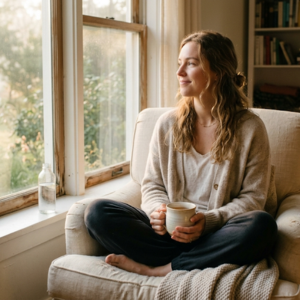
The Morning Magic: Is Dawn the Best Time to Meditate?
The Morning Magic: Is Dawn the Best Time to Meditate?For centuries, yogis and spiritual masters have claimed that the "Amrit Vela" (the hours before sunrise) is the best time to meditate. From a spiritual perspective, the world is physically quieter, and the "collective consciousness" is less cluttered.·
Fresh Mind: You haven't yet been hit by emails or news.·
Set the Tone: A 10-minute session at 6 AM acts as a shield against the day’s stress.·
Consistency: It is harder for "life" to get in the way of a morning routine compared to an evening one.
If you struggle with morning grogginess, try washing your face with cold water or doing three minutes of light stretching before sitting down. This shifts your body from "sleep mode" to "alert awareness," making the morning arguably the best time to meditate for long-term habit formation.
You can learn more about starting your day right in our guide on how to build a spiritual morning routine.

Midday Resets: The Antidote to Work Stress
Sometimes, the best time to meditate isn't when you first wake up, but when you are about to lose your cool. A "lunch break" meditation can serve as a mental "Control-Alt-Delete."
Research shows that even a five-minute mindfulness pause during high-cortisol periods (usually around 2 PM) can significantly lower perceived stress. Instead of reaching for a third cup of coffee, sitting in silence for a few minutes can provide a cleaner, more sustainable energy boost.·
The 5-Minute Rule: If you're busy, just five minutes is enough.·
The Car Sanctuary: If your office is loud, your car can be the perfect meditation pod.·
Digital Fast: Use this time to step away from all screens.
Nighttime Zen: Using Meditation for Better Sleep
If your main struggle is insomnia or "revenge bedtime procrastination," then the evening might be the best time to meditate for you. Evening meditation isn't about productivity or focus; it’s about surrender.
Using techniques like "Yoga Nidra" or body scans allows the nervous system to shift from the sympathetic (fight or flight) to the parasympathetic (rest and digest) state. This transition is crucial for deep, restorative sleep.
However, be careful—if you meditate while lying in bed, your brain might associate the practice with falling asleep, which can make it harder to stay alert during daytime sessions. If you want to dive deeper into the connection between sleep and spirituality, check out our post on spiritual meanings of dreams.

What Science Says About Timing
While spirituality favors the morning, modern science suggests that the best time to meditate is whenever you can be consistent. A study published in Nature indicates that regular practice, regardless of the hour, leads to structural changes in the brain's gray matter.
Time of Day
Primary Benefit
Best For
Early Morning
Mental Clarity & Focus
High Achievers / Spiritual Seekers
Mid-Day
Stress Reduction
Corporate Workers / Students
Evening
Emotional Processing
Overthinkers
Before Bed
Improved Sleep Quality
Insomniacs
3 Tips to Find Your Personal "Best Time"
Still not sure when to start? Follow these steps to find your unique best time to meditate:
1. Track Your Energy: For three days, note when you feel most anxious and when you feel most "empty." Meditate during the anxious times to calm down, or the empty times to recharge.
2. Stack Your Habits: Attach meditation to something you already do. "After I brush my teeth, I will sit for 5 minutes."
3. Experiment for a Week: Try mornings for seven days, then evenings for seven days. Your body will tell you which one feels more "aligned."
Finding the best time to meditate is a journey, not a destination. It’s okay if your time changes as your life changes.

Morning vs Night Meditation (Quick Comparison)
Factor
Morning
Night
Focus
High
Medium
Relaxation
Best For
Medium
Productivity
High
Sleep
Recommended YouTube Resources
Recommended YouTube ResourcesTo help you find the best time to meditate, I highly recommend these three videos that break down the timing and techniques:
1. The Scientific Best Time to Meditate – A deep dive into circadian rhythms.
2. 10-Minute Morning Meditation for Beginners – Perfect for those testing the morning window.
3. Sleep Hypnosis vs. Meditation – To see if nighttime is right for you.
Frequently Asked Questions (FAQs)
Q1. Can I meditate twice a day?
Absolutely. Many people find that meditating for 10 minutes in the morning to set their intention and 10 minutes at night to clear the day's "mental clutter" is the most effective approach.
Q2. Is it bad to meditate after eating?
It is generally recommended to wait at least 1–2 hours after a heavy meal. Digestion requires a lot of energy, which can make you feel drowsy or distracted during your practice.
Q3. What is the "Amrit Vela" and why is it special?
In Indian spiritual traditions, the time between 3:00 AM and 6:00 AM is considered the best time to meditate because the atmosphere is charged with peace and the "veil" between the physical and spiritual worlds is thought to be thinnest.
Q4. Is 5 minutes of meditation enough?
Yes! Consistency is more important than duration. Five minutes every day at the best time to meditate for your schedule is better than 60 minutes once a week.
Q5. Should I meditate with my eyes open or closed?
If you are meditating in the morning to wake up, a "soft gaze" on the floor can help prevent you from falling back asleep. If you are meditating at night to relax, closing your eyes is usually better.
Final Thoughts: Your Soul Knows the Way
At the end of the day, the best time to meditate is the time you actually do it. Don't let the "perfect" become the enemy of the "good." If you miss your morning window, don't write off the whole day—just find five minutes before bed to reconnect with your breath.Spirituality isn't about following a rigid clock; it's about listening to the whispers of your soul. For more insights on living a grounded life, read our article on practical mindfulness for busy professionals.
Save this guide for later
Share it with someone who overthinks
Follow for more practical spirituality
Read here