
Table of Contents
ToggleGet Out of Your Head: Stop Toxic Thoughts & Find Peace Now (2026)
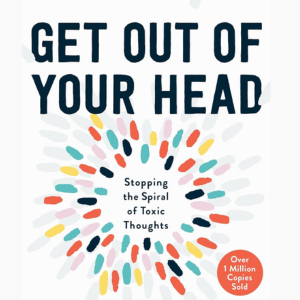
Jennie Allen’s Get Out of Your Head: Stopping the Spiral of Toxic Thoughts is a groundbreaking Christian self-help book that helps readers break free from negative thought patterns and renew their minds with biblical truth. If you struggle with anxiety, overthinking, or self-doubt, this book offers practical tools and spiritual insight to transform your mental and emotional health. In this comprehensive summary and review, we’ll explore all 10 chapters in detail, break down the book’s two-part structure, and reveal the powerful message Jennie Allen wants to convey.
Jennie Allen Book Summary: An Overview
Get Out of Your Head is more than a self-help book; it’s a guide to reclaiming your mind and aligning your thoughts with God’s truth. Allen draws from her own experiences, biblical teachings, and neuroscience to show readers how to recognize and interrupt toxic thought spirals. The book is structured in two parts: Part 1 focuses on understanding the problem of negative thinking, and Part 2 provides practical strategies for renewing your mind and adopting a Christian mindset.
Part 1: All the Thoughts – Understanding the Spiral
Thinking About Thinking
Allen begins by sharing her own story of mental and spiritual crisis. She describes how anxiety, doubt, and racing thoughts dominated her life, leading her to realize that her mind was running her life instead of her consciously choosing her thoughts. She introduces the “spiral” model: emotions trigger thoughts, thoughts shape decisions, decisions drive behaviors, behaviors impact relationships, and over time these consequences reinforce the original thoughts, either in a downward or upward direction.
Allen argues that followers of Jesus are not powerless in this process; God has given them authority over their thought life through Scripture and the Holy Spirit. The core idea emerges: “I have a choice” — toxic thoughts do not have to be passively believed.
What We Believe
“What We Believe” digs into the deeper lies under most negative spirals, which Allen summarizes as three core beliefs: “I’m helpless,” “I’m worthless,” and “I’m unlovable.” She explains how past experiences, trauma, culture, and spiritual attack can cement these beliefs until they feel like unquestionable truth.
Using Philippians and other New Testament passages, she contrasts these lies with God’s truth: in Christ believers are empowered, valuable, and deeply loved. The chapter invites readers to begin noticing which of these lies they most often believe, and to ask, “What does God actually say about this?”
Spiraling Out
In “Spiraling Out,” Allen shares a vivid season of panic: waking at 3 a.m. nightly, plagued by catastrophic thoughts about her faith, family, calling, and even God’s existence. Minor anxieties snowball into existential doubt, illustrating how quickly unchecked thoughts can descend into despair and distance from God.
She shows how this spiral works: anxious emotions feed fearful thoughts (“God has left me,” “I’m failing”), those drive choices to withdraw or numb out, which damage relationships and reinforce the sense of isolation and failure. The chapter’s purpose is to help readers recognize their own spirals so they can name them instead of living in vague overwhelm.
Breaking Free
“Breaking Free” presents the turning point: realizing that believers can interrupt the spiral by actively choosing a different thought rooted in truth. Allen uses the biblical concept of “taking every thought captive to obey Christ” to argue that the mind is a battlefield where believers have real spiritual authority.
She begins to outline practical steps: naming the lie, replacing it with Scripture, and rehearsing that truth until it becomes more familiar than the old pattern. The emphasis is not on instant perfection but on forming new mental habits that over time produce different emotions, decisions, and outcomes.
Where Thoughts Are Captured
“Where Thoughts Are Captured” explains more technically and spiritually how this capture happens. Allen references both neuroscience (neuroplasticity and habit loops) and spiritual warfare, saying that changing thought patterns literally rewires the brain and resists the enemy’s attempts to keep believers in bondage.
Practically, she encourages:
- Pausing when strong emotions surface.
- Asking, “What thought is underneath this feeling?”
- Testing that thought against Scripture.
- Intentionally choosing a God‑centered thought instead.
This chapter frames the mind as a place where the Holy Spirit partners with human choice to transform thought patterns over time.
Make the Shift
“Make the Shift” is a bridge to Part 2, focusing on moving from theory to practiced choice. Allen describes the “upward spiral”: starting with surrender to God, then choosing one true, God‑honoring thought, which shifts emotions, fuels healthier decisions, improves relationships, and leads to life‑giving consequences.
She challenges readers to identify one recurring toxic pattern and deliberately practice shifting it daily—essentially discipling their minds into new default settings. This sets the stage for confronting the specific “enemies of our minds” in the next part.
Part 2: Taking Down the Enemies of Our Minds
Drawing Battle Lines
“Drawing Battle Lines” clarifies that the struggle is not imaginary: there is a real spiritual enemy who wants believers stuck in helpless, anxious, and self‑focused thinking. Allen lists seven “enemies of our minds,” including self‑importance, noise, cynicism, isolation, complacency, victimhood, and anxiety, and shows how each fuels toxic spirals.
She then urges readers to “draw battle lines” by:
- Naming which enemy is most active in their life.
- Identifying trigger situations.
- Committing to fight with spiritual “weapons”: Scripture, prayer, community, worship, and service.
The chapter reframes mental struggle as spiritual warfare where complacency is dangerous but victory is possible in Christ.
Related Articles


Holding Space for Silence | Choose to Be Still With God
In “Holding Space for Silence: Choose to Be Still With God,” Allen targets the enemy of “noise”—constant input from phones, media, and busyness that keeps minds distracted and unable to hear God. She argues that silence and solitude are not luxuries but essential disciplines for mental and spiritual health.
Practical applications include:
- Setting regular times to unplug from screens.
- Sitting in quiet prayer or listening rather than always talking to God.
- Letting Scripture and silence calm the nervous system and re‑center thoughts on God’s character.
The key choice here is: instead of numbing with noise, choose stillness so God can gently reorder your thoughts.
Lifelines | Choose to Be Known
“Lifelines: Choose to Be Known” deals with isolation and secrecy as major enemies of the mind. Allen notes that toxic thoughts grow stronger in the dark; shame and fear keep people from sharing struggles, which deepens the spiral.
She calls “lifelines” those trusted people—friends, mentors, small groups—who know the real you and can speak truth when your own mind is foggy. The chapter encourages:
- Confessing struggles to safe, godly people.
- Inviting accountability and encouragement.
- Remembering that God often uses community to disrupt lies and remind you who you are in Christ.
The core choice is: instead of hiding, choose to be known and let others help you fight your mental battles.
Unafraid | Choose to Surrender My Fears to God
“Unafraid: Choose to Surrender My Fears to God” confronts anxiety and fear directly. Allen describes how fear‑based thoughts (“What if I fail?”, “What if God doesn’t come through?”) can dominate the mental landscape and drive controlling or avoidant behaviors.
She pairs this with biblical promises about God’s presence, sovereignty, and care, urging readers to:
- Name specific fears.
- Pray honestly about them.
- Consciously hand them over to God, often repeatedly.
Allen does not promise that fearful feelings vanish instantly, but insists that consistent surrender gradually loosens fear’s grip and makes room for trust and peace.
Jennie Allen’s Core Message
Across all chapters, Allen’s central message can be summarized in a few key themes:
- You have a choice about your thoughts. Even when mental spirals feel automatic, believers are not helpless victims; in Christ, they can interrupt toxic patterns and choose truth.
- Your mind is a spiritual battleground. Negative thinking is not just psychological but also spiritual, with a real enemy who uses lies, fear, and distraction—but Jesus has already secured victory, and believers can live from that reality.
- Replacing lies with God’s truth changes everything. When people consistently swap “I’m helpless / worthless / unlovable” for what Scripture says, their emotions, decisions, relationships, and life direction begin to transform.
- Silence, community, and surrender are key practices. Getting still with God, letting others in, and handing fears to God daily are essential “weapons” for stopping toxic spirals.
- The goal is to think more like Jesus. The book ultimately points toward aligning the mind with Christ—cultivating hope, gratitude, service, and love instead of anxiety, victimhood, and self‑obsession.
Jennie Allen’s Get Out of Your Head – Final Thoughts
Get Out of Your Head is a practical, Scripture-rich guide for Christians battling anxiety, overthinking, and negative self-talk, offering both theological grounding and concrete tools. Allen’s honesty and vulnerability make her message relatable and credible, and her strategies are accessible to anyone seeking to renew their mind and live a more peaceful, purposeful life.
FAQ: Get Out of Your Head
How do I know if I am stuck in a spiral of toxic thoughts?
You’ll notice your mind looping on worst-case scenarios, past mistakes, or harsh self-criticism. When you can't get out of your head, these negative patterns drain your energy and spark anxiety. Recognizing this repetitive mental loop is always the very first step toward breaking free.
What is the fastest way to get out of your head when overthinking?
The quickest way is to anchor yourself in the present moment using your physical senses. Try the 5-4-3-2-1 grounding technique or take deep, controlled breaths. Shifting attention to your body instantly breaks the momentum of a toxic thought spiral and calms your nervous system.
Can mindfulness really help me stop toxic thoughts permanently?
While mindfulness won't stop negative thoughts from popping up entirely, it completely changes how you react to them. By observing your thoughts without judgment, you realize you don't have to believe them. This practice helps you break the spiral before it takes control.
Why does our brain default to negative thinking patterns anyway?
It’s actually an ancient survival mechanism called negativity bias. Your brain is naturally wired to scan for threats to keep you safe. Unfortunately, in modern life, this manifests as overthinking and toxic thoughts. Understanding this helps you treat yourself with more compassion while retraining your mind.
What daily habits keep negative thoughts from taking over?
Small, consistent habits make a massive difference. Daily journaling helps dump the mental clutter out of your head, while a regular gratitude practice retrains your brain to spot the good. Regular exercise and limiting your social media intake also protect your peace of mind.