Table of Contents
ToggleNew Morning Mercies: Finding Grace in Every Dawn
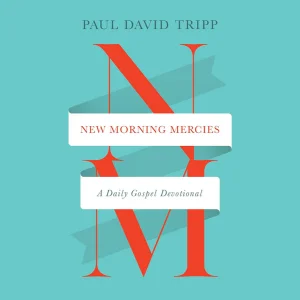
In the relentless pace of the 21st century, the human soul often feels like a dry sponge. We wake up already behind on our to-do lists, haunted by yesterday’s failures, and anxious about tomorrow’s demands. It is into this weary landscape that Paul David Tripp speaks with his transformative work, “New Morning Mercies: A Daily Gospel Devotional.”
This isn’t just another book of “polite encouragements” or “thought for the day” snippets. It is a rigorous, soul-stirring, and deeply theological journey into the heart of the Christian faith. If you’ve ever felt that your spiritual life was a series of “shoulds” and “musts” rather than a fountain of grace, this devotional is designed to flip the script.
The Heart of the Book: Why “New Morning Mercies”?
The title itself is a nod to Lamentations 3:22–23: “The steadfast love of the Lord never ceases; his mercies never come to an end; they are new every morning; great is your faithfulness.” Paul David Tripp’s central thesis is that we don’t just need the Gospel for our “initial salvation”—we need it for our Monday mornings, our difficult marriages, our parenting struggles, and our internal battles with pride and fear. He argues that we are “Gospel-forgetters,” and because we forget, we try to live life on our own strength.
About the Author: Paul David Tripp
To understand the book, you must understand the man. Tripp is a pastor, event speaker, and best-selling author. He is known for his “Gospel-centered” approach to everything from parenting to suffering. His style is unique: he is incredibly blunt about human sin, yet overwhelmingly tender about God’s grace. He doesn’t offer “five steps to a better you”; he offers a Savior for a broken you.
Detailed Breakdown of the Book’s Structure
Unlike many devotionals that use a random assortment of verses, New Morning Mercies follows a specific, intentional rhythm. Each of the 365 entries is structured into three distinct parts:
The “Aphorism” or Core Gospel Principle
Every entry begins with a short, punchy, often provocative statement printed in bold. These aren’t just titles; they are “Gospel-saturated” truths designed to challenge the reader’s worldview immediately.
The Devotional Reflection
The meat of each day is a one-page essay written by Tripp. This is where he connects high-level theology to the “gritty” details of life. He talks about:
- The frustration of a broken dishwasher.
- The sting of a harsh word from a spouse.
- The exhaustion of trying to be “perfect.”
- The idol of control.
“For Further Study and Encouragement”
At the bottom of every page, Tripp provides a specific Scripture passage for the reader to open their Bible and read. This is crucial because it ensures the reader isn’t just consuming Tripp’s words, but is grounded in the Word of God. It encourages a lifestyle of independent Bible study.
Key Themes Explored in New Morning Mercies
To truly grasp what Tripp is doing, we have to look at the recurring themes that run through the 365 days.
The Myth of Self-Reliance
One of Tripp’s most consistent messages is that we are far more broken than we care to admit, but we are also more loved than we ever dared to hope. He spends a significant amount of time deconstructing the “bootstrap” mentality. He argues that our biggest problem isn’t our circumstances; it’s our attempt to be our own “Functional Savior.”
The “Already” and the “Not Yet”
Tripp frequently references the theological concept of the interregnum—the time between Christ’s first coming and His second. He explains why life still hurts even though we are “saved.” This provides a healthy dose of realism for believers who feel guilty because they still struggle with sin or sadness.
The Danger of “Religious Performance”
If you grew up in a legalistic environment, this book will be a breath of fresh air. Tripp constantly attacks the idea that God’s love for us fluctuates based on our daily performance. He reminds us that Christ’s work was finished on the cross, and we cannot add to it with our “good behavior.”
Deep Dive: What Message Does the Author Want to Convey?
At its core, Paul David Tripp wants to convey one singular, life-altering message: The Gospel is not just a gate we walk through once; it is the path we walk on every single day.
You are a “Limit-Taker”
Tripp wants readers to accept their creaturely limits. We aren’t God. We cannot control our kids, our health, or our futures perfectly. By accepting our limits, we are forced to lean on the Limitless One.
Grace is a Tool for Transformation, Not Just Forgiveness
Many people view grace as a “get out of jail free” card. Tripp argues that grace is actually the power that enables us to change. It is the “mercy” of God that provides the strength to say “no” to anger and “yes” to love.
The Power of “Small Moments”
Tripp argues that the “big moments” of life (weddings, funerals, career changes) are actually shaped by the thousands of “small moments” we experience daily. His message is that the Gospel matters in the mundane. How you talk to the person at the grocery store matters because it reveals who you are worshipping in that moment.
A Critical Review: The Pros and Cons
No book summary is complete without an honest assessment of how the material lands.
The Strengths
- Consistency: Unlike some devotionals where the quality fluctuates, Tripp is remarkably consistent. Every day feels “meaty.”
- Relatability: He uses “we” and “us” constantly. He doesn’t write as a guru on a mountain, but as a fellow “sinner in need of grace.”
- Theological Depth: He manages to explain complex concepts like Justification and Sanctification in language a teenager could understand.
The Potential Drawbacks
- Repetitive Nature: Because Tripp is so focused on the Gospel, some readers might feel he is saying the same thing in 365 different ways. However, fans of the book argue that this is the point—we need to hear the same truth repeatedly because we forget it so quickly.
- Directness: Tripp doesn’t pull punches. If you aren’t ready to have your selfishness or idols pointed out, some entries might feel a bit “stinging.”
Comparative Analysis: How Does It Stack Up?
When compared to classics like My Utmost for His Highest by Oswald Chambers or Morning and Evening by Charles Spurgeon, New Morning Mercies holds its own.
Feature | New Morning Mercies | My Utmost for His Highest |
Language | Modern, accessible, gritty. | Poetic, dense, Victorian. |
Primary Focus | The Gospel’s daily application. | Total surrender to God. |
Tone | Relatable and pastoral. | Challenging and mystical. |
Length | Medium (1 page per day). | Short (half a page). |
Who Should Read This Book?
- The Burned-Out Christian: If you feel like your faith has become a dry checklist of duties.
- The New Believer: It provides a fantastic theological foundation without being an intimidating textbook.
- The “Busy” Professional: The entries are short enough to read in five minutes but deep enough to chew on all day.
- The Skeptic: It offers a clear, no-nonsense look at what Christians actually believe about human nature and God.
How to Get the Most Out of “New Morning Mercies”
To ensure this book actually impacts your life rather than just sitting on your nightstand, consider these three tips:
- Don’t Rush: It is tempting to “catch up” if you miss a few days. Don’t. It’s better to read one entry deeply than five entries shallowly.
- Keep a Journal: Write down one “aha!” moment from each day. Tripp’s aphorisms at the top of the page are perfect for journaling prompts.
- Read the Scripture: Never skip the “For Further Study” section. The power is in the Bible; Tripp’s words are just the magnifying glass.
Final Thoughts: A Journey Toward Rest
In a world that demands we prove our worth every single day, New Morning Mercies invites us into a different reality. It tells us that our worth was proven 2,000 years ago on a hill outside Jerusalem.
Paul David Tripp’s message is a call to “Gospel-rest.” It is the realization that because God’s mercies are new every morning, we can face our failures without despair and our successes without pride. Whether you are at a spiritual high point or in the “valley of the shadow of death,” this devotional serves as a compass, always pointing you back to the person and work of Jesus Christ.
If you are looking for a way to start your year (or your day) with a renewed sense of purpose and a deeper understanding of grace, this is the book to pick up. It isn’t just a book summary; it’s an invitation to a transformed life.
FAQs
Q1. Is New Morning Mercies suitable for beginners?
Yes, it’s easy to read and deeply practical.
Q2. Can this book be read non-daily?
Yes, but daily reading gives the best experience.
Q3. Is the book only for Christians?
It’s written for Christians, but seekers may also find value.
Q4. How long does each devotion take to read?
Around 5 minutes.
Q5. Does the book include Bible verses?
Yes, many devotions are grounded in Scripture.