
The Narrow Path Rich Villodas: Find Real Soul Rest 2026
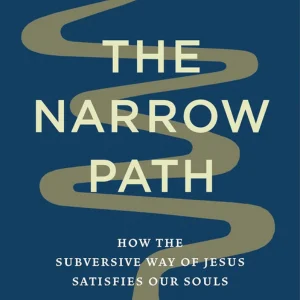
In an era defined by “more”—more consumption, more speed, more outrage—Rich Villodas offers a refreshing, albeit challenging, counter-narrative. His book, The Narrow Path: How the Subversive Way of Jesus Satisfies Our Souls, is a profound exploration of the Sermon on the Mount. Villodas argues that the way of Jesus isn’t just a set of rules to follow, but a “subversive” path that leads to the deepest satisfaction of the human soul.
This blog provides a comprehensive summary and review of Villodas’s work, breaking down all twelve chapters and the interlude to help you understand why the “narrow path” is the only one worth walking.
Part One: Understanding the Narrow Path
The first section of the book sets the theological and psychological foundation. Villodas contrasts the cultural “broad path” with the radical alternative proposed by Jesus.
Chapter 1: Unexpected Disaster (The Broad Path)
Villodas begins by defining the “Broad Path.” In modern terms, this is the path of least resistance—the way of ego, comparison, and reactionary living. The “disaster” is that this path feels natural and successful by worldly standards, yet it leads to an inner fragmentation. Villodas suggests that we often choose the broad path because it promises safety and validation, but it ultimately leaves us exhausted and spiritually hollow.
Chapter 2: Unexpected Happiness
Here, the author dives into the Beatitudes. He flips the script on what it means to be “blessed.” While the world associates happiness with strength, wealth, and influence, Jesus locates it in poverty of spirit, mourning, and meekness. Villodas explains that this “unexpected happiness” isn’t an emotion but a state of being aligned with God’s kingdom. It is the joy of being found by God when you are at the end of your own resources.
Chapter 3: Unexpected Righteousness
Righteousness is often misunderstood as moral perfection or religious performance. Villodas clarifies that Jesus’s version of righteousness is “unexpected” because it is an interior transformation that exceeds the external legalism of the Pharisees. It’s about the heart’s orientation. This chapter emphasizes that the narrow path isn’t about trying harder to be good; it’s about allowing the grace of God to reshape our deepest motivations.
Interlude: Prayer and the Narrow Path
Before moving into the practical application, Villodas pauses on prayer. He argues that prayer is the “oxygen” of the narrow path. Without a contemplative connection to God, the teachings of the Sermon on the Mount become a heavy burden rather than a life-giving way. He introduces prayer not as a list of requests, but as a practice of presence.
Part Two: Walking the Narrow Path
If Part One is the why, Part Two is the how. Villodas takes the lofty ideals of Jesus and applies them to the gritty realities of everyday life.
Chapter 4: Our Witness
What does it mean to be “salt and light”? Villodas moves away from aggressive proselytization and toward a witness of presence. Our witness on the narrow path is found in how we live our lives—our integrity, our kindness, and our commitment to justice. It is a “subversive” witness because it doesn’t seek power; it seeks to serve.
Chapter 5: Our Anger
Anger is one of the most pervasive forces in modern culture. Villodas explores Jesus’s teaching that anger is a form of “heart-murder.” He doesn’t suggest we suppress our emotions but that we examine the roots of our contempt. Walking the narrow path means learning to slow down and process anger in a way that leads to reconciliation rather than destruction.
Chapter 6: Our Words
In an age of social media vitriol and “spin,” Villodas calls for a return to simple, honest speech. He discusses how our words can either create life or cause deep harm. The narrow path demands a “yes” that means yes and a “no” that means no—a level of integrity that makes oaths unnecessary because our character is enough.
Chapter 7: Our Desires
Focusing largely on lust and fidelity, this chapter looks at how we handle our bodily and emotional longings. Villodas treats desires with nuance, acknowledging their power but pointing toward a higher devotion. He argues that the narrow path is about “ordered loves”—learning to love God and people in a way that doesn’t objectify or consume them.
Chapter 8: Our Money
Wealth is perhaps the most common “broad path.” Villodas critiques the consumerism that defines our lives and suggests that the narrow path is paved with radical generosity. He challenges the reader to see money not as a source of security, but as a tool for kingdom work. To walk this path is to break the power of “Mammon” over our hearts.
Chapter 9: Our Anxiety
Jesus’s command to “not be anxious” is one of the hardest to follow. Villodas approaches this with pastoral sensitivity. He explains that anxiety is often a result of trying to control the future. The subversive way of Jesus invites us into “holy indifference”—a trust that God provides for the lilies and the birds, and will surely provide for us.


Chapter 10: Our Judgments
“Judge not, lest you be judged.” Villodas unpacks this frequently quoted but rarely practiced verse. He explains that the narrow path requires us to remove the “log” from our own eye before helping others with their “speck.” This is a call to humility and self-awareness, recognizing that we are all in need of the same mercy.
Chapter 11: Our Decisions
Life is a series of choices between the narrow and broad gates. This chapter focuses on discernment. How do we know we are on the right path? Villodas points toward the “fruit” of our lives. True discipleship is marked by a consistency between our inner life and our outer actions.
Chapter 12: Our Enemies
The ultimate test of the narrow path is the command to love our enemies. Villodas argues that this is the most subversive act a human can perform. It breaks the cycle of violence and retribution. To love an enemy is to see them through the eyes of God, recognizing their humanity even when they deny ours.
Afterword: Practicing Obedience
Villodas concludes by emphasizing that the narrow path is not a philosophy to be admired, but a life to be lived. Obedience isn’t about mindless compliance; it’s about a loving response to a God who has already loved us. He encourages readers to pick one or two areas to begin practicing immediately, as the path is walked one step at a time.
The Core Message: What Rich Villodas Wants to Convey
The central thesis of The Narrow Path is that the way of Jesus is a subversive alternative to the exhaustion of modern life. Villodas wants readers to understand that the “broad path”—the way of pride, anger, and accumulation—is actually a path to soul-poverty. By contrast, the “narrow path” of humility, forgiveness, and simplicity is the only way to find true satisfaction.
The author’s message is essentially a call to wholeness. He argues that we cannot separate our spiritual lives from our emotional or social lives. To follow Jesus is to allow Him to touch every facet of our existence—from how we handle our bank accounts to how we treat the people who annoy us most. It is a path that leads to a “soul satisfied” not by circumstances, but by the presence of God.
Review and Analysis
Rich Villodas has a unique gift for blending contemplative spirituality with social justice and emotional health. His writing is accessible yet deeply convicting.
Unlike some academic commentaries on the Sermon on the Mount, Villodas writes as a fellow traveler. He is honest about his own struggles with anger and anxiety, making the “narrow path” feel attainable rather than an impossible ideal.
This is a must-read for anyone feeling “burned out” by the pace of the world or the superficiality of modern religion. It is a guide for those who want their faith to mean something in the real world.
FAQs
1. What exactly is the main message of Rich Villodas’s book, The Narrow Path?
In The Narrow Path, Rich Villodas explains how the subversive way of Jesus satisfies our souls in a culture obsessed with more. By digging into the Sermon on the Mount, the book reveals that true soul satisfaction doesn’t come from external validation or worldly success. Instead, choosing the narrow path over the broad path brings a deep, life-changing inner peace and emotional wholeness that the world simply cannot offer.
2. How does the broad path vs narrow path contrast affect my daily lifestyle?
The broad path represents the modern lifestyle of constant comparison, quick outrage, and pursuing external validation. It feels easy but leaves you spiritually exhausted. In contrast, walking the narrow path involves an intentional inner transformation. Following Jesus’s teachings on the Sermon on the Mount helps you slow down, manage anxiety, handle anger constructively, and find genuine purpose in your relationships and daily choices.
3. Can non-religious readers benefit from reading The Narrow Path?
Absolutely! While the book is anchored heavily in the subversive way of Jesus, its core themes speak directly to universal human struggles. Anyone looking for practical wisdom on mindfulness, managing anxiety, emotional health, and intentional living will find deep value here. It offers an actionable guide to escaping the endless exhaustion of modern consumerism and finding authentic, everyday fulfillment.
4. Is this Sermon on the Mount summary practical for dealing with modern anxiety and stress?
Yes, it is incredibly practical. Rich Villodas doesn’t just share theoretical ideas; he shows how Jesus’s teachings actively target modern-day stress. By applying these lessons to money, judgments, and personal relationships, the book offers a pastoral guide to shifting your mindset. It teaches you to release control and trade toxic daily pressures for a steady, restorative sense of soul satisfaction.
5. What makes The Narrow Path different from other spiritual books?
What makes this book unique is how beautifully Rich Villodas connects deep contemplative spirituality with emotional health and social justice. He doesn’t write like an unapproachable scholar; he shares his own raw struggles with things like anger and control. This honest approach makes the radical, subversive way of Jesus feel attainable and highly relevant for anyone feeling burned out by today’s fast-paced world.