
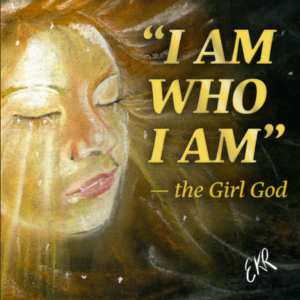
Emily K. Rivera is not just an author—she is an artist, a storyteller, and someone who observes the world through a deeply reflective and nurturing lens. Her work in “I AM WHO I AM – The Girl God” is rooted in both creativity and lived experience, especially influenced by watching her own children grow. This personal connection is what gives the book its emotional authenticity and warmth. Rather than approaching storytelling in a traditional literary way, Rivera blends visual art with spiritual narrative, making the book feel more like an experience than just a read.
What’s fascinating is how she doesn’t try to “rewrite” religious texts but instead gently reframes them. The book draws heavily from the King James Version of Genesis, maintaining its poetic cadence while introducing a subtle but powerful shift—God is referred to as “She.”
This small linguistic transformation opens a completely new emotional and philosophical dimension for readers.Her artistic background plays a crucial role here. Each page feels intentional, almost meditative, as if you’re meant to pause, reflect, and absorb. It’s not just storytelling—it’s an invitation to see differently.
What Makes This Book Unique
The idea of a “Girl God” challenges centuries of ingrained imagery where divine power is often portrayed as male. Without being loud or confrontational, the book quietly asks: What changes when God is imagined as a girl? And what stays the same?
This question alone makes the book powerful. It doesn’t force answers—it creates space for reflection. The use of young girls as active creators in the illustrations further reinforces this idea. They are not passive or decorative; they are curious, engaged, and central to the act of creation.
At first glance, you might think this is just another illustrated children’s book. But that assumption fades quickly. The uniqueness of this book lies in its simplicity combined with depth. Rivera doesn’t overload the reader with complex reinterpretations or radical changes. Instead, she makes one subtle shift—and lets that shift do all the work.
Core Concept of the Girl God
Reimagining Genesis with a Feminine Divine
It’s almost like hearing a familiar song played in a different key. The melody remains the same, but the emotional resonance shifts completely. Suddenly, creation doesn’t feel distant or authoritative—it feels intimate and relatable.
The foundation of this book lies in the biblical creation story—but with a twist that feels both radical and natural at the same time. By simply replacing “He” with “She,” Rivera transforms the narrative into something fresh and deeply thought-provoking.This isn’t about changing the story’s events. Light is still created. The earth still takes shape. Life still emerges. But the energy behind creation feels different. There’s a softness, a nurturing presence, and a sense of intuitive power that comes through when the creator is imagined as female.
Embrace Feminine Energy: Unleash Your Inner Goddess
Why Language Matters in Spiritual Narratives
Language shapes perception more than we realize. When generations grow up hearing “God as He,” it subtly reinforces certain ideas about power, authority, and identity. Rivera’s choice to use “She” isn’t just artistic—it’s psychologically impactful.
Think about it: if young girls grow up seeing themselves reflected in the divine, how does that change their sense of self-worth? How does it influence their confidence, their voice, and their place in the world?
This book doesn’t preach feminism in an aggressive way. Instead, it gently rebalances representation, making space for inclusivity without rejecting tradition. It’s a quiet revolution—one that happens in the mind and heart of the reader.
Chapter-by-Chapter Summary
Chapter 1 – The Beginning (Creation of Light)
This chapter sets the tone for the entire book. Creation is not forceful—it’s intentional and graceful. The imagery often shows young girls reaching toward light, symbolizing curiosity and discovery. It’s a reminder that creation begins with awareness, with the ability to see and recognize possibility.There’s also an underlying metaphor here. Light isn’t just physical—it represents knowledge, identity, and truth. By associating this act with a feminine divine, Rivera subtly suggests that understanding and wisdom are deeply connected to feminine energy.
The story opens with the iconic moment of creation—light emerging from darkness. But here, the act feels less like a command and more like an expression. The Girl God doesn’t just create light; she reveals it, almost like uncovering something that was always meant to exist.
Chapter 2 – Formation of Earth and Sky
As the narrative progresses, the separation of earth and sky unfolds. This chapter emphasizes structure and balance. The Girl God organizes chaos into harmony, creating space for life to exist.What stands out here is the sense of care in the process. The illustrations often depict movement—stretching, reaching, arranging. It feels less like building and more like shaping with intention, as if every element is placed with purpose.
This chapter also introduces the idea of boundaries—not as limitations, but as necessary frameworks. Without separation, there can be no clarity. Rivera uses this moment to subtly highlight the importance of balance in life, something that resonates deeply beyond the spiritual context.
Chapter 3 – Life Emerges
Here, the world begins to come alive. Plants grow, waters move, and ecosystems start forming. The Girl God is no longer just creating structure—she’s breathing life into it.The imagery becomes more vibrant, filled with motion and color. Girls are shown interacting with nature, symbolizing connection rather than control. This reinforces the idea that humans are not separate from creation but are part of it.
This chapter beautifully captures the essence of growth. Life is not static—it evolves, adapts, and expands. Rivera subtly reminds us that creation is an ongoing process, not a one-time event.
Chapter 4 – Creation of Humanity
This is where the narrative becomes deeply personal. Humanity is created, and for the first time, readers see themselves reflected directly in the story.Unlike traditional depictions, the focus here is on presence and participation. Humans are not just created—they are invited to exist, to explore, and to engage with the world around them.
The use of young girls in the imagery makes a strong statement. It challenges the idea that power and divinity are distant concepts. Instead, it suggests that divine essence exists within us, especially within those who have historically been underrepresented.
Chapter 5 – Identity and Self-Realization
This chapter dives into the concept of identity. The title itself—“I AM WHO I AM”—becomes central here. It’s not just a declaration; it’s a realization.The Girl God embodies self-awareness, and through her, readers are encouraged to reflect on their own identities. Who are you when you strip away expectations, labels, and societal norms?Rivera uses this moment to emphasize that identity is not something given—it’s something discovered and embraced.
Chapter 6 – Balance and Harmony
Creation reaches a point where everything begins to coexist. This chapter focuses on interconnectedness—how every element relies on another.
The visuals often show symmetry and flow, reinforcing the idea that balance is not static but dynamic. Life is a constant dance between forces, and harmony comes from understanding that movement.
Chapter 7 – Power of Creation
Here, the focus shifts to the idea that creation itself is power. The Girl God is not just a creator—she is creation embodied.
This chapter empowers readers to see themselves as creators in their own lives. Whether it’s through art, ideas, or actions, everyone has the ability to shape their reality.
Chapter 8 – Reflection and Responsibility
With creation comes responsibility. This chapter introduces the idea that power must be used with awareness.
The tone becomes more introspective, encouraging readers to think about their role in the world.
Chapter 9 – Voice and Presence
The Girl God speaks—and in doing so, she defines herself. This chapter emphasizes the importance of voice.
For many readers, especially young girls, this can be incredibly powerful. It reinforces the idea that their voices matter.
Chapter 10 – Completion and Rest
The story concludes with rest—not as an end, but as a pause. Creation is complete, but the journey continues.Rest is portrayed as essential, not optional. It’s a reminder that even creators need space to reflect and recharge.
Themes and Symbolism
Feminine Divine Energy
The central theme is the reclamation of feminine power in spirituality. The Girl God represents strength, creativity, and nurturing—all in one.
Identity and Self-Worth
The book constantly reinforces the idea that identity is sacred. Being yourself is not just acceptable—it’s divine.
Representation and Visibility
Representation matters. Seeing oneself reflected in powerful roles can change how individuals perceive their place in the world.
Visual Storytelling and Art Style
Role of Pastel Illustrations
The soft pastel tones create a calming, almost dreamlike atmosphere. They make the book feel gentle yet powerful at the same time.
Emotional Impact of Imagery
The visuals are not just decorative—they are integral to the storytelling. They evoke emotion, curiosity, and reflection.
Author’s Message and Intent
Empowering Young Girls
At its core, this book is about empowerment. It tells young girls: You are strong. You are capable. You are sacred.
Redefining Spiritual Perspective
Rivera doesn’t aim to replace traditional beliefs but to expand them. She invites readers to see spirituality through a broader lens.
Critical Review
Strengths of the Book
- Unique concept
- Beautiful illustrations
- Deep emotional impact
- Inclusive and empowering message
Limitations and Criticism
Some readers might feel the concept challenges traditional beliefs. Others may wish for a more detailed narrative.
Conclusion
"I AM WHO I AM – The Girl God” is not just a book—it’s an experience. It invites you to question, reflect, and reimagine. By making a simple yet powerful shift, Emily K. Rivera opens a door to new perspectives on identity, power, and spirituality.
FAQs
Q1. Is this book suitable for children?
Yes, it’s designed to be accessible for children while also offering depth for adults.
Q2. Does it change the original Bible story?
No, it keeps the structure intact but shifts the perspective by using a feminine divine voice.
Q3. What is the main message of the book?
The core message is about identity, empowerment, and representation.
Q4. Why is the concept of a “Girl God” important?
It challenges traditional norms and creates space for inclusivity in spiritual narratives.
Q5. Is this book only for girls?
Not at all. It’s for anyone open to exploring new perspectives on identity and spirituality.