
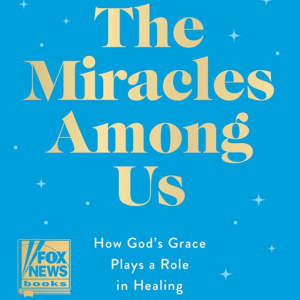
In a world increasingly dominated by cold data, clinical algorithms, and sterile hospital corridors, the intersection of faith and medicine often feels like a taboo subject. Yet, for many patients and practitioners, there is a "missing link" in the healing process that science cannot always quantify. In his profound work, The Miracles Among Us: How God’s Grace Plays a Role in Healing, Dr. Marc Siegel—a clinical professor of medicine and well-known medical contributor—steps outside the traditional confines of the laboratory to explore the inexplicable.
This blog provides a comprehensive, summary and review of this moving book, exploring how the human spirit and divine grace cooperate with medical science to produce outcomes that can only be described as miraculous.
Who is Dr. Marc Siegel?
Dr. Marc Siegel is not just another author trying to sell spirituality wrapped in feel-good stories. He’s a practicing physician, a clinical professor of medicine, and someone who has spent years standing at the intersection of science and human vulnerability. That’s what makes The Miracles Among Us different. It doesn’t blindly preach faith, nor does it dismiss it. Instead, it explores a space most people struggle to define — where medicine ends and something deeper begins.
You know that moment when doctors say, “We’ve done all we can”? This book lives in that exact moment. It asks: what happens next? Is it luck, resilience, coincidence… or something more?
Core Theme of the Book
At its heart, this book is about healing beyond medicine. Not replacing science, but complementing it. Dr. Siegel uses real-life stories to show how faith, prayer, emotional strength, and human connection can influence recovery in ways we don’t fully understand.
Think of it like this: medicine treats the body, but healing often involves the mind and soul. And this book is a deep dive into that invisible layer.
Understanding the Concept of Divine Healing
Science Meets Faith
One of the most interesting aspects of this book is how it refuses to pick sides. It doesn’t say “science is wrong” or “faith is everything.” Instead, it blends both. Dr. Siegel suggests that healing is not always linear. Sometimes, recovery happens in ways that cannot be explained by clinical data alone.There’s a subtle but powerful idea here: belief itself can be therapeutic. When patients believe they can heal, when they feel supported, when they surrender fear — their bodies sometimes respond differently. It’s not magic. It’s a complex interaction between psychology, biology, and spirituality.
Why Stories Matter in Healing
Stories are the backbone of this book. And not just for emotional impact. Stories help us relate, believe, and imagine possibilities. When you read about someone surviving against all odds, it shifts something inside you. It makes healing feel… possible.Dr. Siegel uses storytelling as a tool — almost like a bridge — connecting cold medical facts with warm human experiences.
Part I – Prayers from the Heart
Chapter 1 – The Most Courageous Baier
This chapter introduces us to Baier, whose story is less about illness and more about raw courage. Facing a life-threatening condition, Baier doesn’t just rely on treatment — he leans into faith with an intensity that is almost contagious.
What stands out is how courage becomes a form of healing in itself. Fear weakens the body, but courage seems to strengthen it. Baier’s journey shows that mental resilience can be as powerful as any drug. His story feels like a reminder that sometimes, the battle is not just physical — it’s deeply emotional.
Chapter 2 – Damar
Damar’s story is quieter but equally powerful. It’s about endurance and silent faith. Not every miracle is dramatic. Some are slow, almost invisible, unfolding over time.
Damar represents those people who don’t make headlines but fight their battles daily. Her healing is not just about recovery, but about finding peace in uncertainty. And that’s a different kind of miracle altogether.
Chapter 3 – Breakthrough
This chapter lives up to its name. It captures that moment when everything shifts — when a patient who was losing hope suddenly experiences a turning point.What’s fascinating is how Dr. Siegel describes this “breakthrough” not as random, but as something influenced by belief, support, and emotional release. It makes you wonder: are breakthroughs triggered internally as much as externally?
Chapter 4 – The Albert Schweitzer of Sudan
Here, the focus shifts from patients to healers. This story highlights a doctor working in extreme conditions, driven not by money or recognition, but by pure compassion.
It’s a powerful reminder that healing is not just about the patient — it’s also about the intentions of the healer. When doctors treat with empathy, something changes. The environment itself becomes healing.
Chapter 5 – The Pharmacist and the Baby
This chapter is deeply emotional. It revolves around a fragile life — a baby — and the unexpected role of a pharmacist in saving it.It challenges the idea that only doctors perform miracles. Sometimes, ordinary people in the right moment can make extraordinary differences. It’s about timing, instinct, and perhaps… divine intervention.
Chapter 6 – Team 43
Healing is rarely a solo journey. This chapter emphasizes community and collective strength. “Team 43” represents a group of people coming together to support one individual.The takeaway? Healing accelerates when people feel supported, loved, and not alone. It’s like the emotional equivalent of oxygen — invisible, but essential.
Chapter 7 – The Rebbe
This chapter dives into spiritual leadership. The Rebbe represents a figure whose presence alone brings comfort and healing.It explores the idea that faith leaders can influence health outcomes — not through medicine, but through belief, reassurance, and emotional grounding.
Part II – Prayers for the Soul
Chapter 8 – The Doctor at Lourdes
Lourdes is famous for its healing miracles, and this chapter explores it through a medical lens. A doctor witnesses events that challenge his scientific beliefs.It’s a fascinating clash between skepticism and experience. When a trained professional begins to question everything he knows, you realize how complex healing truly is.
Chapter 9 – Dodie Osteen and Her World of Healing
Dodie Osteen’s story is about surviving terminal illness through unwavering faith. Her journey is often cited as miraculous.This chapter dives into how belief systems can shape outcomes. Whether you see it as divine intervention or psychological strength, the result is undeniable.
Chapter 10 – Still Alive in the Hungarian Forest
This story feels almost cinematic. Survival against impossible odds in extreme conditions.It highlights the human will to live, suggesting that sometimes, the body pushes beyond limits when the mind refuses to give up.
Chapter 11 – Dr. Ellay Hogeg-Golan
A story that blends modern medicine with holistic approaches. Dr. Hogeg-Golan represents a new kind of healer — one who understands both science and spirituality.This chapter suggests that the future of medicine might lie in integration, not separation.
Chapter 12 – Montgomery MD
Here, we see a physician grappling with cases that defy logic. It’s about humility — accepting that not everything can be explained.And that’s rare in medicine.
Chapter 13 – Dan the Man
Dan’s story is about personality as a healing force. His optimism, humor, and energy play a role in his recovery.It’s a reminder that sometimes, attitude itself becomes medicine.
Chapter 14 – Congressman Scalise
A real-life high-profile survival story. After a near-fatal incident, his recovery becomes a symbol of resilience.It shows how public support, faith, and medical care together can create powerful outcomes.
Chapter 15 – Shane
Shane’s journey is deeply personal. It explores emotional healing alongside physical recovery.Because sometimes, wounds are not visible.
Chapter 16 – Back from the Dead
This chapter is exactly what it sounds like — a story of someone who defied death itself.It pushes the boundaries of what we consider possible, leaving you with more questions than answers.
Epilogue – A Prayer for My Patients
The epilogue feels intimate. Dr. Siegel steps out of the role of storyteller and speaks directly from the heart.It’s not just about patients anymore — it’s about humanity, vulnerability, and hope. His prayer reflects a deep belief that healing is not just a medical process, but a spiritual journey.
Key Message and Takeaways
So what is the author really trying to say?
- Healing is not purely scientific
- Faith and belief can influence recovery
- Emotional and social support are critical factors
- Doctors don’t just treat bodies — they impact souls
The biggest takeaway? Miracles are not always supernatural. Sometimes, they’re deeply human.
Final Review and Critical Analysis
This book is not for someone looking for hard scientific conclusions. It’s for someone willing to explore the gray areas — the “what ifs.”The strength of the book lies in its stories and emotional depth.
However, skeptics might find it lacking in empirical evidence. But maybe that’s the point. Not everything meaningful can be measured.If you approach it with an open mind, it can change how you see illness, recovery, and even life itself.
Conclusion
The Miracles Among Us doesn’t try to prove miracles. It simply presents them — quietly, honestly, and powerfully.
And somewhere between the stories, you start to wonder:
What if healing is bigger than we think?
FAQs
Q1. Is this book based on real stories?
Yes, the book is built on real-life cases and experiences observed by Dr. Marc Siegel.
Q2. Does the book reject modern medicine?
No, it complements it by exploring emotional and spiritual dimensions of healing.
Q3. Is it suitable for non-religious readers?
Yes, even skeptics can appreciate the psychological and human aspects discussed.
Q4. What makes this book unique?
Its ability to blend medical science with spirituality through compelling storytelling.
Q5. What is the main message of the book?
That healing is multi-dimensional — involving the body, mind, and soul.