Table of Contents
ToggleThe Well Watered Woman: Learn to Grow Your Faith in 2026!
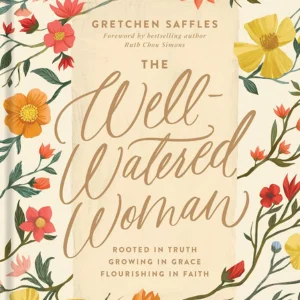
Have you ever felt spiritually parched—like your soul is cracked earth desperately searching for rain? You read your Bible dutifully, attend church faithfully, yet something vital feels missing. Your faith feels dry, your joy feels forced, and your identity feels fragile. If this resonates, Gretchen Saffles’ The Well Watered Woman: Rooted in Truth, Growing in Grace, Flourishing in Faith arrives not as another religious to-do list, but as a lifeline to the Living Water Himself.
Published in 2021 and already impacting over 250,000 women worldwide, this isn’t merely a devotional book—it’s an invitation to trade spiritual dehydration for divine saturation. As founder of the global Well Watered Women ministry, Saffles writes from a place of hard-won authenticity, having navigated her own seasons of barrenness before discovering the secret to flourishing faith. What makes this book uniquely transformative is its elegant three-part framework that mirrors Christ’s own identity: Jesus as The Well (our source), The Word (our sustenance), and The Way (our mission). Let’s journey through each chapter, beginning where Saffles wisely starts: at the end.
Beginning at the End: The Vision of Flourishing
Before diving into Part 1, Saffles offers a revolutionary perspective in her introduction: “beginning at the end.” Rather than presenting spiritual growth as a burdensome climb toward some distant summit, she paints the breathtaking destination first—a woman deeply rooted in God’s truth, gracefully growing through life’s seasons, and flourishing with supernatural joy regardless of circumstances. This woman isn’t perfect; she’s well watered. She draws daily from Christ, the Living Water (John 4), allowing His truth to permeate every aspect of her being until her life overflows with gospel hope. This vision reframes our entire spiritual journey—not as striving to become acceptable to God, but as sinking our roots deeper into the acceptance we already possess in Christ.
Part 1: The Well – Finding Our Source in Christ’s Fullness
Chapter 1: “I’m Not Okay, Is That Okay?”
Saffles courageously dismantles the Christian culture of curated perfection in this opening chapter. Using the story of the Samaritan woman at the well (John 4), she validates the exhaustion many women feel from pretending to have it all together. The revolutionary truth? Your brokenness isn’t a barrier to God’s love—it’s the very doorway to experiencing it.
Jesus didn’t wait for the woman to clean up her life before offering living water; He met her in her shame, knew her completely, and loved her anyway. Saffles writes with raw vulnerability about her own struggles with anxiety and inadequacy, giving readers permission to stop performing and start being honest before God. This chapter establishes the book’s foundational premise: spiritual flourishing begins not when we arrive at wholeness, but when we admit our thirst.
Chapter 2: “Identity Roots”
What happens when a tree’s roots are shallow? The slightest storm topples it. Similarly, when our identity is rooted in shifting soil—our roles, accomplishments, appearance, or others’ approval—we live in constant anxiety. Saffles guides readers to examine their identity roots with surgical precision. Are you defining yourself by your productivity? Your children’s behavior? Your marital status? Your bank account? Each of these roots will eventually wither. Instead, she anchors identity in unshakable gospel truths: You are fully known and fully loved. You are God’s beloved daughter. Your value is secured by Christ’s finished work, not your ongoing performance.
This chapter includes practical reflection questions that help women trace their emotional reactions back to their root beliefs—a profoundly liberating exercise.
Chapter 3: “Bring Your Nothing”
Building on identity, Saffles addresses our addiction to self-sufficiency. We bring our “somethings” to God—our plans, our efforts, our spiritual résumés—while secretly believing He needs our contribution. But the gospel flips this script: God doesn’t want our something; He wants our nothing. Drawing from the woman with the issue of blood (Mark 5) who touched Jesus’ garment in her utter desperation, Saffles shows how our emptiness becomes the canvas for God’s power. When we stop trying to manufacture faith and simply bring our doubt, our exhaustion, our “I can’t do this anymore,” we position ourselves to receive grace in its purest form. This chapter dismantles religious striving and replaces it with surrendered dependence.
Chapter 4: “Dying to Live”
Perhaps the most countercultural chapter, “Dying to Live” explores the paradox at Christianity’s heart: resurrection life flows through death. Saffles doesn’t spiritualize this away—she addresses the real deaths we experience: death to dreams, death to control, death to our preferred timelines. Using Jesus’ words in John 12:24 (“Unless a grain of wheat falls into the earth and dies, it remains alone; but if it dies, it bears much fruit”), she reframes suffering not as God’s absence but as His pruning hand. This isn’t passive resignation; it’s active surrender—the daily choice to release our grip on outcomes and trust the Gardener.
Readers learn that the path to flourishing isn’t avoiding the cross but embracing it as the gateway to resurrection power.
Chapter 5: “Forsaking Broken Wells”
Jeremiah 2:13 describes God’s heartbreak when His people “have forsaken me, the fountain of living waters, and hewed out cisterns for themselves, broken cisterns that can hold no water.” Saffles masterfully identifies modern “broken wells”—the substitutes we turn to for satisfaction that inevitably leave us thirstier: busyness as identity, social media validation, romantic relationships as saviors, achievement as worth. Each broken well promises fulfillment but delivers depletion. This chapter provides a diagnostic tool for recognizing when we’ve returned to broken cisterns and practical steps for returning to the true Well. The freedom here is profound: you can stop drinking from wells that poison you because Living Water awaits.
Chapter 6: “Anywhere But Here”
The final chapter of Part 1 tackles the universal temptation to believe flourishing exists elsewhere—in a different season, location, relationship status, or financial bracket. Saffles confronts the lie that “if only my circumstances changed, then I could truly thrive.” Using Jesus’ example of finding joy and purpose in every season—even the agonizing path to Calvary—she reframes our present moment as sacred ground. The well watered woman isn’t waiting for ideal conditions to flourish; she’s learning to draw deeply from Christ right here, in this season, with these limitations. This chapter liberates women from the tyranny of “someday” and empowers them to cultivate gospel joy in their current reality.

Daily Spiritual Practices for a Peaceful Life: Your Complete Guide to Inner Tranquility
Spiritual Awakening: 11 Powerful Signs You’re Awakening Incorporating daily spiritual practices into your routine can be the bridge between a chaotic mind and a soul that feels truly at home. We’ve all been there—waking up to the jarring sound of an alarm, immediately reaching for a phone, and letting a


Part 2: The Word – Cultivating Daily Dependence on Scripture
Chapter 7: “Word Before World”
How do we practically drink from the Well daily? Saffles answers: by prioritizing God’s Word before the world’s noise. “Word Before World” isn’t just a catchy phrase—it’s a non-negotiable rhythm for spiritual survival. Before checking notifications, before consuming news, before planning our day, we position ourselves under Scripture’s authority. This chapter provides tangible strategies for establishing this rhythm without legalism, emphasizing that Scripture intake isn’t about checking a box but encountering a Person. When the Word shapes our first thoughts, it transforms our entire day.
Chapter 8: “Springing Up From the Ashes”
Life leaves us in ashes—grief, failure, betrayal, disappointment. Saffles doesn’t offer shallow optimism but gospel realism: ashes are inevitable, but they’re not final. Drawing from Isaiah’s imagery of beauty for ashes (Isaiah 61:3), she shows how God specializes in resurrection—bringing life from death, hope from despair, purpose from pain. This chapter validates grief while refusing to let it have the final word. The well watered woman doesn’t pretend ashes don’t exist; she trusts the God who walks with us through them and promises to bring new growth from their soil.
Chapter 9: “The Art of Abiding”
John 15:5 contains Jesus’ most vital metaphor for spiritual life: “Apart from me you can do nothing.” Abiding isn’t another spiritual discipline to master; it’s the posture of continual dependence—like a branch connected to a vine. Saffles demystifies abiding, showing it as simple as moment-by-moment awareness of Christ’s presence: breathing prayers throughout the day, rehearsing gospel truths in traffic, choosing worship over worry in anxiety. This chapter transforms spirituality from an event (quiet time) to an atmosphere (constant connection).
Learning to live as a well-watered soul is an ongoing practice of weaving spirituality in daily life.
Chapter 10: “In Every Season”
Spiritual disciplines often feel sustainable only in ideal seasons. But what about seasons of exhaustion, grief, or chaos? Saffles normalizes fluctuating capacity while maintaining non-negotiable connection to Christ. She offers seasonally-appropriate ways to abide: five minutes of Scripture when you’re drowning in motherhood; audio Bibles during commutes; one-verse meditation when concentration fails. The goal isn’t perfect consistency but persistent connection—trusting that the Vine sustains the branch even when fruit seems scarce.
Chapter 11: “A Lifelong Battle”
Sanctification isn’t a one-time event but a daily war against sin and self-sufficiency. Saffles refuses to spiritualize away the reality of spiritual warfare, equipping women to recognize enemy tactics (accusation, distraction, deception) and fight with gospel weapons (truth, prayer, community). This chapter brings sober hope: the battle is real, but the victory is already won. We fight from victory, not for it.
Part 3: The Way – Living Out Gospel Transformation
Chapter 12: “Weeding Out Sin”
Just as gardens require weeding, our hearts need regular purification. Saffles addresses sin not with shame but with surgical grace—helping women identify specific sins (bitterness, control, people-pleasing) and replace them with gospel truths. This isn’t self-improvement but Spirit-empowered transformation: as we behold Christ’s beauty, lesser loves lose their grip.
Chapter 13: “Lead Like a Follower”
Biblical leadership flows from surrendered followership. The well watered woman leads not from a place of control but from humble dependence on Christ. Whether leading a home, workplace, or ministry, her authority is derivative—flowing from her submission to Jesus. This redefines influence as service and power as sacrifice.
Chapter 14: “Gospel Intersections”
The gospel isn’t confined to church—it intersects every mundane moment. Saffles trains women to spot gospel opportunities in grocery lines, workplace tensions, and family conflicts. These “gospel intersections” transform ordinary life into kingdom mission fields where grace can be extended and truth can be shared.
Chapter 15: “Your Mission Is Now”
Many women postpone mission until some future season (“when the kids are older,” “when I’m less busy”). Saffles shatters this delay tactic: your mission field is your current context. Flourishing faith overflows naturally into gospel witness—not through perfect presentations but authentic lives marked by grace.
Chapter 16: “Inside Out, Upside Down, & Well Watered”
The culminating chapter synthesizes the entire journey: gospel transformation works inside out (changing hearts before behaviors), operates upside down (strength through weakness, greatness through service), and produces women who are truly well watered—saturated with Christ until His life overflows through them.
The Well Watered Woman Statements: Declarations of Truth
Each chapter concludes with a “Well-Watered Woman Statement”—a concise, Scripture-rooted declaration that crystallizes the chapter’s truth. These aren’t positive affirmations but gospel realities to be rehearsed until they reshape our thinking. Examples include: “I am rooted in the truth that I am fully known and fully loved by God” and “I am growing in grace as I bring my nothing to Jesus and receive His everything.” These statements become weapons against lies and anchors in storms.
The Author’s Core Message: From Thirsty to Flourishing
Gretchen Saffles’ central message is deceptively simple yet profoundly liberating: You don’t need to manufacture spiritual vitality—you need to drink deeply from the Source who already possesses it. The well watered woman isn’t characterized by perfect behavior but by persistent dependence. She isn’t immune to drought but knows where to find Living Water. She isn’t defined by her fruitfulness but by her connection to the Vine.
This book dismantles the exhausting cycle of religious performance and replaces it with gospel rest. Saffles isn’t offering another program to implement but a Person to enjoy. Her vision isn’t women who have it all together, but women who know the One who does—and who drink so deeply from Him that their lives become oases in a parched world.
Final Thoughts: Will You Drink?
The Well Watered Woman succeeds not because of clever techniques but because it points relentlessly to Christ—the true Well, the living Word, the only Way. Saffles writes as a fellow traveler, not a guru, making this book accessible to women at every spiritual stage. Whether you’re spiritually dehydrated or simply longing for deeper roots, this book offers a path from barrenness to flourishing.
The invitation is simple yet radical: lay down your buckets of self-effort. Walk away from broken cisterns. Come to the Well with your thirst, your nothing, your brokenness. And drink deeply—not once, but daily—until you become a woman rooted in truth, growing in grace, and flourishing in faith. Not because you’ve arrived, but because you’ve found the Source who never runs dry.
In a world of spiritual mirages, Gretchen Saffles points us to the only Water that truly satisfies. And in doing so, she offers not just a book—but an invitation to life.
FAQs
Q1: Is The Well Watered Woman book suitable for beginners in faith?
A: Yes, absolutely! This book is written in a very accessible, gentle, and deeply encouraging tone. It avoids complicated theological jargon, making it the perfect choice for anyone looking to build a strong foundation of truth, grace, and faith at the very start of their spiritual journey.
Q2: Can this book be used for a group Bible study?
A: Yes, it is ideal for that. The book’s core themes of finding truth, grace, and faith are perfect for sparking meaningful conversations. It works wonderfully as a guide for women’s ministry groups, small group Bible studies, or even casual book clubs focused on growing closer to God.
Q3: Is The Well Watered Woman book only intended for women?
A: While the author specifically addresses women, the core biblical messages are entirely universal. Any believer looking to move past superficial habits and cultivate deeper truth, grace, and faith in their relationship with God will find this book highly relatable, challenging, and spiritually refreshing, regardless of gender.
Q4: Does the book include direct Scripture references?
A: Yes, it does. You will find that foundational Scripture references are beautifully woven throughout every single chapter. Instead of just offering personal advice, the book anchors its lessons on truth, grace, and faith directly in God’s Word to ensure your spiritual growth remains deeply rooted in the Bible.
Q5: What makes this book different from other Christian faith books?
A: What sets it apart is its unique focus on deep, honest connection over religious performance. Instead of giving you a exhausting checklist of things to do, it teaches you how to stop striving and simply abide in God, transforming your daily walk through genuine truth, grace, and faith.