
Jesus The Christ by James E Talmage: A Comprehensive Summary and Review
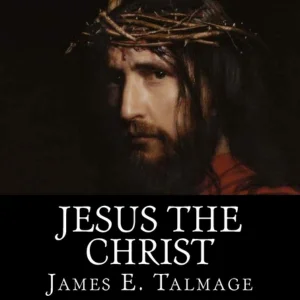
When James E. Talmage penned Jesus the Christ in 1915, he wasn’t just writing a biography; he was crafting a theological masterpiece. Written within the quiet walls of the Salt Lake Temple, this book remains one of the most authoritative accounts of the Savior’s life from a Latter-day Saint perspective. It transcends mere historical retelling, venturing into the antemortal existence of Christ and extending into His modern-day manifestations.
The Author’s Vision: What is the Core Message?
The central message James E. Talmage conveys is the absolute divinity and literal Sonship of Jesus Christ. Talmage argues that Jesus was not merely a great teacher or a social reformer, but the Jehovah of the Old Testament, the Creator of the world, and the Promised Messiah. The book aims to prove that Christ’s mission was a deliberate, preordained plan to bridge the gap between a fallen humanity and an eternal Father through a voluntary sacrifice.
Part I: The Divine Origins and Pre-Earth Life
Pre-existence and Foreordination of Christ
Talmage begins not at the manger, but in the councils of heaven. He explains that Jesus was the “Firstborn” of the Father’s spirit children. Before the world was framed, Christ was chosen and foreordained to be the Savior of mankind. This wasn’t a last-minute backup plan but a foundational pillar of the Plan of Salvation.
The Need of a Redeemer
Why did we need a Savior? Talmage delves into the Fall of Adam, explaining that the introduction of sin and death created a chasm that no mortal could cross. A “Redeemer” was required—someone who had power over death (being the Son of God) yet could experience it (being the son of Mary).
The Antemortal Godship of Christ
One of the book’s most striking assertions is that Jesus Christ is Jehovah. Talmage meticulously connects New Testament teachings with Old Testament scriptures to show that the God who spoke to Moses and led Israel was, in fact, the pre-mortal Jesus acting under the authority of the Father.
Part II: The Preparation and the Advent
Earthly Advent of the Christ Predicted
From the Garden of Eden to the prophets of the Americas, Talmage tracks the “scarlet thread” of prophecy. He discusses how civilizations across the globe were given signs and shadows of the coming Messiah so that the world would be without excuse when He arrived.
The Meridian of Time
Talmage defines the “Meridian of Time” as the peak of human history. He describes the political and social climate of the Roman and Jewish world, showing how the “fullness of time” had arrived for the King of Kings to enter the mortal sphere.
Gabriel’s Annunciation of John and Jesus
The narrative moves to the sacred encounters between the angel Gabriel and Zacharias, and later, the Virgin Mary. Talmage highlights the contrast between Zacharias’s doubt and Mary’s humble submission, emphasizing that John the Baptist was the literal “forerunner” prepared to pave the way.
The Babe of Bethlehem and the Boy of Nazareth
Talmage strips away the “Christmas card” sentimentality to focus on the reality of the Nativity. He discusses the legal rights of Jesus to the throne of David and the quiet, developmental years in Nazareth. He posits that Jesus grew “grace for grace,” gaining a realization of His mission through study and divine revelation.
Part III: The Opening Ministry
In the Wilderness of Judea
The baptism of Jesus and the subsequent forty days of temptation are treated as a literal combat with Satan. Talmage explains that Christ’s victory over the three specific temptations (appetite, pride, and worldly power) was essential to prove His worthiness for the ministry ahead.
From Judea to Galilee and Early Incidents
As Jesus begins His public work, we see the calling of the first disciples and the first miracle at Cana. Talmage views these early acts as a “soft opening” to His ministry, establishing His power over elements and His concern for human joy.
Honoured by Strangers, Rejected by His Own
A recurring theme in the book is the irony of Christ’s reception. While Samaritans and Gentiles often recognized His divinity, His own townsfolk in Nazareth attempted to cast Him off a cliff. Talmage uses this to illustrate the blindness caused by “familiarity” and legalistic pride.
Part IV: The Galilean Ministry and the Twelve
Lord of the Sabbath and the Chosen Twelve
Jesus’s frequent healings on the Sabbath were not accidental; they were direct challenges to the corrupted traditions of the Pharisees. Amidst this tension, Jesus officially organizes His Church by calling the Twelve Apostles, granting them authority that transcended local Jewish law.
The Sermon on the Mount: As One Having Authority
Talmage devotes significant space to the Sermon on the Mount, describing it as the “Constitution of the Kingdom of God.” He emphasizes that Jesus didn’t just teach the law; He fulfilled it, replacing outward rituals with inward righteousness.
He Spake Many Things in Parables
Why parables? Talmage explains that parables were both a mercy and a judgment. They revealed truth to the seeker while veiling it from the scorner. He analyzes the deeper meanings of the Sower, the Tares, and the Pearl of Great Price.
Peace, Be Still
The calming of the storm and the walking on water are presented as evidence of Christ’s status as Creator. If He made the atoms of the sea, they must obey His voice.
Part V: The Turning Tide and the Transfiguration
The Apostolic Mission and Darkening Opposition
As the Apostles are sent out, the shadow of the cross begins to lengthen. The religious leaders move from curiosity to active conspiracy. Talmage notes that as Christ’s light grew brighter, the hatred of the “princes of darkness” became more desperate.
The Transfiguration: From Sunshine to Shadow
On the Mount of Transfiguration, Jesus receives keys and encouragement from Moses and Elias. Talmage describes this as a pivotal moment where the Savior is strengthened for the “exodus” He was to accomplish at Jerusalem.
Elijah’s epic showdown on Mount Carmel
Part VI: The Final Journey to Jerusalem
Ministry in Perea and Judea
The “Last Winter” of Christ’s life was spent in the regions of Perea and Judea. Talmage details the raising of Lazarus—the miracle that essentially sealed Jesus’s death warrant by making His power undeniable to the public.
On to Jerusalem and the Temple
The Triumphal Entry is depicted not as a political rally, but as the formal entry of the King into His city. Jesus returns to the Temple daily, cleansing it once more and silencing the lawyers and scribes with perfect wisdom.
The Close of Public Ministry
In His final public discourses, Jesus denounces the hypocrisy of the leaders (the “Woes”) and gives the Olivet Discourse regarding the destruction of Jerusalem and the end of the world.
Related Articles

The Forgotten Teachings of Jesus: Heal Your Soul Today (2026)
Hey there! Some links on this page are affiliate links which means that, if you choose to make a purchase, I may earn a small commission at no extra cost to you. I greatly appreciate your support!

The Life of Jesus Gospel of John: True Grace (2026)
Hey there! Some links on this page are affiliate links which means that, if you choose to make a purchase, I may earn a small commission at no extra cost to you. I greatly appreciate your support!

The Case for Christ: A Comprehensive Book Summary and Review of Lee Strobel’s Investigative Journey
Hey there! Some links on this page are affiliate links which means that, if you choose to make a purchase, I may earn a small commission at no extra cost to you. I greatly appreciate your support!
Part VII: The Sacrifice and Victory
The Last Supper and the Betrayal
Talmage provides a poignant look at the Passover meal, the institution of the Sacrament, and the deep sorrow of the betrayal by Judas Iscariot. He emphasizes that the “agony in Gethsemane” was where the weight of the world’s sins was truly felt—a suffering so great it caused Him to bleed at every pore.
The Trial and Condemnation
The book meticulously documents the illegalities of the Jewish trial before the Sanhedrin and the political cowardice of Pontius Pilate. Talmage argues that Jesus was the only truly innocent man ever to be tried, yet He remained silent as a “lamb to the slaughter.”
Death and Burial
The Crucifixion is treated with profound reverence. Talmage focuses on the “Seven Utterances” from the cross and the cosmic significance of the moment Christ gave up His life voluntarily. He did not die because He was overcome, but because He chose to lay His life down.
In the Realm of Disembodied Spirits
While His body lay in the tomb, where was His spirit? Talmage explains the “Mission to the Spirit World,” where Christ organized the preaching of the gospel to those who had died without hearing it, ensuring that God’s justice is universal.
The Resurrection and Ascension
The empty tomb is the climax of the book. Talmage asserts the literal, physical resurrection of Jesus. He describes the joy of Mary Magdalene and the Apostles, concluding with Christ’s ascension to the Father, having conquered both sin and the grave.
Part VIII: The Extended Ministry and the Future
Ministry in the Western Hemisphere
Unique to this volume is the inclusion of Christ’s visit to the “other sheep” in the Americas (as recorded in the Book of Mormon). Talmage describes this as a period of perfect peace where the resurrected Lord established His law among the Nephites.
The Long Night of Apostasy
Talmage doesn’t end the story in the first century. He describes the gradual “Apostasy” where the simple truths of the gospel were lost or corrupted by man-made philosophies, leading to a period of spiritual darkness.
Personal Manifestations in Modern Times
The book concludes by discussing the Restoration of the Gospel in the 1800s. Talmage testifies of the appearance of the Father and the Son to Joseph Smith, asserting that Jesus Christ is once again actively leading His Church.
Jesus the Christ to Return
The final chapter is a call to readiness. Talmage looks forward to the Second Coming, when Christ will return in glory to reign as King of Kings and Lord of Lords.
Conclusion: A Review of the Work
Jesus the Christ is not a light read, but it is a life-changing one. James E. Talmage combines the precision of a scientist (which he was) with the soul of an apostle.
Why you should read it:
- Depth: It answers the “why” behind the “what” of Christ’s life.
- Scriptural Harmony: It seamlessly weaves together the Old Testament, New Testament, and modern scripture.
- Clarity: Despite the dense vocabulary, Talmage’s logic is undeniable.
If you are looking for a summary that captures the essence of the Savior’s mission, this book stands as a monumental witness that Jesus is indeed the Christ, the Son of the Living God.
For another profound perspective on developing a closer relationship with the Savior, check out our The Practice of the Presence of God book summary and review.
FAQs
Q: What is the main focus of James E. Talmage’s Jesus the Christ?
A: At its heart, this masterpiece offers a deep, doctrinal look into the life and mission of Jesus Christ. Our comprehensive summary and review explores how Elder Talmage blends scriptural history with Latter-day Saint theology to outline Jesus’s pre-mortal existence, earthly ministry, and ultimate atonement.
Q: Why is Jesus the Christ considered unique compared to other biographies?
A: What sets it apart is that it was written inside the Salt Lake Temple! This unique setting infuses the book with a sacred authority. In this review, we look at how the book balances strict historical context with profound spiritual insights about the Savior.
Q: Is Jesus the Christ easy to read for beginners?
A: Honestly, it can be quite scholarly and dense! James E. Talmage used rich, elevated language. However, our detailed Jesus the Christ book summary breaks down these complex theological concepts and historical timelines, making the text much more accessible for everyday readers and spiritual seekers.
Q: What are the key takeaways from the Jesus the Christ summary and review?
A: The biggest takeaway is a renewed understanding of Christ’s divinity. The book successfully bridges the Old and New Testaments. Our review highlights how Talmage proves Jesus is the promised Messiah, offering readers a powerful framework to strengthen their personal faith and testimony.
Q: Who should read James E. Talmage’s classic spiritual book?
A: If you want to deepen your scriptural knowledge, this book is for you. It is perfect for Latter-day Saints, biblical scholars, or anyone seeking a closer relationship with God. Read our full Jesus the Christ review to see how it can transform your gospel study.