
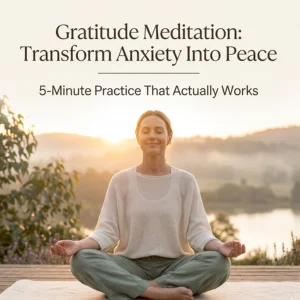
Gratitude Meditation isn't just another wellness trend—it's the lifeline I clung to when anxiety threatened to drown me, and it can be yours too. If you're reading this, chances are you're tired. Tired of the endless mental chatter, the worry that creeps in before your feet even hit the floor, the feeling that no matter how much you achieve, it's never quite enough. I've been there. For years, I woke up with a knot in my stomach, scrolling through problems before I'd even brushed my teeth. Then I discovered gratitude meditation, and everything shifted.
This isn't about toxic positivity or pretending life is perfect. It's about rewiring your brain to spot the light even in the darkest rooms. In the next few minutes, I'll show you exactly how this ancient practice can dissolve your stress, quiet your overthinking, and help you reclaim joy—one breath at a time.
What Exactly Is Gratitude Meditation?
Gratitude meditation is a mindful practice where you intentionally focus on the things you're thankful for, training your mind to recognize abundance rather than scarcity. Gratitude meditation directs your awareness toward appreciation—whether that's your morning coffee, a supportive friend, or simply the ability to breathe without struggle.Think of it as mental composting. You're taking the ordinary moments of your life and transforming them into nutrient-rich soil where peace can grow. When I first started, I thought I needed grand reasons to feel grateful. But gratitude meditation taught me that magic lives in the mundane: the warm shower, the text from an old friend, the way sunlight hits your kitchen table.
The Science: Why Gratitude Meditation Actually Works
Your brain has a negativity bias—it's wired to spot threats and problems like a hawk. This kept our ancestors alive, but it's exhausting for modern life. Here's where gratitude meditation becomes your secret weapon. Research from Harvard Health shows that regular gratitude practice physically changes your brain structure, strengthening the prefrontal cortex responsible for decision-making and emotional regulation.When you practice gratitude meditation, you're not just feeling warm fuzzies. You're:
Boosting dopamine and serotonin — the neurotransmitters responsible for happiness
Reducing cortisol levels — your primary stress hormone
Improving sleep quality by calming an overactive mind before bed
Strengthening neural pathways that make gratitude your default setting
A study published in the Journal of Personality and Social Psychology found that people who practiced gratitude meditation regularly reported 25% higher happiness levels and significantly lower depression symptoms. This isn't wishful thinking; it's neuroscience.
Why Your Anxious Mind Desperately Needs Gratitude Meditation
Let me be real with you. If you're someone who lies awake at 3 AM replaying every awkward conversation from the past decade, or if your inner critic is louder than your favorite playlist, gratitude meditation isn't just nice to have—it's essential.I used to think meditation was about emptying my mind. That's impossible when you're human. Gratitude meditation doesn't ask you to silence your thoughts. Instead, it gives your racing mind something constructive to focus on. It's like handing a hyperactive child a coloring book instead of expecting them to sit still doing nothing.
When anxiety strikes, your brain is scanning for danger. Gratitude meditation retrains it to scan for gifts instead. Over time, this simple shift creates a profound transformation. You stop being a prisoner of your thoughts and start becoming the observer who can choose which thoughts to feed.
🔗 Related Reading: If you're struggling with overwhelming emotions, check out our guide on Mindfulness Meditation for Emotional Healing to complement your gratitude practice.
How to Practice Gratitude Meditation: A Step-by-Step Guide
Ready to begin? Here's your foolproof framework for gratitude meditation that actually fits into real life:
Step 1: Set Your Space (2 minutes)Find a quiet corner. It doesn't need to be perfect—just yours. Light a candle if that helps, or simply sit by a window. Comfort matters more than aesthetics.
Step 2: Breathe and Arrive (3 minutes)Close your eyes. Take five deep breaths, inhaling for four counts, holding for four, exhaling for six. Feel your body settle. You're arriving in this moment, not the regret of yesterday or the worry of tomorrow.
Step 3: The Gratitude Scan (5-10 minutes)Start small. What's one thing you're grateful for right now? Maybe it's the chair supporting you, the device you're reading this on, or the fact that you're taking time for yourself. Don't rush. Let each item of gratitude sink in. Feel it in your body.
Step 4: Expand Outward (5 minutes)Now think of people. Who made your life easier today? The barista who smiled, your partner who listened, or even a stranger who held the door. Feel appreciation for them.
Step 5: Close with Intention (2 minutes)Take three more deep breaths. Set an intention to carry this grateful awareness into your day. When you're ready, gently open your eyes.

Morning Gratitude Meditation: Start Your Day Different
Your morning sets the tone for everything. If you grab your phone and scroll through bad news first thing, you're essentially marinating in stress before your feet touch the floor. Gratitude meditation in the morning is like armor for your soul.Here's my personal 5-minute morning gratitude meditation ritual:
Minute 1: Before opening your eyes, think of one thing you're grateful for about today. Maybe it's a meeting, a meal, or simply daylight.
Minute 2: Acknowledge your body. Thank your legs for carrying you, your lungs for breathing, your heart for beating without you asking.
Minute 3: Visualize someone you love. Send them silent thanks for existing in your life.
Minute 4: Think of a challenge you're facing. Now find one tiny gift within it. (Growth? Strength? Clarity?)
Minute 5: Set your intention: "Today, I choose to notice what's working."This isn't magical thinking. It's strategic focus. What you look for, you find.
Evening Gratitude Meditation: Sleep Your Way to Peace
If you're an overthinker (hello, fellow night owl), your brain probably loves to review every mistake at bedtime. Gratitude meditation before sleep is the antidote to insomnia and anxiety.
Research shows that people who practice gratitude meditation before bed fall asleep faster and enjoy deeper, more restorative sleep. Why? Because gratitude activates the parasympathetic nervous system—your "rest and digest" mode—while quieting the stress response.
Try this bedtime gratitude ritual:
Lie comfortably in bed, phone away
Review your day like a highlight reel, not a horror movie
Name three specific moments you're grateful for (the taste of your lunch, a laugh you shared, a moment of quiet)
Feel the appreciation in your body—warmth in your chest, relaxation in your shoulders
Drift off with the feeling of enoughness
Related Reading: Discover more sleep-enhancing practices in our article on Spiritual Healing for Better Sleep.
Harvard Health Gratitude Research
Positive Psychology Gratitude Neuroscience Guide
APA Meditation Research

Common Gratitude Meditation Mistakes (And How to Fix Them)
Even with the best intentions, it's easy to derail your gratitude meditation practice. Here are the pitfalls I've seen (and fallen into myself):
Mistake #1: Forcing Fake Positivity
You don't have to be grateful for everything. If you're grieving or struggling, toxic positivity is harmful. Gratitude meditation isn't about denying pain; it's about making space for both the hard and the good.
Fix it: Start with tiny, undeniable truths. "I'm grateful this chair is holding me." Authenticity matters more than intensity.
Mistake #2: Expecting Instant Transformation
One session won't cure your anxiety. Gratitude meditation is like going to the gym for your mind—you need consistency to see results.
Fix it: Commit to just 5 minutes daily for 30 days. Track how you feel. The shifts are subtle but cumulative.
Mistake #3: Making It a ChoreIf your gratitude meditation feels like homework, you'll quit.
Fix it: Pair it with something you love—your morning coffee, a walk in nature, or right before your favorite show. Make it a gift, not a task.
Mistake #4: Only Being Grateful for Big Things
Waiting for promotions or vacations to feel thankful means you're missing 99% of life.
Fix it: Celebrate the microscopic miracles. The way your pet greets you. The smell of rain. The fact that your favorite song came on shuffle.
The Transformative Benefits of Daily Gratitude Meditation
When you commit to gratitude meditation, you're not just checking a self-care box. You're fundamentally rewiring how you experience life. Here's what the research—and my own journey—shows:
Mental Health Benefits:
Reduces symptoms of depression and anxiety by up to 35%
Decreases rumination (that annoying mental loop of negative thoughts)
Increases resilience during difficult times
Improves overall life satisfaction scores
Physical Health Benefits:
Strengthens immune system function
Lowers blood pressure
Reduces chronic pain perception
Improves heart health markers
Relationship Benefits:
Makes you more empathetic and less aggressive
Helps you appreciate others more deeply
Reduces social comparison and envy
Attracts more positive people into your life
Spiritual Benefits:
Deepens your sense of connection to something greater
Cultivates presence and mindfulness
Opens you to synchronicities and abundance
Creates space for inner peace
"Gratitude is not only the greatest of virtues but the parent of all others." — Cicero
Related Reading: Explore how gratitude connects to abundance in our post on Manifestation Techniques That Actually Work.

Frequently Asked Questions About Gratitude Meditation
1. How long should I practice gratitude meditation?
Start with just 5-10 minutes daily. Consistency beats duration. Even 3 minutes of authentic gratitude meditation is more powerful than 30 minutes once a week. Build up gradually as it becomes habit.
2. Can gratitude meditation help with anxiety and depression?
Yes. Multiple studies show that gratitude meditation reduces anxiety by shifting focus from threats to resources, and it decreases depressive symptoms by interrupting negative thought patterns. However, it complements—doesn't replace—professional treatment.
3. What if I can't think of anything to be grateful for?
Start with your body. You're breathing. Your heart is beating. You have access to information (you're reading this!). Gratitude meditation isn't about having a perfect life; it's about noticing the life you have. Begin with the absolute basics.
4. Is gratitude meditation religious?
No. While gratitude is part of many spiritual traditions, gratitude meditation is a secular, science-backed practice anyone can do regardless of beliefs. It's about training your attention, not worship.
5. When is the best time to practice gratitude meditation?
Morning practice sets a positive tone for your day, while evening practice improves sleep and helps you unwind. The "best" time is whenever you'll actually do it consistently. Experiment and find what fits your rhythm.
Your Invitation to Transform
Here's the truth: Gratitude meditation won't erase your problems. But it will change your relationship with them. You'll still face challenges, but you won't drown in them. You'll still have bad days, but they won't define you. You'll start noticing that even in the hardest moments, there are tiny sparks of grace—and those sparks add up to a fire that can light your whole life.
I've gone from someone who couldn't sleep without anxiety medication to someone who practices gratitude meditation daily and wakes up with genuine anticipation for life. It wasn't overnight. It wasn't always easy. But it was worth it. And if I can do it, so can you.
Your future self is waiting on the other side of this practice. The version of you who sleeps peacefully. Who laughs more easily. Who sees opportunities instead of obstacles. Who knows, deep in their bones, that they are enough.
Save this guide for later
Share it with someone who overthinks
Follow for more practical spirituality
Your journey into gratitude meditation starts with a single breath. Take it now.

Disclaimer: This content is for educational purposes and doesn't replace professional medical or psychological advice. If you're struggling with mental health issues, please consult a qualified healthcare provider.
